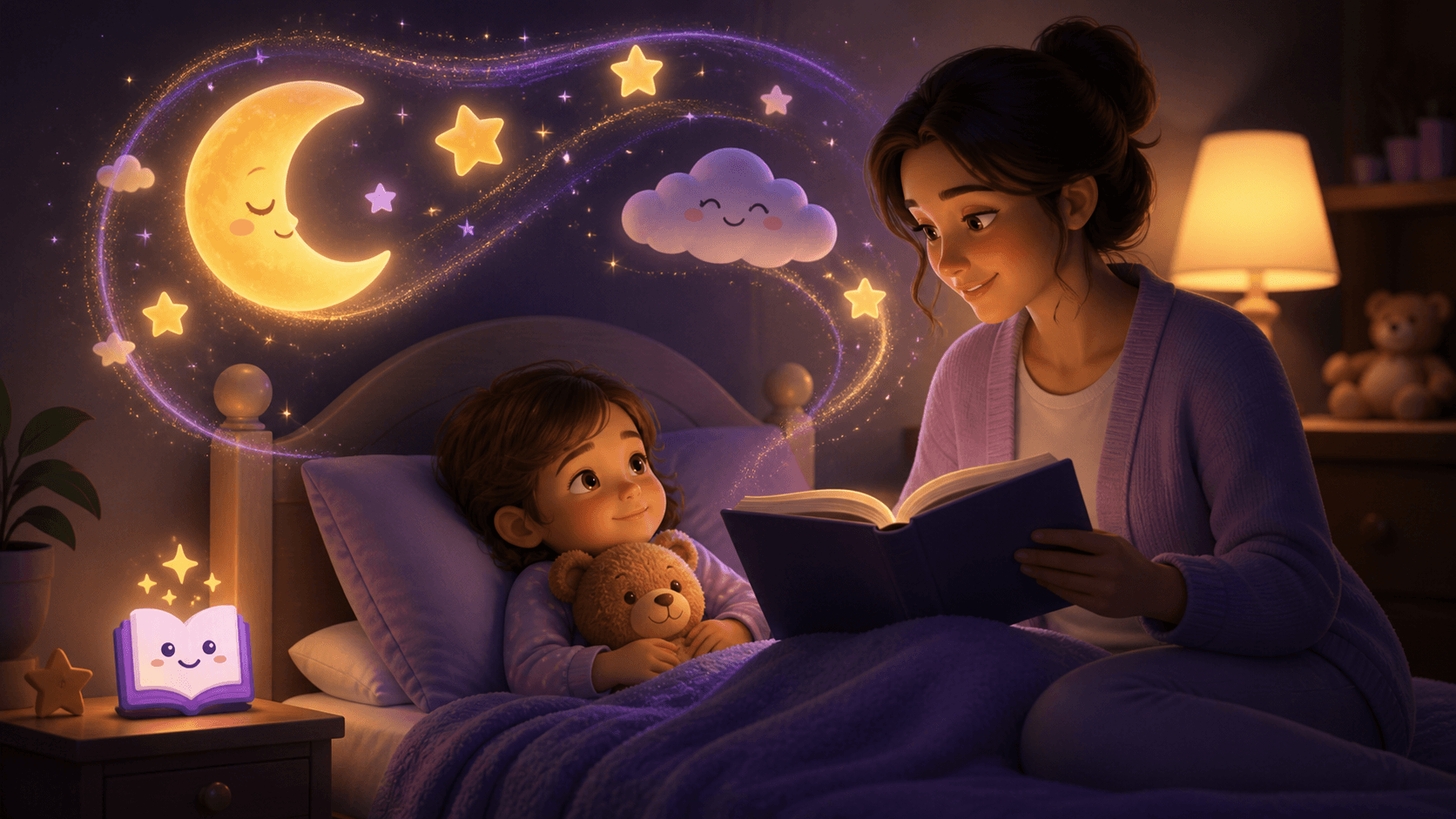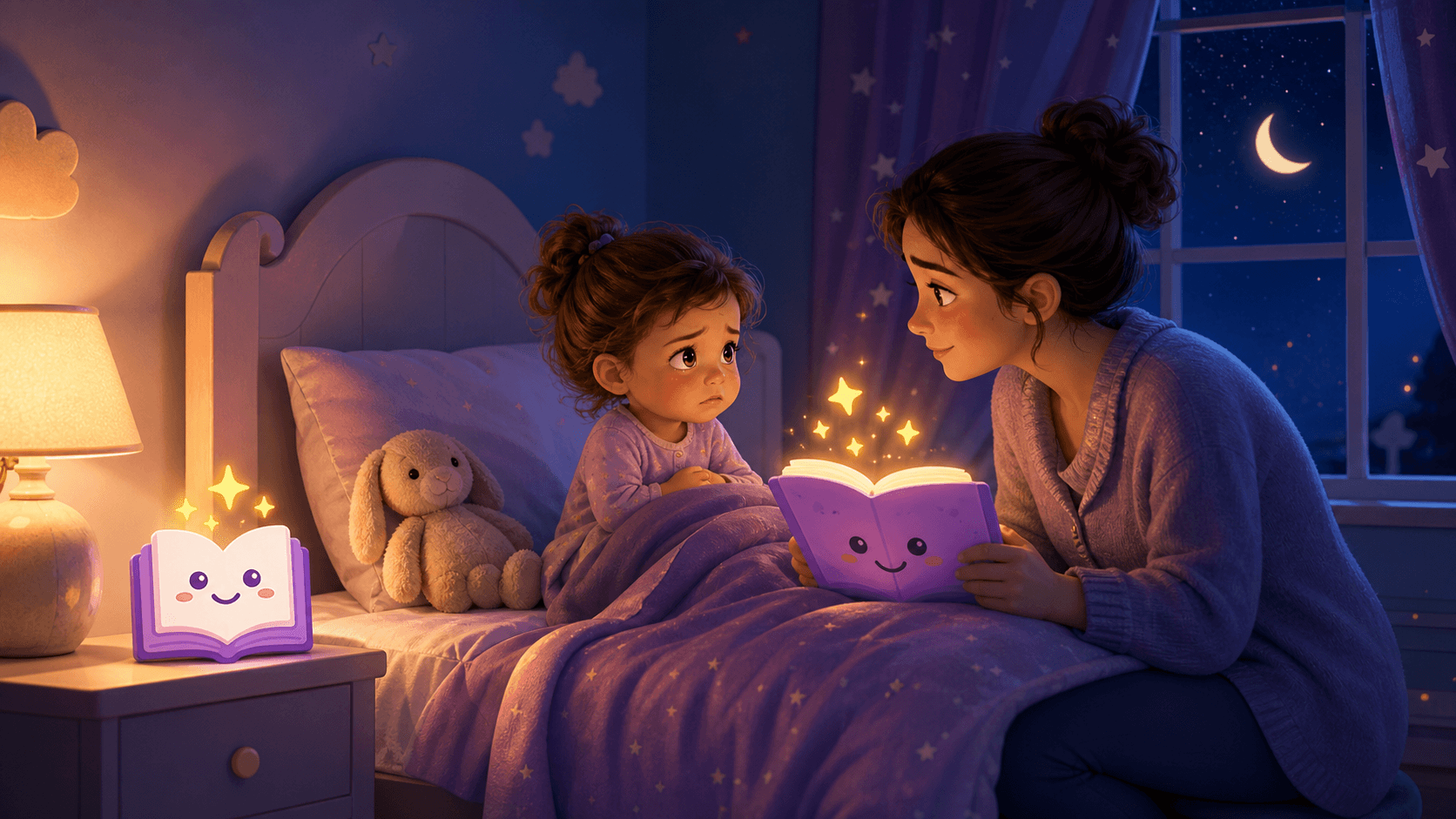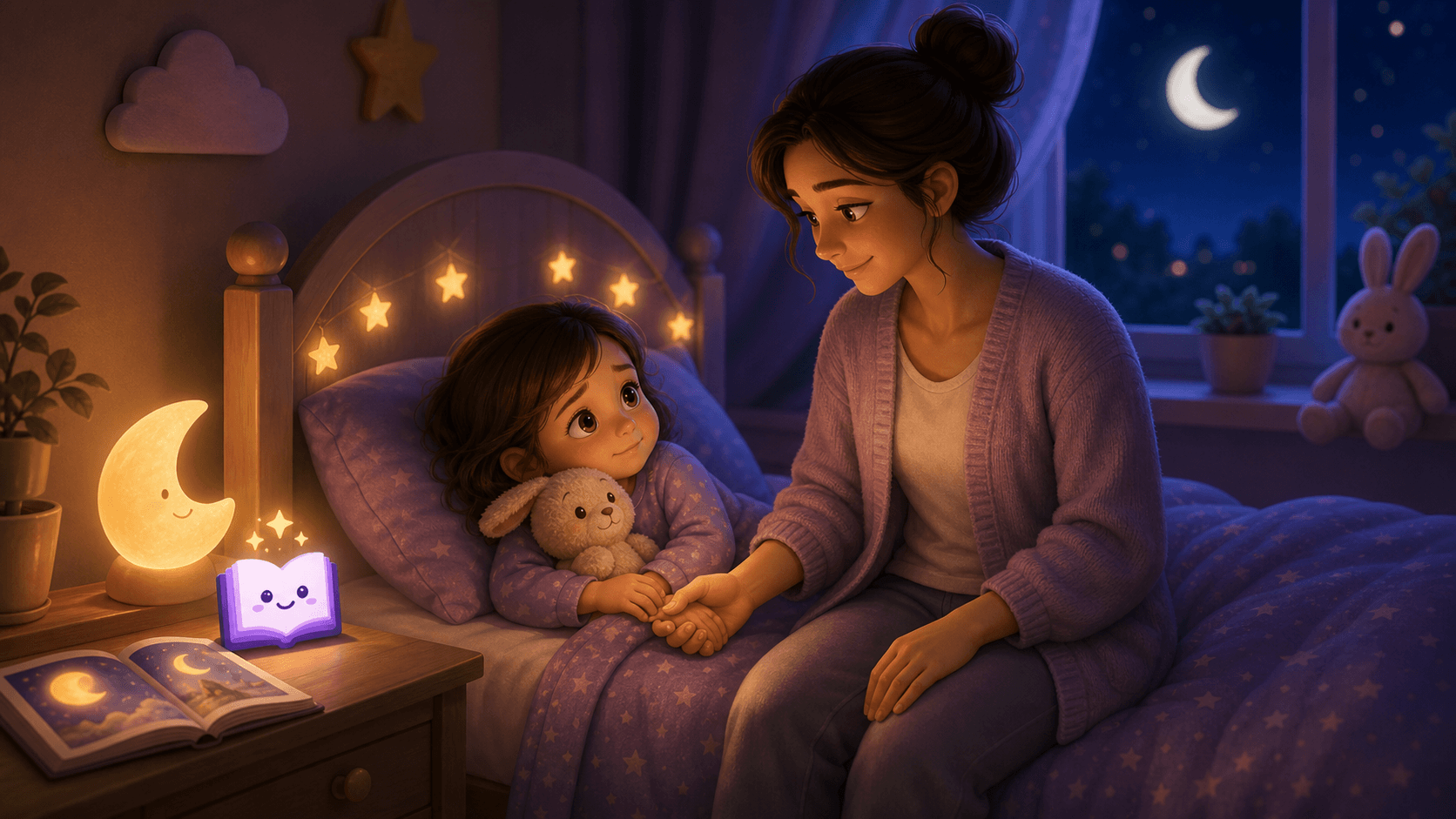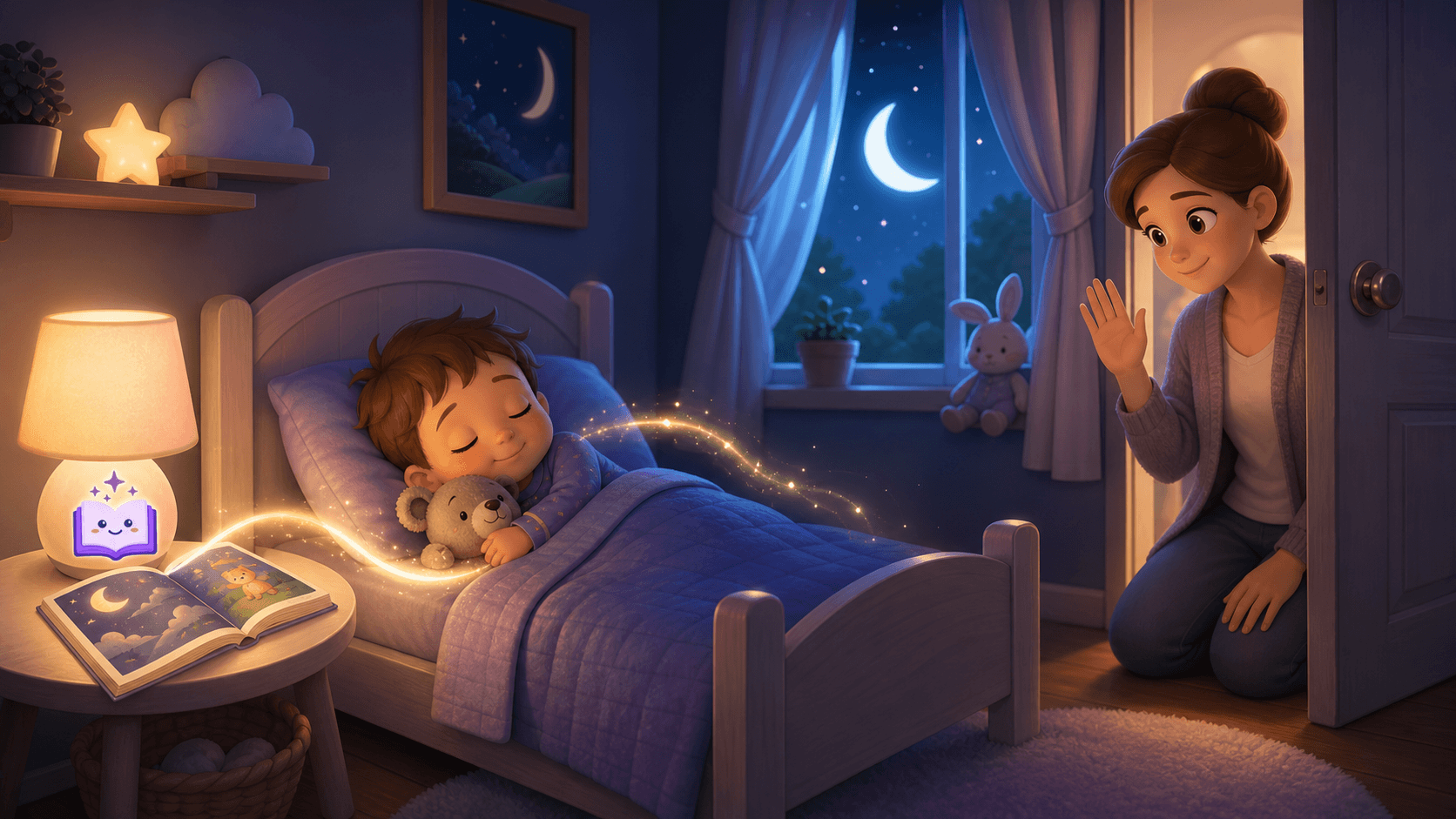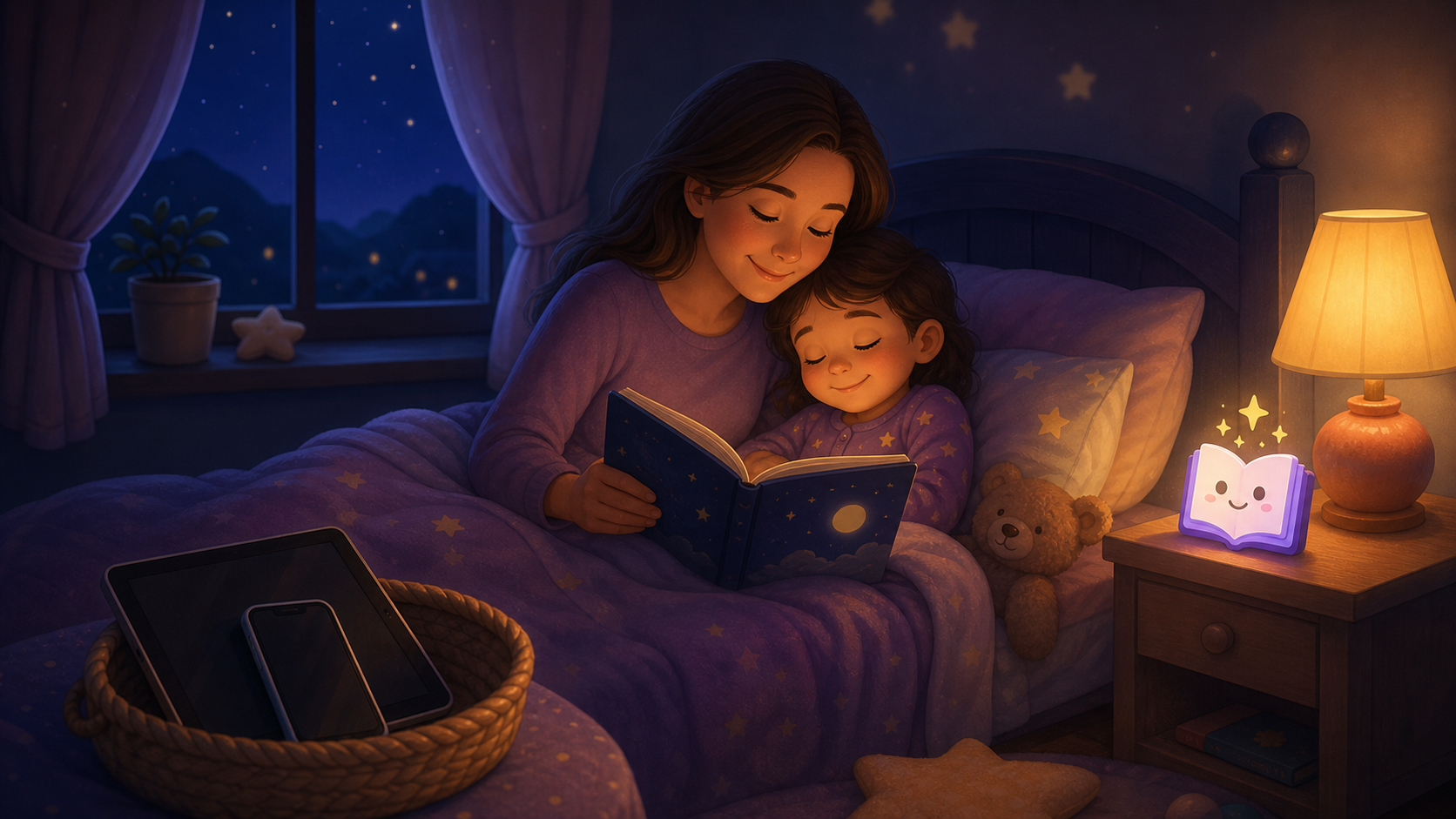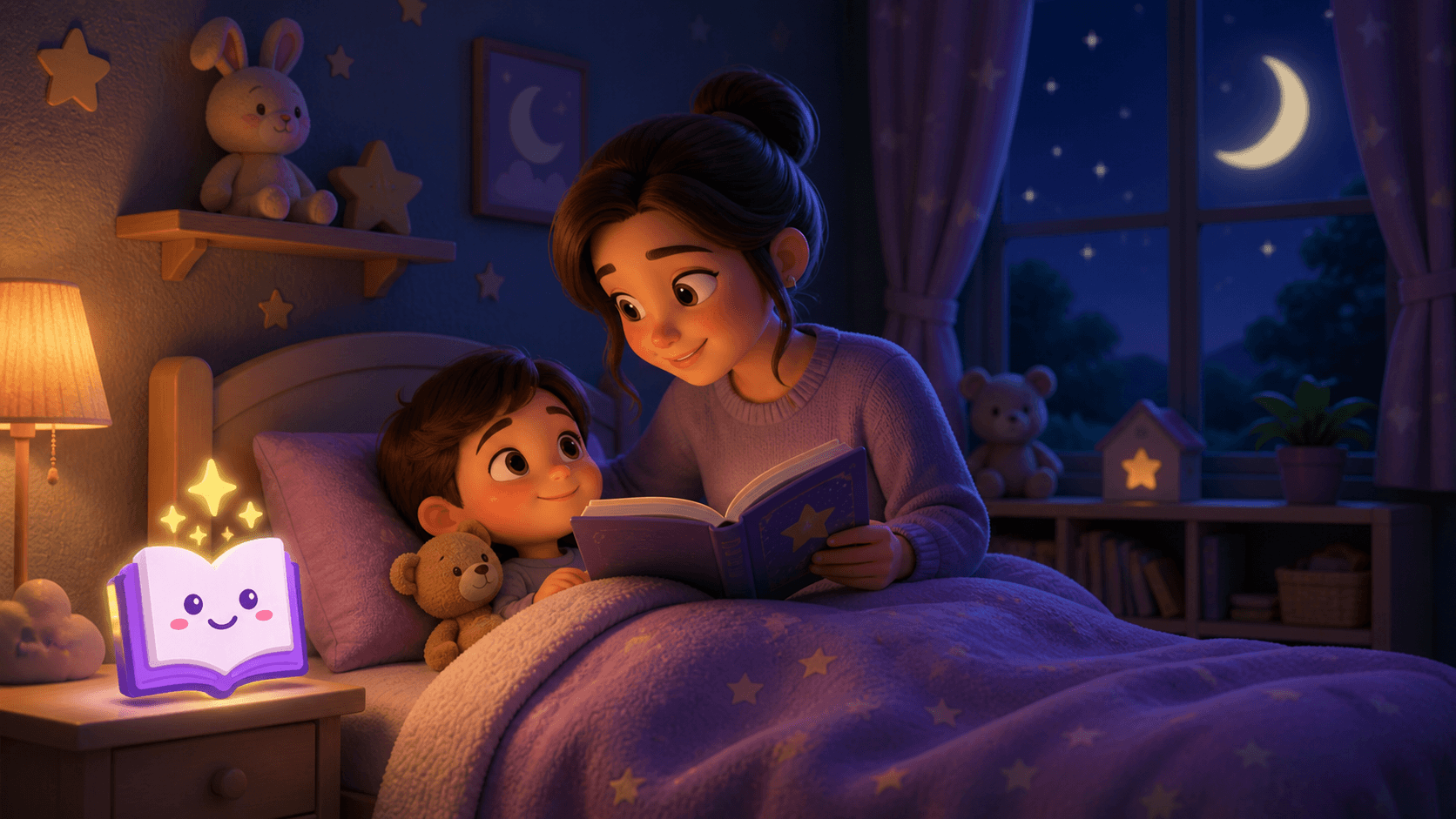
When a child is scared of the dark at bedtime, the goal is to make the room feel familiar, predictable, and safe: one calm check, one comfort object, a simple goodnight phrase, and a gentle story that ends with the child feeling secure. The fear is real, but bedtime should not become a nightly investigation.
Fear of the dark often shows up at the exact moment parents are most tired.
The light goes off. The room changes shape. A coat looks like something else. A shadow moves when a car passes outside. Your child asks for one more check, one more light, one more cuddle, or one more reason not to be alone.
The best response is warm, boring, and consistent.
Not dismissive.
Not dramatic.
Just steady enough that your child can borrow your calm.
Quick Answer: What Helps Tonight?
Try this simple plan:
- Validate the feeling: "The dark can feel strange."
- Check the room once together.
- Name familiar objects: bed, shelf, curtains, toy, blanket.
- Turn on a dim warm nightlight or leave the door slightly open.
- Read one calming bedtime story.
- Use the same goodnight phrase every night.
- Return briefly and calmly if needed, without restarting the whole routine.
The plan works because it answers the fear without feeding it.
Why Children Become Scared of the Dark
Fear of the dark is common because darkness removes visual certainty. A child cannot see the room as clearly, so imagination fills in the gaps.
Common triggers include:
| Trigger | What it can look like |
|---|---|
| Growing imagination | Shadows become "something" |
| Separation at bedtime | The child feels less safe when a parent leaves |
| Overtiredness | Small worries feel bigger |
| Scary shows or videos | Images return when the room is quiet |
| New room or travel | Familiar sleep cues are missing |
| Bad dream memory | The child expects another bad dream |
Mayo Clinic's child sleep guidance recommends a calming bedtime routine, comfort objects, and a night light or open door when those help a child feel secure.
Fear of the Dark vs Bedtime Anxiety
Fear of the dark can be one part of bedtime anxiety.
| If the main fear is... | Try... |
|---|---|
| Dark corners or shadows | Gentle room naming and a warm low nightlight |
| Being alone | A clear check-in plan and familiar goodnight phrase |
| Bad dreams | A story that creates a safe dream path |
| Strange noises | White noise or a simple "house sounds" explanation |
| Tomorrow worries | A worry basket or story about saving worries for morning |
If the fear is mostly about a parent leaving, also read separation anxiety at bedtime and child won't sleep without parent.
The One-Check Rule
Checking the room can help, but repeated checking can accidentally teach the child that there really might be danger.
Use one calm check:
- Look under the bed once.
- Look in the closet once.
- Name what each shadow actually is.
- Keep your voice casual.
- End with the same phrase: "Your room is safe. I checked. It is sleep time."
Do not turn the check into a hunt. The goal is safety, not suspense.
Use Light Carefully
A nightlight can be useful when a child is scared of the dark.
The best bedtime light is usually:
- dim
- warm
- amber or orange rather than bright blue-white
- placed low in the room
- not shining into the child's face
- boring enough that it does not invite play
Cleveland Clinic sleep guidance notes that nightlight impact depends on brightness, color, and placement, and that warm colors are usually better for bedtime than bright blue light.
If your child is calmer with the door cracked open, that can work too. The useful rule is simple: use the least light that creates enough security for sleep.
Make the Bedroom Familiar Again
When the room is dark, help your child map it back to normal.
Say:
That is your chair. That is your bookshelf. That is your blanket. That is your bear. The room is the same room. It is just nighttime now.
This is more helpful than saying, "There is nothing to be scared of."
To the child, there is something to be scared of: uncertainty. Familiar names reduce uncertainty.
What Kind of Story Helps?
A good story for fear of the dark should make darkness feel quiet, kind, and ordinary.
Use stories with:
- a safe bedroom or cozy home
- a small glow, moon, lantern, or friendly nightlight
- a trusted helper
- familiar objects
- slow pacing
- repeated reassurance
- a finished, peaceful ending
Avoid:
- monsters
- villains
- chase scenes
- scary darkness
- sudden noises
- cliffhangers
- "just one more chapter" endings
For broader story structure, use bedtime stories for kids with anxiety.
A Calming Story Prompt
Use this with Lulawe or another parent-led story tool:
Write a calm bedtime story for a [age]-year-old named [name] who feels unsure when the room gets dark. Include [favorite toy] and a small warm nightlight. Help [name] notice that the room is familiar and safe. Use gentle language, no monsters, no danger, no cliffhanger, and end with [name] cozy, loved, and ready to sleep.
A personalized bedtime story works well here because familiar details matter. The child's toy, blanket, room, nickname, or favorite gentle theme can make the story feel close without using private information.
Example Story Shape
Use this structure:
- The child is tucked in.
- The room looks different in the dark.
- A small warm light helps the child name familiar things.
- A trusted helper reminds the child that nighttime changes how things look, not what they are.
- The child says goodnight to the room.
- The room feels safe enough for sleep.
This story shape validates fear without making the fear the main character.
What Not to Do
Try to avoid:
- laughing at the fear
- saying "big kids are not scared"
- checking the room again and again
- adding screens after fear starts
- using scary stories as "practice"
- promising that no bad dreams will ever happen
- staying angry in the doorway
- changing the plan every night
The message should be:
I believe you feel scared. I also know you are safe.
Both parts matter.
When the Fear Is Bigger Than Bedtime
Most fear of the dark improves with routine, reassurance, and time. But sometimes it needs more support.
Cleveland Clinic's overview of fear of the dark explains that a phobia is more than occasional uneasiness and can interfere with sleep and daily life.
Consider professional support if:
- fear lasts for months without improvement
- your child panics at lights out
- the fear affects daytime activities
- sleep loss is affecting mood, school, or family life
- fear started after a frightening event
- your child has frequent nightmares, sleep terrors, or intense body symptoms
A bedtime story can support a calmer routine. It should not be the only support when distress is severe or persistent.
How Lulawe Fits
Lulawe is useful for this problem because parents can create a story around a child's safe details: first name or nickname, age, favorite toy, cozy room, gentle nightlight, and the story goal of feeling safe in the dark.
That is more targeted than a generic story.
The best Lulawe story for fear of the dark should:
- keep the parent in control
- avoid scary plot turns
- use familiar details
- make the child's room feel safe
- end clearly
- support a screen-free bedtime routine
If screens are making bedtime harder, pair this page with screen time before bed for kids and screen-free bedtime routine.
Final Takeaway
When a child is scared of the dark at bedtime, do not argue with the fear and do not build the night around it.
Validate it. Check once. Make the room familiar. Use a soft comfort cue. Read one calm story. Repeat the same goodnight.
The child learns the most important bedtime message through repetition:
The room is safe. My parent is steady. The dark is just nighttime.