What Is Bedtime Anxiety?
Bedtime anxiety is persistent worry, fear, or dread that a child experiences specifically around the time of going to sleep — distinct from general anxiety and more specific than separation anxiety at bedtime.
Bedtime anxiety is one of the most common sleep challenges in children aged 3–10. Unlike separation anxiety, which centres on the fear of being away from a parent, bedtime anxiety can involve a wide range of fears: the dark, intruders, monsters, bad dreams, illness, or a more diffuse, generalised worry about the night.
Children with bedtime anxiety are not being manipulative or difficult. The fear they experience is real, and dismissing it tends to make things significantly worse.
Bedtime Anxiety vs. Separation Anxiety at Bedtime
These two often overlap but are meaningfully different:
| Bedtime Anxiety | Separation Anxiety at Bedtime | |
|---|---|---|
| Core fear | The night itself — dark, bad dreams, being unsafe | Being away from the parent |
| Age of onset | Often 3+ as imagination develops | Peaks 6–18 months, resurfaces at transitions |
| Response to parent staying | Somewhat helps, but fear persists | Largely resolves when parent is present |
| Content of distress | Specific fears named or unnamed | "I want you, don't leave" |
| Developmental driver | Imagination, understanding of danger | Attachment, object permanence |
Many children experience both simultaneously — fearing the dark AND wanting a parent present. Both components need to be addressed.
What Children Are Typically Afraid of at Bedtime
- The dark — the most common bedtime fear across all ages
- Monsters or intruders — imaginative fears that feel very real
- Bad dreams — fear of what might happen during sleep, especially after a nightmare
- Being alone — not specifically missing a parent, but a general fear of solitude
- Something bad happening — a more abstract fear linked to health anxiety or world events
- Not being able to sleep — older children sometimes develop performance anxiety around sleep itself, worrying about how they will feel if they do not sleep enough
Why Bedtime Anxiety Peaks Between Ages 3 and 8
The developmental timing of bedtime anxiety is not coincidental.
Between ages 3 and 8, children undergo a dramatic expansion of imagination and cognitive capacity. They can now:
- imagine scenarios that have not happened
- understand that the world contains danger
- construct vivid mental images of threats in the dark
- remember and dwell on frightening things they have seen or heard
This is the same developmental leap that makes children this age love stories, imaginative play, and fantasy — and also makes the dark feel genuinely threatening in a way it did not as a toddler.
Signs of Bedtime Anxiety in Children
Bedtime anxiety does not always look like obvious fear. It can manifest as:
- stalling and delaying at bedtime — excessive requests for water, hugs, toilet trips
- physical complaints that appear at bedtime — stomach aches, headaches
- calling out repeatedly after lights out
- inability to fall asleep alone even when tired
- coming to parents' room in the night
- crying or distress when bedtime approaches
- asking repeated reassurance questions — "Is the door locked? Is there a monster?"
- difficulty separating from parents during the wind-down routine
How to Help a Child with Bedtime Anxiety
Validate the Fear
The most important first step. "There are no monsters" is less helpful than "I can see bedtime feels scary. That makes sense. Let's figure this out together." Children whose fears are acknowledged feel safer than those who are told their fears are wrong.
Use the Bedtime Routine as an Anchor
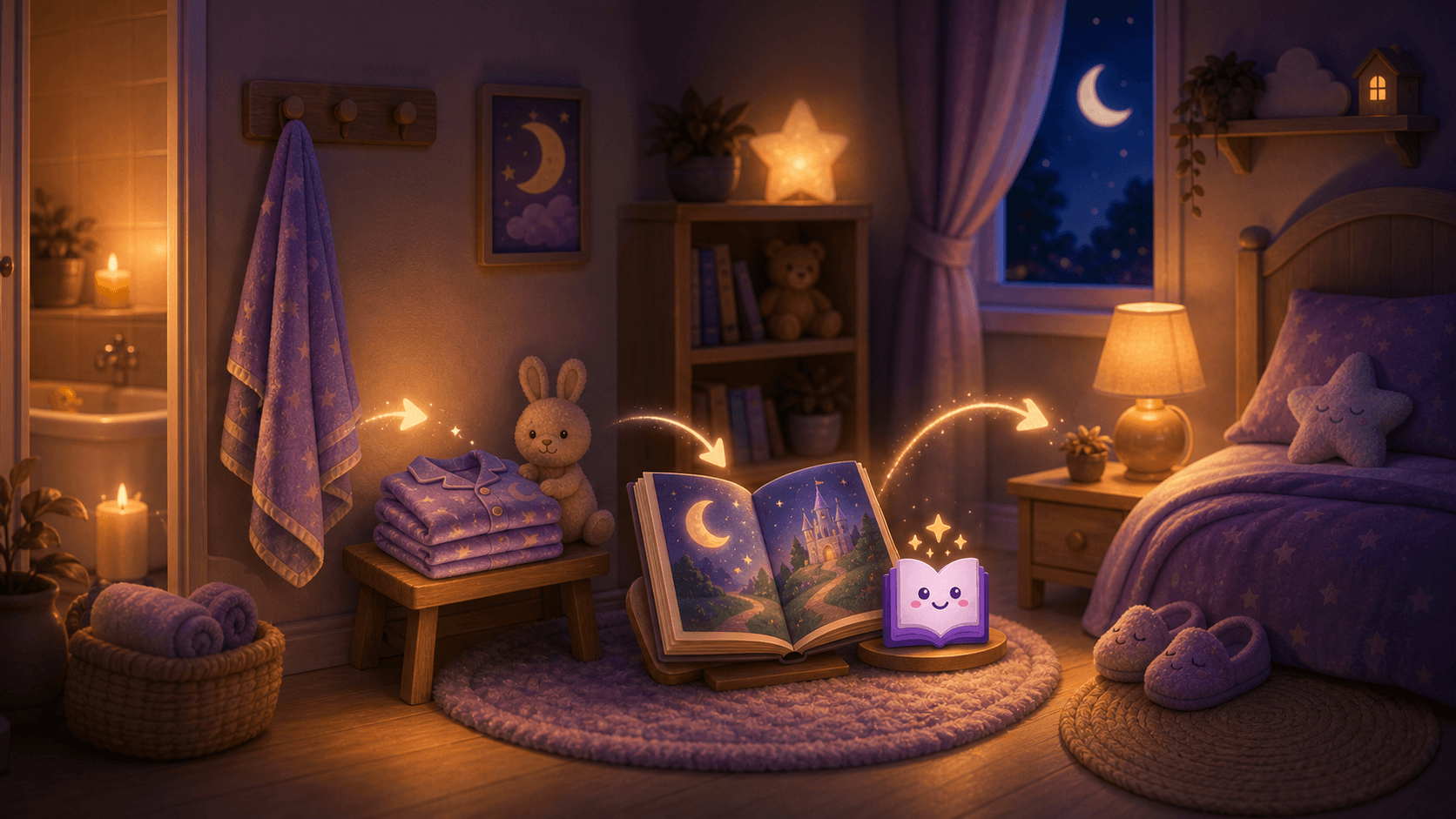
A consistent, predictable bedtime routine reduces anxiety by making bedtime feel structured and safe rather than unpredictable. Every element of the routine becomes a familiar landmark: bath, pyjamas, story, goodnight.
Choose the Right Bedtime Story
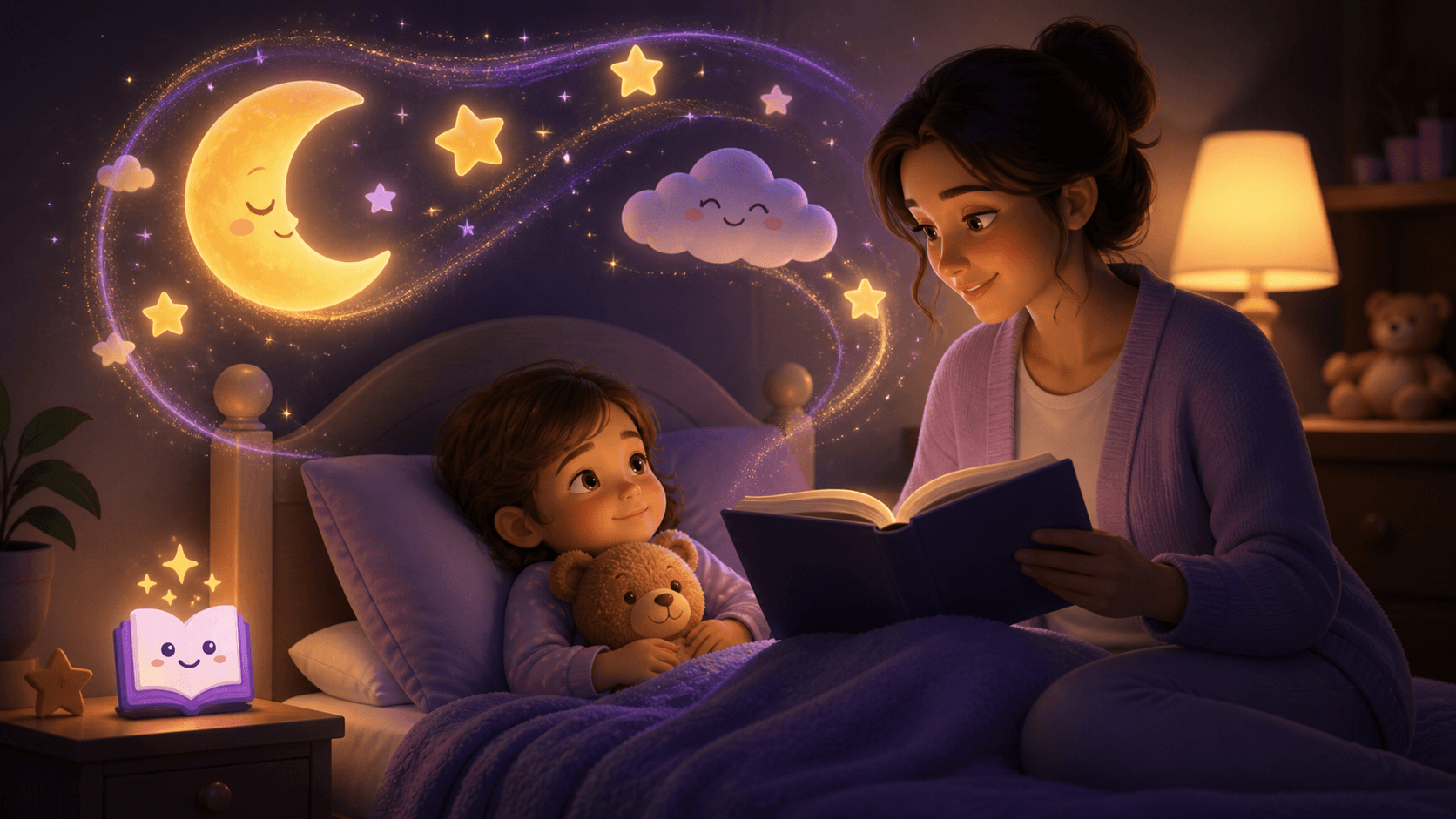
Story choice matters significantly for anxious children. A calming bedtime story that places the child in a safe, peaceful world — ideally one where they are the brave and capable hero — actively counters the fearful thoughts that drive bedtime anxiety. Avoid stimulating or scary stories in the wind-down period.
A personalized bedtime story that features the child facing a small challenge and feeling safe and happy at the end can be particularly effective — it gives the child's imagination a positive narrative to follow into sleep rather than an anxious one.
Address Specific Fears Practically
- Fear of the dark: nightlight, glow stars, a torch the child controls
- Fear of monsters: a consistent, calm "monster check" before bed; some children benefit from "monster spray" (a spray bottle of water with a reassuring label)
- Fear of bad dreams: a dreamcatcher, a "good dream charm," a brief visualisation of a happy dream scenario before sleep
Gradual Exposure to Being Alone
For children who are afraid to be alone at bedtime, a gradual approach — staying slightly further from the child each night, reducing the time spent in the room — builds confidence more sustainably than abrupt withdrawal.
Keep Daytime Conversations Brief
Avoid extended conversations about nighttime fears during the day, which can inadvertently reinforce them. Brief, calm acknowledgment is enough: "I know bedtime feels hard sometimes. You're safe and I'm nearby."
When Bedtime Anxiety Needs Professional Support
Bedtime anxiety is a normal and common childhood experience that most children grow through with consistent, warm support.
It may be worth consulting a GP or child psychologist if:
- the anxiety is severe and has persisted for more than a few months without improvement
- it is significantly affecting the child's daytime functioning or wellbeing
- it is accompanied by other anxiety symptoms during the day
- the child is experiencing night terrors alongside the anxiety
- the family's sleep and functioning are severely affected