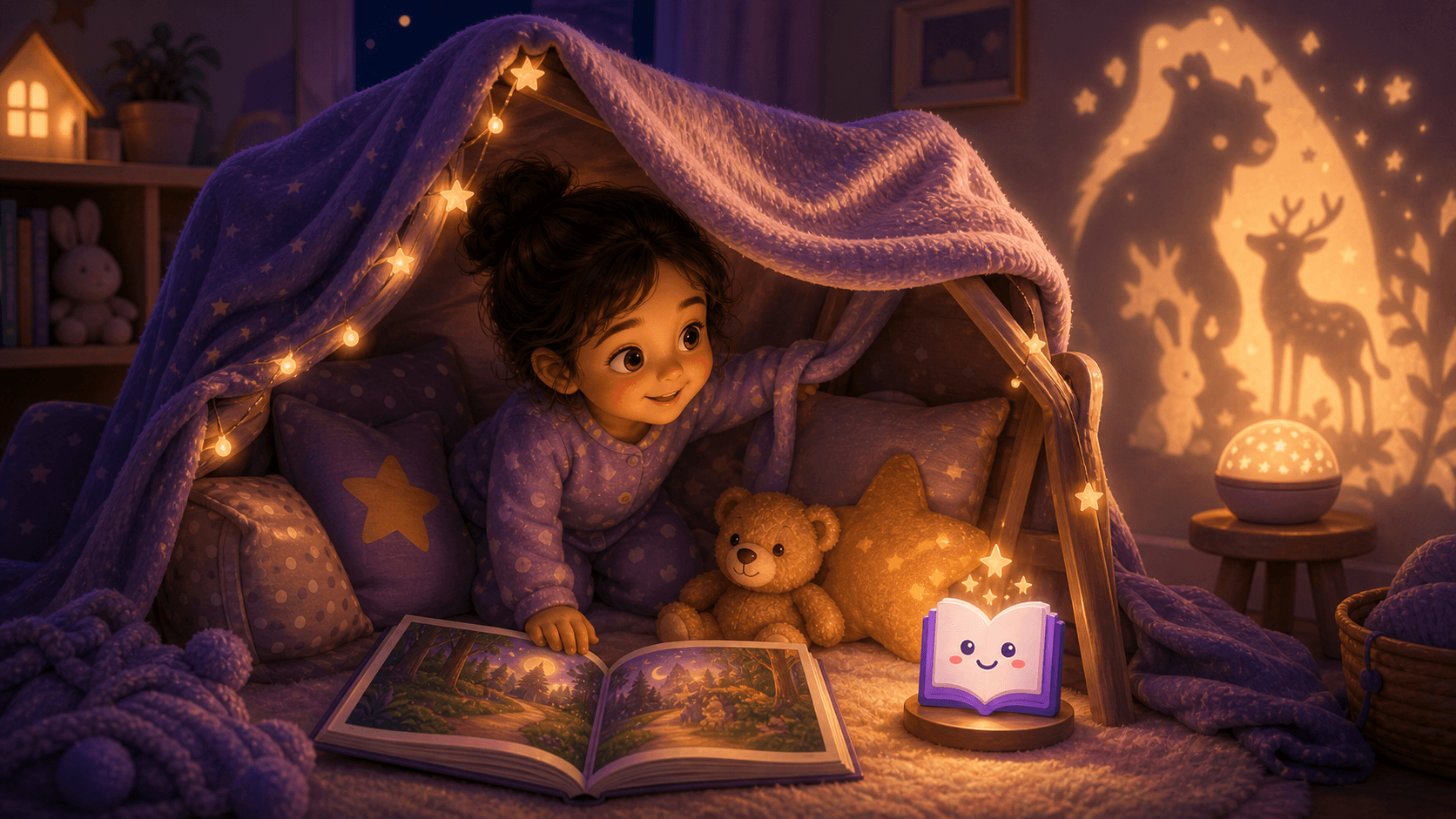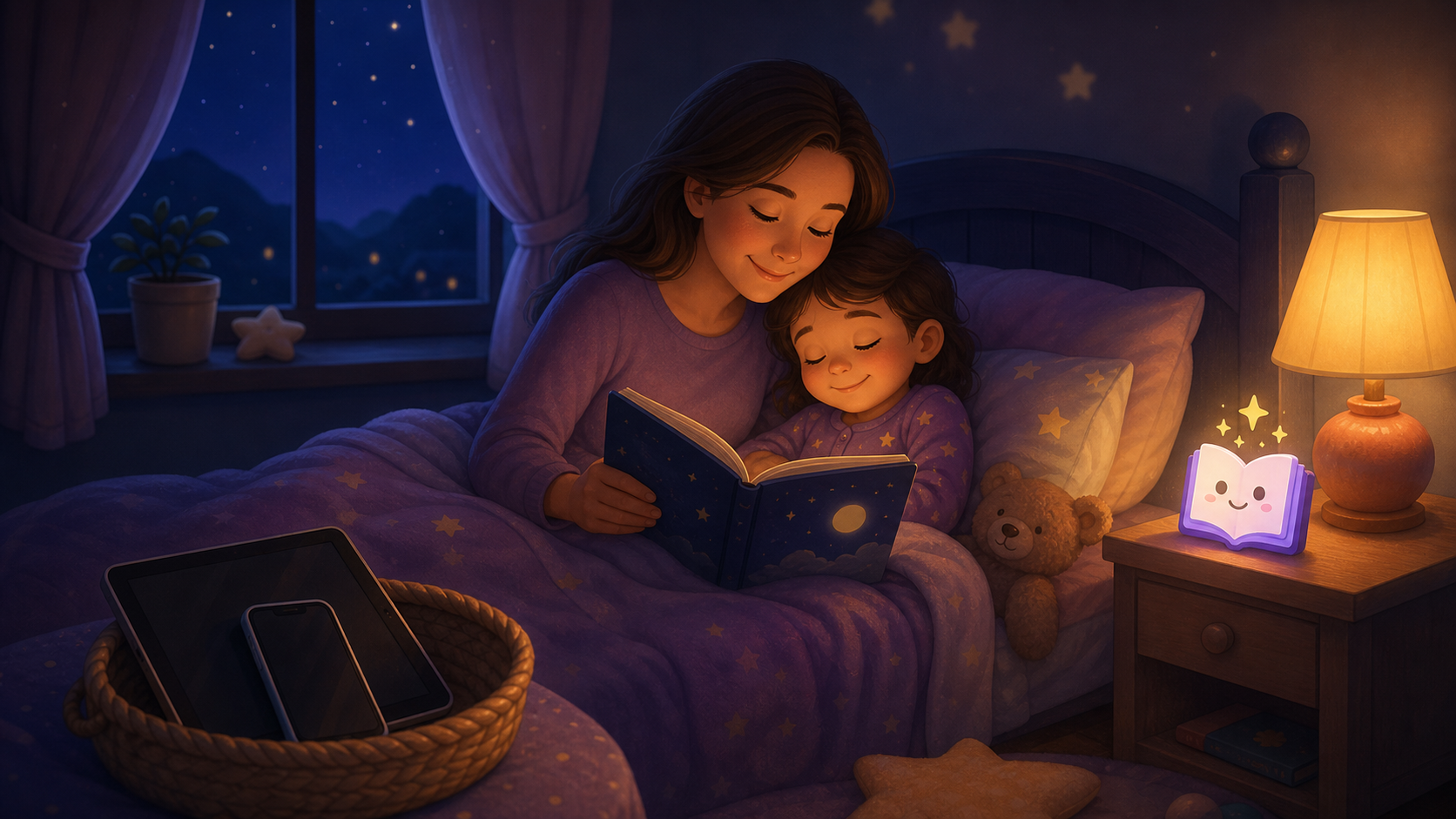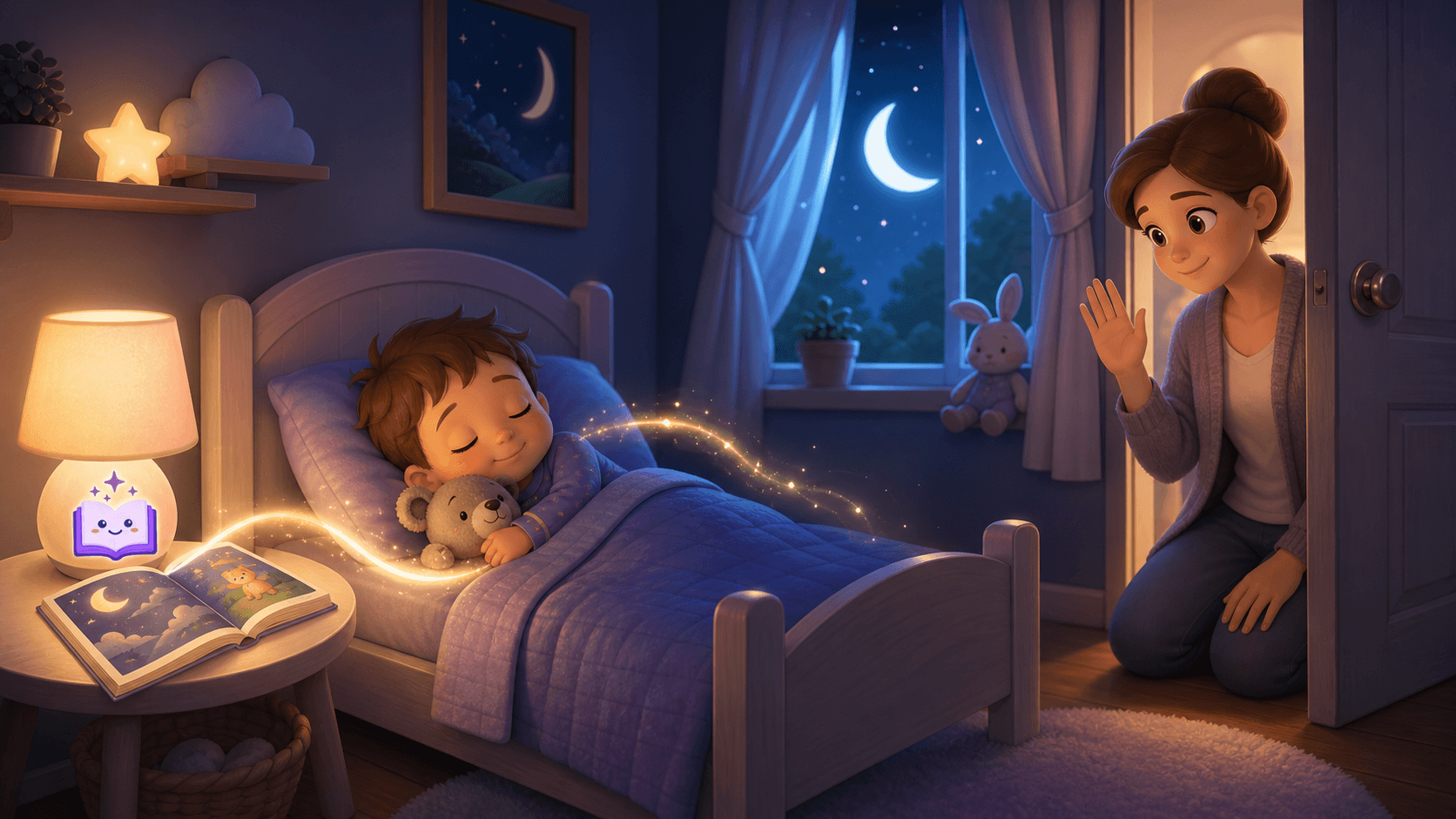
To help a toddler sleep alone, build a predictable bedtime routine, create positive sleep associations, use a comfort object, and reduce parent help gradually rather than disappearing suddenly. The goal is not to force independence overnight, but to help the child feel safe enough to fall asleep with less help.
Toddlers are not trying to make bedtime difficult.
They are small people with big feelings, limited impulse control, and a very strong preference for the safest thing they know: you.
So when a toddler says "stay," cries at the door, or wakes needing a parent, it is not usually manipulation. It is a mix of habit, connection, tiredness, separation anxiety, and sleep associations.
This guide shows a gentle path toward sleeping alone without turning bedtime into a battle.
Quick Plan
Use this order:
- Make bedtime timing realistic.
- Keep the same routine every night.
- Add one calming story as a clear endpoint.
- Use a comfort object or bedtime phrase.
- Reduce your presence gradually.
- Respond to wake-ups calmly and consistently.
- Give the plan one to three weeks before judging it.
The most important word is gradually.
Why Toddlers Struggle to Sleep Alone
Most toddler sleep-alone struggles come from one or more of these patterns:
| Pattern | What it looks like | Helpful focus |
|---|---|---|
| Separation anxiety | Child panics or clings when parent leaves | Reassurance and gradual distance |
| Parent-dependent sleep association | Child needs rocking, feeding, or parent lying nearby | Replace with a more sustainable cue |
| Overtiredness | Child is wired, emotional, or frantic at bedtime | Earlier wind-down and calmer routine |
| Bedtime resistance | Requests, bargaining, leaving bed | Clear routine and consistent return |
| Fear of dark or room | Child says room feels scary | Calming story, nightlight, familiar cues |
For children who mainly fear separation, see separation anxiety at bedtime. For children who need the same parent help every time they wake, the issue may be a sleep association.
Step 1: Start With the Bedtime Routine
A toddler is more likely to sleep alone when bedtime feels predictable.
A simple bedtime routine might be:
- screens off
- bath or wash
- pajamas
- brush teeth
- one calming story
- cuddle
- same goodnight phrase
- parent leaves or moves to planned spot
Keep the order boring and repeatable. Boring is good at bedtime.
Step 2: Use a Story as the Transition Point
A bedtime story is useful because it gives connection a shape.
Instead of "I need you forever," the routine becomes:
We cuddle, we read, we say our phrase, and then it is sleep time.
For toddlers, choose a calming bedtime story that is:
- short
- repetitive
- familiar
- gentle
- not funny enough to restart play
- not scary
- clearly finished
A personalized story can help because the child hears their own name, room, blanket, teddy, or bedtime phrase inside the story.
Step 3: Create a Positive Sleep Association
A sleep association is something a child connects with falling asleep.
If the association is always "parent lying beside me until I am fully asleep," the child may need that same condition again after night wakings.
Try shifting toward sleep cues that can stay with the child:
- comfort object
- nightlight
- same story ending
- same goodnight phrase
- calm room
- predictable routine
Example phrase:
You are safe. Teddy is here. I am nearby. It is sleep time.
Use the same words every night. The phrase becomes part of the routine.
Step 4: Try Gradual Parent Withdrawal
Gradual withdrawal means reducing your help step by step.
One version:
| Nights | Parent position |
|---|---|
| 1-3 | Sit beside the bed, calm and boring |
| 4-6 | Sit halfway across the room |
| 7-9 | Sit near the door |
| 10-12 | Sit outside the door and check in briefly |
| 13+ | Goodnight phrase, leave, brief predictable returns if needed |
Do not sneak out. Sneaking can make anxious children more watchful.
The parent should be warm, but not entertaining. No extra stories, games, negotiations, or long talks after the routine ends.
Step 5: Handle Calling Out and Getting Up
Toddlers often test whether the new pattern is real.
Use the same response every time:
- Return calmly.
- Use the same phrase.
- Avoid a long conversation.
- Put them back or guide them back.
- Leave again or return to your planned position.
Example:
It is sleep time. You are safe. I will check on you soon.
The goal is not to ignore the child. The goal is to make the response predictable and low-drama.
Step 6: Make the Room Feel Safe
Small environmental cues can help a toddler sleep alone:
- dim nightlight
- comfort object
- door slightly open
- white noise if already part of the routine
- familiar blanket
- simple room check before bed
- family photo nearby
Avoid introducing too many new things at once. Choose one or two supports and repeat them.
Step 7: Use a Personalized Story for Separation
Here is a simple story pattern:
A little bear loves being close to Mama Bear. Every night, they read one cozy story. Then Mama Bear says, "I am nearby, and your bed knows how to keep you safe." The little bear holds his blanket, listens to the quiet room, and learns that Mama Bear always comes back in the morning.
The story does not shame the child for wanting closeness.
It gently models the next step: feeling safe while the parent is nearby, but not right beside them.
For anxious children, pair this with Bedtime Stories for Kids with Anxiety.
Common Mistakes
Changing the plan every night
Toddlers learn patterns through repetition. If bedtime changes every evening, the child keeps testing which version is real.
Adding more and more routine
One more story, one more drink, one more cuddle, one more song. A loving routine can accidentally become endless.
Set the routine, then keep it.
Moving too fast
If a child is very anxious, suddenly leaving can increase distress. Gradual steps are often more sustainable.
Making bedtime the only connection point
Some toddlers ask for more parent presence at bedtime because the day felt rushed. Ten minutes of focused connection earlier in the evening can reduce bedtime clinginess.
When to Get Extra Help
Consider speaking with a pediatrician, GP, qualified sleep consultant, or child psychologist if:
- your toddler's sleep anxiety is severe
- sleep disruption lasts for months
- the child has intense panic at separation
- the child is also struggling during the day
- parents are dangerously sleep deprived
- there are medical concerns such as snoring, breathing pauses, reflux, or pain
Sleep-alone skills are important, but they should develop inside a context of safety.
Final Takeaway
Getting a toddler to sleep alone is not about winning bedtime.
It is about teaching a new pattern: bedtime is predictable, the room is safe, the parent is nearby, and the child can fall asleep with gradually less help.
Use routine, story, comfort, and repetition.
That is how independence starts to feel safe.