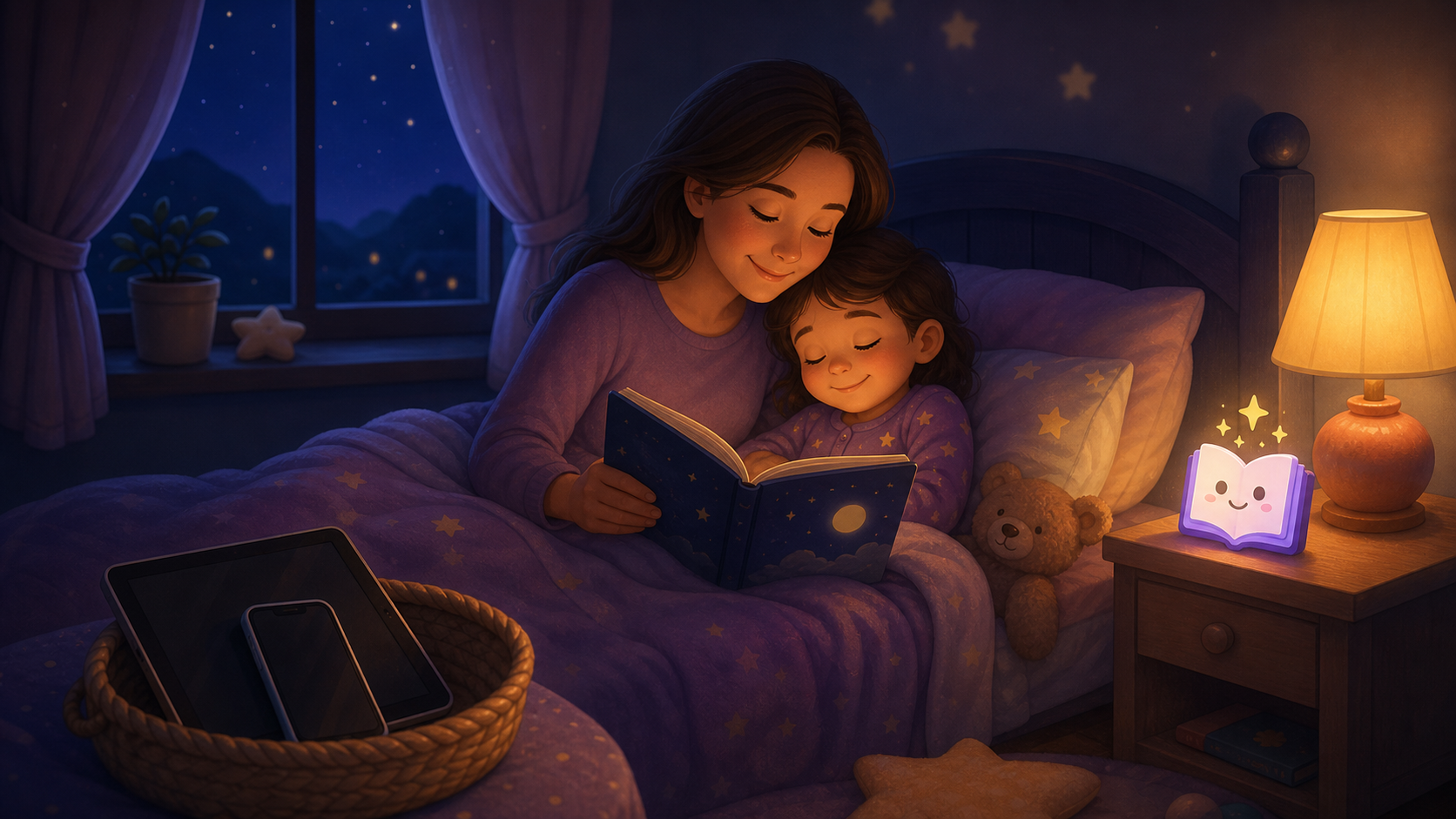
What Is a Screen-Free Bedtime Routine?
A screen-free bedtime routine is a predictable evening sequence that removes phones, tablets, TV, games, and other bright screens before sleep so children can wind down with lower stimulation.
For many families, the goal is not a perfectly screen-free life. The practical goal is a protected wind-down window before lights out, when the child's brain gets calmer cues: lower light, slower pacing, familiar steps, and connection with a caregiver.
Why Screens Are Hard at Bedtime
Screens can make bedtime harder for two reasons:
- Light exposure — bright light close to bedtime can delay the body's sleep signal
- Content arousal — fast, funny, dramatic, or interactive content keeps attention switched on
That combination can make children feel tired and wired at the same time. A screen-free routine reduces both problems by replacing stimulation with predictable calming cues.
What a Screen-Free Routine Looks Like
A simple routine might be:
- screens off 30 minutes before lights out
- dim lights
- wash, brush teeth, pajamas
- one calming bedtime story
- brief cuddle or check-in
- lights out
The exact activities matter less than consistency. A repeated bedtime routine teaches the body what comes next.
Why Bedtime Stories Work So Well
A bedtime story is a strong screen replacement because it gives children something positive, not just a rule.
Stories help children:
- shift attention away from screens
- reconnect with a parent after the day
- slow their breathing and body pace
- follow one gentle narrative instead of many rapid inputs
- reach a natural endpoint before sleep
When repeated nightly, the story can become a sleep association: a familiar cue that sleep is approaching.
For a step-by-step parent plan, see Screen Time Before Bed for Kids.
Common Mistakes
Removing screens without replacing them Children often resist when the screen disappears and nothing comforting takes its place. Replace the screen with a clear ritual.
Making the routine too long The best routine is one you can repeat on tired evenings. Start with 20 to 30 minutes.
Using exciting content as the replacement Fast audiobooks, competitive games, or highly dramatic stories may keep the nervous system active. Choose slower, calmer options.
Quick Parent Script
"Screens are done for tonight. Now we do pajamas, teeth, one story, cuddle, and lights out."
Keep the wording boring and consistent. The routine does the heavy lifting.