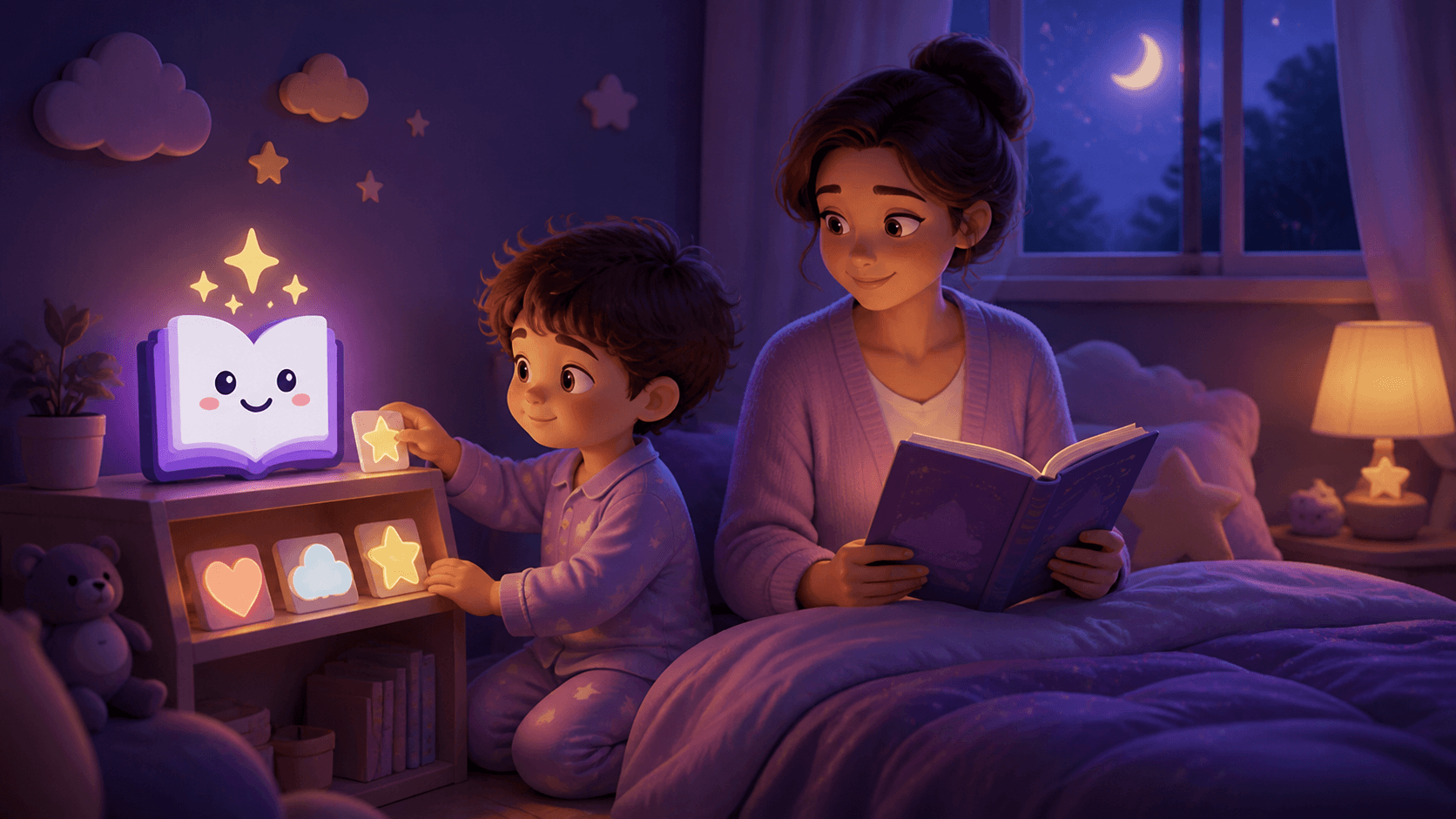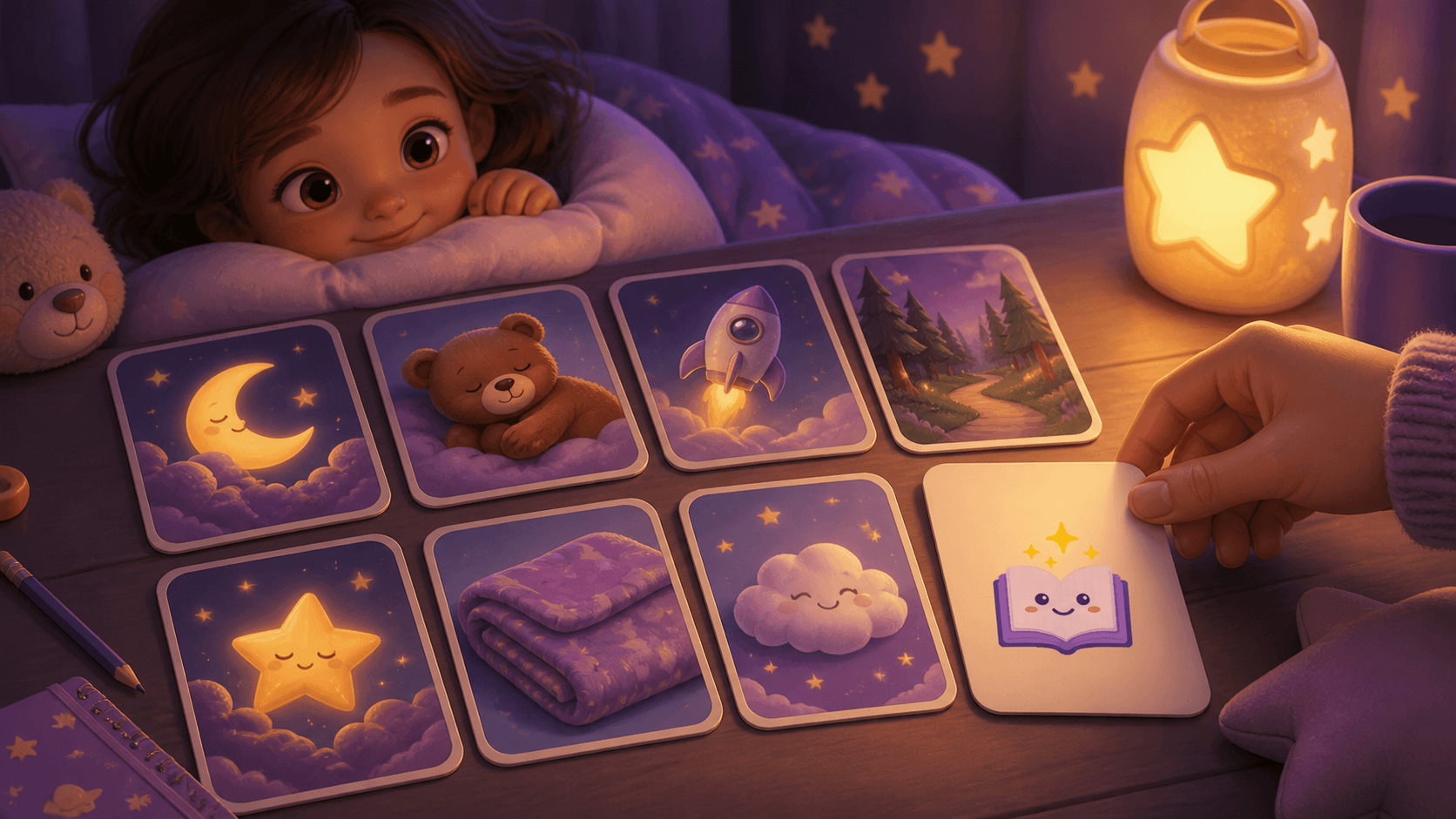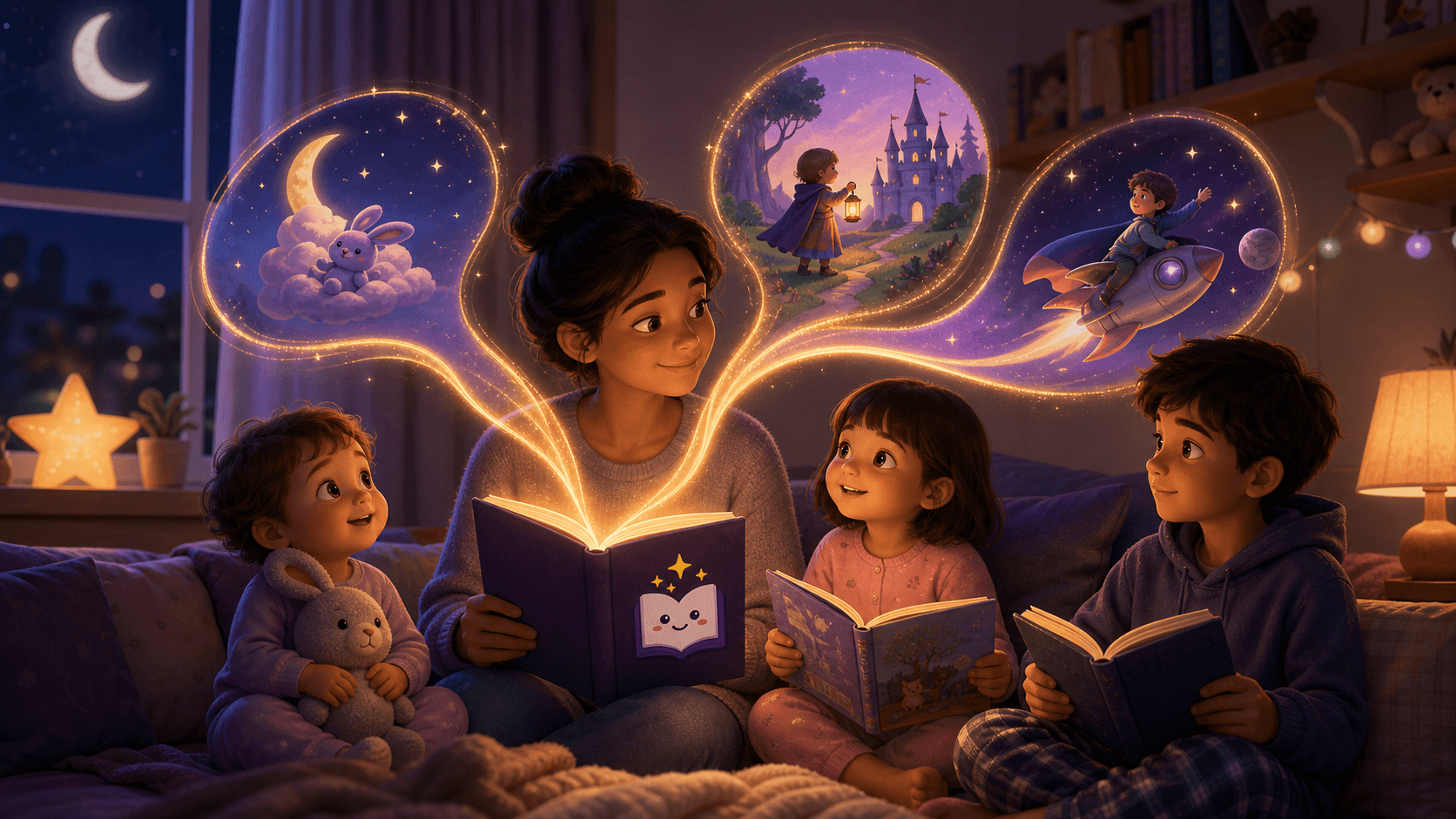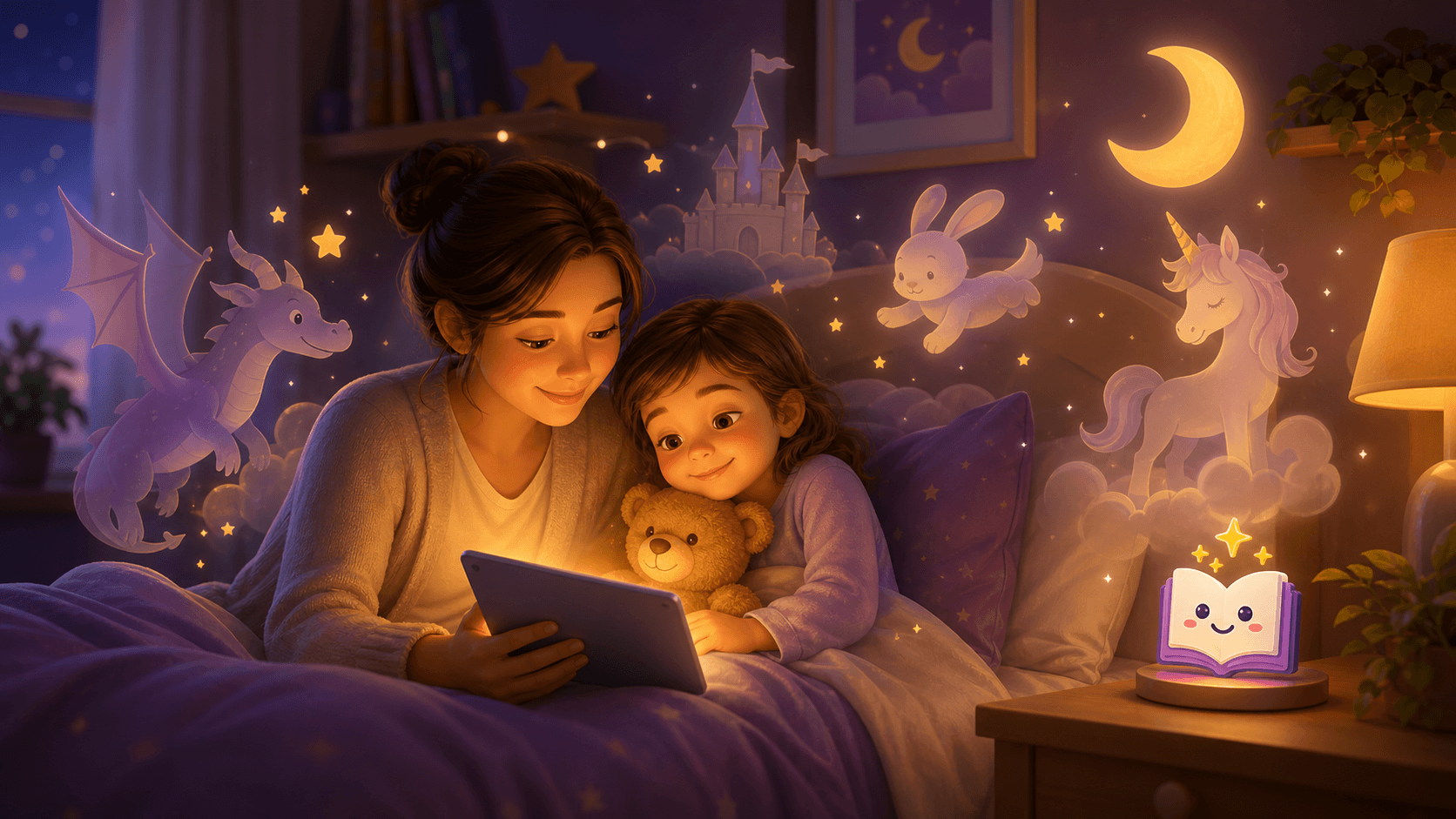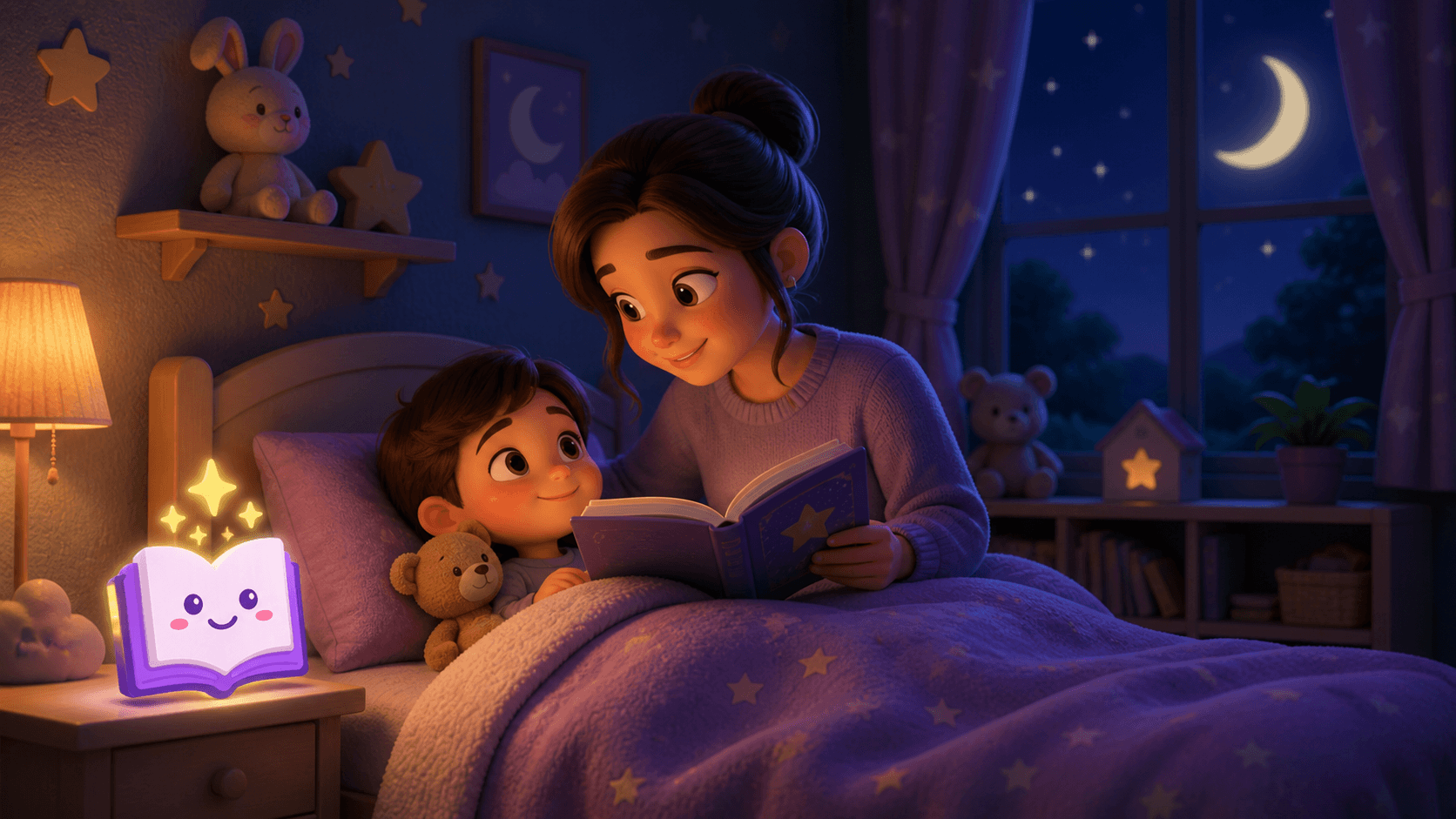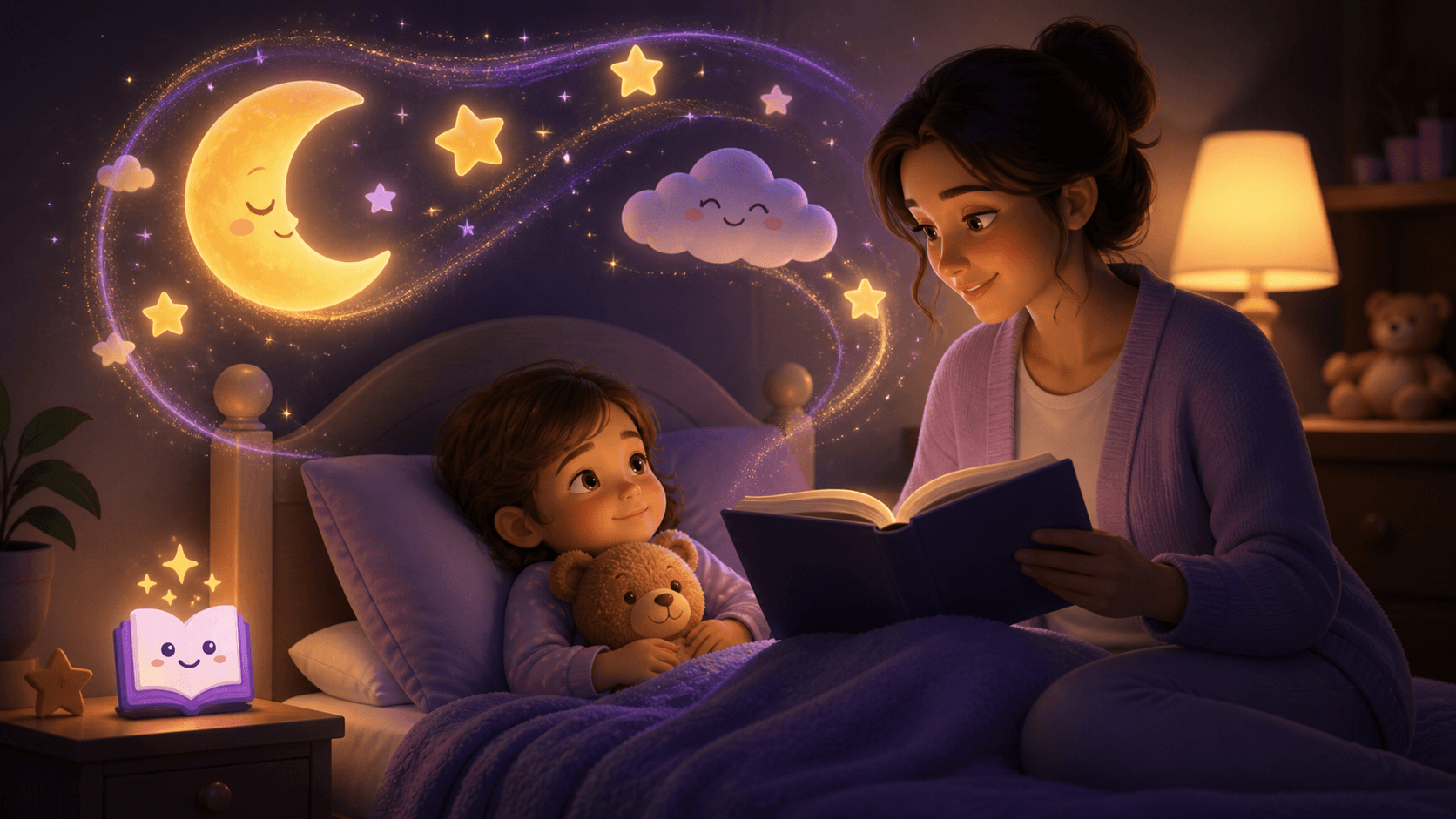
Bedtime stories for kids with anxiety should be calm, predictable, and emotionally safe. The best stories give the child one gentle worry, a trusted helper, familiar details, and a reassuring ending where the character feels safe, loved, and ready to sleep.
An anxious child does not need a bigger adventure at bedtime.
They need a safer one.
When a child is worried about the dark, being alone, bad dreams, or something they cannot quite explain, the wrong story can make bedtime harder. A chase scene, a villain, or an unresolved ending can give the imagination more material to work with.
The right story does the opposite.
It gives the child's mind somewhere safe to go.
This guide explains how to choose, prompt, or make up bedtime stories for anxious children. For a broader low-stimulation story framework, read Calming Bedtime Stories for Kids. For fear of darkness, shadows, or the bedroom itself, use Nighttime Fears in Children.
Quick Answer: What Kind of Story Helps an Anxious Child?
Choose a story with:
- a familiar or cozy setting
- one small worry, not a big danger
- a kind helper
- slow pacing
- soft sensory details
- repeated reassurance
- a complete, peaceful ending
Avoid stories where the child waits to see whether something bad will happen. At bedtime, suspense is usually the enemy of sleep.
Why Stories Can Help Bedtime Anxiety
Bedtime anxiety is fear, worry, or dread that appears around the time a child is expected to sleep.
Stories can help because they:
- focus the child's attention on one gentle narrative
- replace anxious thoughts with safe imagery
- create a predictable routine
- give the parent a warm way to validate feelings
- model a small step toward bravery
- end with safety and rest
A story cannot remove every fear. But it can give the child a calmer emotional script to follow into sleep.
Bedtime Anxiety vs Separation Anxiety
Some children are afraid of the night itself. Others mainly struggle when a parent leaves the room.
| Child's worry | Story angle that helps |
|---|---|
| Fear of the dark | A character learns the night can be quiet and safe |
| Fear of being alone | A trusted helper remains nearby or returns predictably |
| Bad dreams | A character creates a good dream path before sleep |
| School or tomorrow worries | A character places tomorrow's worries in a basket until morning |
| General unease | A cozy home, slow goodnights, and soft sensory details |
For parent-specific distress, see separation anxiety at bedtime. For broader nighttime fear, start with bedtime anxiety.
What Makes a Bedtime Story Calming?
A calming bedtime story is built differently from an exciting children's story.
| Calming story | Anxiety-triggering story |
|---|---|
| Gentle setting | Unknown or dangerous setting |
| Small problem | Big threat |
| Kind helper | Villain or trickster |
| Predictable structure | Sudden twist |
| Soft ending | Cliffhanger |
| Reassuring language | Dramatic language |
For anxious children, the story should feel emotionally boring in the best possible way. Not dull, but safe.
What to Avoid
Avoid these elements close to sleep:
- monsters
- villains
- intruders
- being lost
- abandonment
- punishment
- storms if the child fears weather
- cliffhangers
- scary darkness
- dramatic music or sound effects
- jokes that turn into silliness
Even if the story ends well, the middle may still be too activating for an anxious child.
Should the Story Mention Anxiety?
It depends on the child.
Some children feel relieved when the story gently names the feeling:
The little fox felt worried when the room became dark, so he took one slow breath and held his soft blanket.
Other children become more anxious when fear is named directly. For them, use indirect safety:
The little fox made his den warm, listened to the quiet leaves, and noticed the moon keeping watch outside.
Both approaches can work. Watch your child's body: if they become tense, ask more questions, or delay sleep, make the story less direct next time.
A Simple Anxiety Story Formula
Use this structure:
- A character is safe at home or in a cozy place.
- One small worry appears.
- A trusted helper offers comfort.
- The character takes one tiny brave step.
- The world becomes familiar and calm.
- The character rests.
This formula works because it validates fear without letting fear run the story.
Prompt Template for AI Stories
Use this prompt with an AI bedtime story generator or adapt it yourself:
Write a calm bedtime story for a [age]-year-old named [name] who feels nervous at bedtime. Use a cozy setting, one very small worry, a trusted helper, slow gentle language, and a reassuring ending. Avoid monsters, villains, danger, cliffhangers, loud action, and scary darkness. End with [name] feeling safe, loved, and ready to sleep.
For more prompt ideas, see Bedtime Story Prompts for Kids.
Example Story: The Little Lantern
Mila did not like the moment when the room became quiet.
In the daytime, her room was full of blocks, books, socks, and sunshine. At night, everything looked softer and stranger.
"I wish the dark knew my name," Mila whispered.
Beside her bed sat a small lantern with a warm golden glow.
"I know your name," said the lantern, very gently. "And I know this room."
Mila blinked.
"You do?"
"Yes," said the lantern. "That is your bookshelf. It keeps the stories safe. That is your chair. It waits for morning clothes. That is your blanket. It is already doing its bedtime job."
Mila looked around.
The bookshelf was still the bookshelf.
The chair was still the chair.
The blanket was still warm over her knees.
"What about the corner?" Mila asked.
"The corner is just resting," said the lantern. "Corners get tired too."
Mila smiled a little.
The lantern made a soft circle of light on the wall.
"Would you like to say goodnight to the room?" it asked.
Mila nodded.
"Goodnight, bookshelf," she whispered.
"Goodnight, chair."
"Goodnight, corner."
"Goodnight, blanket."
The room felt less like a mystery and more like itself.
The lantern glowed softly.
"You do not have to be brave in a big way," it said. "Only cozy in a small way."
Mila pulled the blanket up to her chin.
The bookshelf kept the stories.
The chair waited for morning.
The corner rested.
The lantern glowed.
And Mila, who felt safe and sleepy, closed her eyes.
How to Personalize the Story
A personalized bedtime story can help anxious children because familiar details make the story feel closer and safer.
Add:
- the child's first name or nickname
- their blanket, teddy, or nightlight
- a familiar room detail
- a pet or trusted helper
- a small brave action
- a phrase you can repeat nightly
Avoid:
- exact school names
- private family conflict
- medical information
- a detailed list of the child's fears
- making the child "defeat" anxiety dramatically
The story should help the child feel capable, not pressured.
Best Story Types for Anxious Children
| Story type | Why it helps |
|---|---|
| Cozy room story | Makes the bedroom feel familiar |
| Gentle animal story | Lowers intensity through soft characters |
| Nightlight story | Reframes darkness as manageable |
| Goodnight walk | Creates repetition and predictability |
| Worry basket story | Gives worries a place to rest |
| Parent-nearby story | Helps separation anxiety without extending bedtime |
| Breathing story | Pairs story rhythm with body calming |
When Stories Are Not Enough
Bedtime stories can support everyday fear, but they are not a substitute for professional help.
Consider speaking with a pediatrician, GP, child psychologist, or qualified sleep professional if:
- anxiety lasts for months without improvement
- the child is distressed during the day too
- sleep loss is affecting school, mood, or family functioning
- the child has panic-like symptoms
- fears are linked to trauma or a major life event
- parents feel stuck despite consistent support
A story can be part of the support plan. It should not be the whole plan when anxiety is severe or persistent.
Final Takeaway
The best bedtime stories for kids with anxiety are not dramatic, clever, or surprising.
They are safe.
They show one small worry becoming manageable. They give the child a familiar place to rest their imagination. And they end with the feeling anxious children need most at night:
I am safe. I am loved. I can sleep.