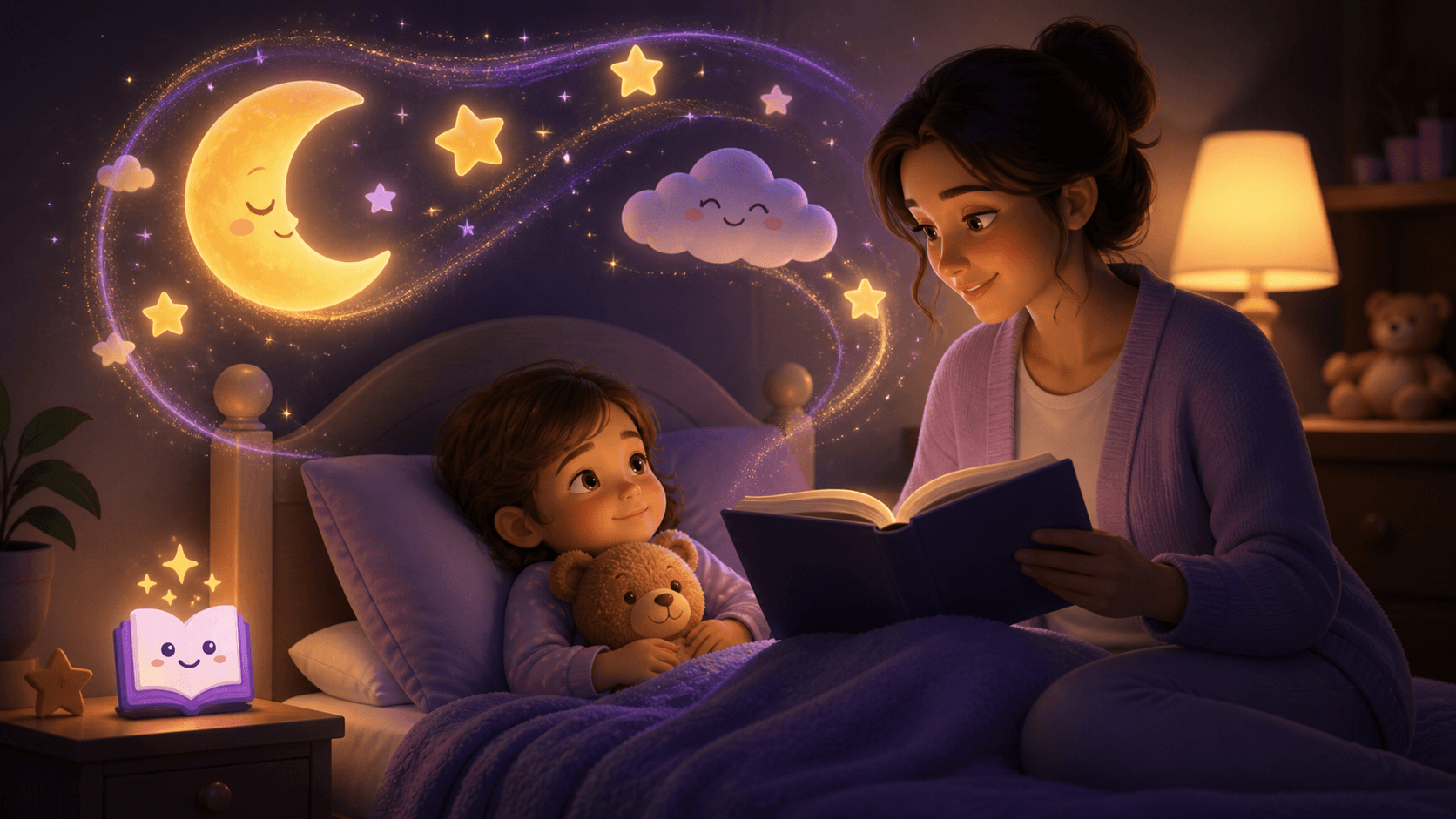
What Is a Calming Bedtime Story?
A calming bedtime story is a gentle, low-stimulation narrative specifically chosen or created to reduce arousal, ease anxiety, and help children transition smoothly into sleep.
Not all stories work at bedtime. A calming bedtime story is intentionally distinct from exciting adventure stories or dramatic fairy tales — it prioritizes emotional warmth, peaceful imagery, and gentle resolution over tension, conflict, and surprise.
For children who struggle to wind down, feel anxious at bedtime, or take a long time to fall asleep, a calming bedtime story can be a genuinely effective tool within a broader bedtime routine.
What Makes a Story Calming for Children?
A calming bedtime story has specific qualities that distinguish it from other children's narratives:
- Slow narrative pace — the story unfolds gently without rushing
- Peaceful settings — cosy forests, quiet meadows, warm kitchens at night, a bedroom just like the child's own
- Gentle stakes — the character faces a small challenge, not a crisis
- Warm, safe characters — the child listener feels protected within the story world
- Sensory details that invite relaxation — soft textures, warm light, quiet sounds, cool breezes
- A resolution that brings comfort — the story ends with the character safe, happy, and ready for rest
- Language that flows at the pace of a breath — no sharp sentences, no jarring shifts
Why Calming Stories Help Children Sleep
When children's nervous systems are activated — by excitement, worry, or overstimulation — the transition to sleep becomes harder.
A calming bedtime story helps by:
- giving the mind a single, gentle focus to follow
- replacing anxious or racing thoughts with peaceful imagery
- creating a clear psychological signal that the day is ending
- triggering an emotional state of safety and comfort
- gradually reducing the physical arousal that keeps children awake
Over time, the experience of a calming bedtime story can become a powerful sleep association — a reliable cue that sleep is coming.
Calming Bedtime Stories vs. Exciting Bedtime Stories
Many beloved children's books are excellent for daytime reading but work against the goals of bedtime:
| Calming Bedtime Story | Exciting Story |
|---|---|
| Peaceful, low-stakes setting | Action, adventure, danger |
| Slow, soothing pace | Fast-moving events |
| Resolves gently | May end on a cliffhanger |
| Decreases arousal | Increases arousal |
| Helps child feel sleepy | Makes child want to stay awake |
This does not mean exciting stories are bad — they are wonderful in the right context. But for a child who needs to sleep, the story choice matters.
Types of Calming Bedtime Stories for Children
Several different narrative styles can achieve the calming effect at bedtime:
- Nature journey stories — a character wanders through a peaceful forest, meadow, or beach at twilight
- Cosy home stories — a character settles in for the night in a warm, familiar place
- Gentle adventure stories — a small character on a very safe, slow, dreamlike journey
- Animal bedtime stories — a beloved animal character prepares for their own night's sleep
- Personalized calming stories — the child themselves is the character who gently winds down at the end of a wonderful day
- Guided imagery stories — narrative that incorporates gentle visualisation, inviting the child to imagine themselves in peaceful surroundings
Calming Bedtime Stories for Anxious Children
Children with bedtime anxiety — fear of the dark, separation anxiety, or worry about the next day — often respond particularly well to calming bedtime stories.
A calming story helps anxious children because:
- it gives the mind somewhere safe to go rather than dwelling on worries
- it normalises feelings of sleepiness and night-time peace
- it provides physical closeness with a caregiver during a vulnerable moment
- stories that feature the child as the hero can gently reinforce feelings of security and capability
For very anxious children, stories specifically designed to address bedtime fears — featuring characters who learn that the dark is safe, or that parents are always nearby — can be especially helpful.
How to Choose a Calming Bedtime Story
When selecting or creating a calming bedtime story:
- avoid stories with chase sequences, scary villains, or unresolved conflict
- look for books with soft, warm illustration palettes (if using a picture book)
- choose stories with a natural ending that mirrors going to sleep
- consider personalized stories that include the child's own name and feel familiar and safe
- trust your child's cues — the right calming story is one the child settles into, not one they get excited by