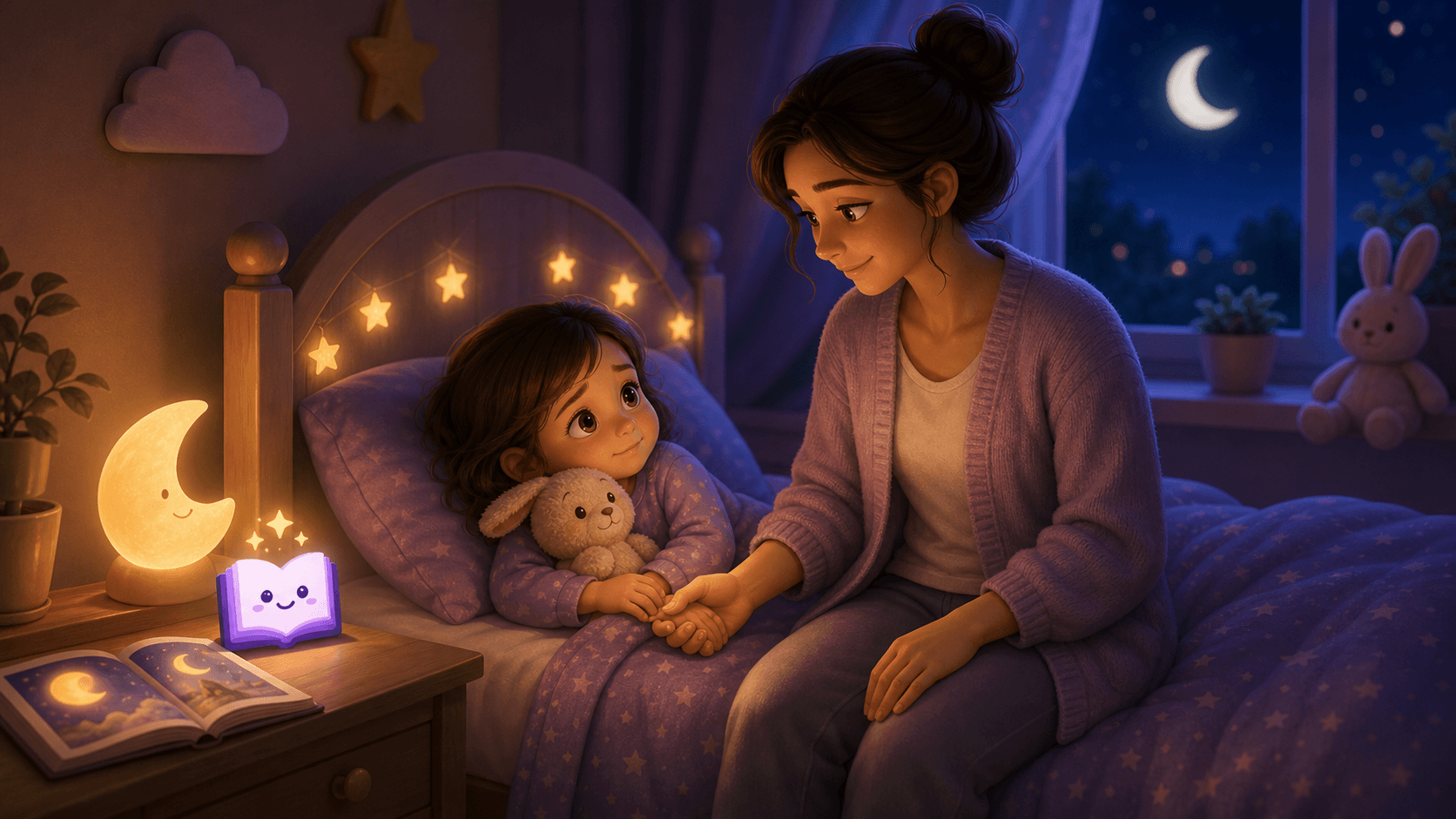
What Is Separation Anxiety at Bedtime?
Separation anxiety at bedtime is a child's distress at being separated from a parent or caregiver at night — a normal developmental stage that peaks in infancy and toddlerhood but can occur at any age.
Bedtime is one of the hardest moments for separation anxiety to surface. The combination of tiredness, the dark, the quiet, and the withdrawal of the parent's presence can feel overwhelming to a child whose primary need is connection and safety.
Understanding that separation anxiety at bedtime is a normal developmental response — not manipulation or naughtiness — is the first step toward managing it effectively.
Why Separation Anxiety Peaks at Bedtime
Several factors make bedtime uniquely challenging for children with separation anxiety:
- Reduced stimulation — in a quiet, dark room, the child's focus shifts fully to the absence of the parent
- Lowered defences — tiredness reduces a child's ability to self-regulate and manage distress
- Object permanence — once children understand that a parent still exists when they leave the room, they also understand that the parent is somewhere else — and want to be with them
- Imagination — as children develop (typically age 3 onwards), the ability to imagine scary scenarios adds fear to the anxiety of separation
When Separation Anxiety at Bedtime Is Normal
Separation anxiety at bedtime is developmentally expected at several ages:
6–12 Months
The first major peak. As object permanence develops, babies begin to understand that parents leave — and they protest. Night waking often intensifies, and babies who were settling independently may begin calling out or crying when they rouse between sleep cycles.
18 Months
A second, often intense peak linked to the 18-month sleep regression and a significant developmental leap. Toddlers may cling at bedtime, cry loudly when parents leave, and wake frequently in the night calling for parents.
2.5–3 Years
As imagination develops, nighttime fears begin to layer on top of separation anxiety. The child is not just missing the parent — they are also afraid of what might be in the dark.
Starting School or Nursery
Any major transition that heightens separation during the day tends to spill into bedtime. A child who is managing nursery separation during the day may release that anxiety at night.
Signs of Separation Anxiety at Bedtime
- clinging to a parent at the start of the bedtime routine
- crying or calling out immediately when the parent leaves the room
- repeatedly getting out of bed to find the parent
- complaints of physical symptoms — stomach aches, headaches — that resolve when the parent returns
- requesting one more hug, story, or drink as the parent tries to leave
- inability to fall asleep unless the parent is present
How to Support a Child with Separation Anxiety at Bedtime
Strengthen the Daytime Attachment
Paradoxically, the best thing to do at night is invest more in connection during the day. Children who feel securely connected during waking hours are better able to tolerate separation at night.
Create a Predictable Bedtime Routine
A consistent, loving bedtime routine helps the child know exactly what is coming and reduces the ambient anxiety that feeds separation distress. The routine should include ample connection — cuddling, a calming story, calm conversation — so the child's connection needs are met before the parent leaves.
Use a Comfort Object
A transitional object — a specific soft toy, a piece of the parent's clothing, a pillow that smells familiar — gives the child something concrete to hold onto after the parent leaves. For many children this is genuinely soothing.
Practise Predictable Goodbyes
A brief, warm, consistent goodbye — rather than a drawn-out or sneaky exit — builds trust. The child learns the goodbye is real, the parent always comes back, and the routine is safe. Sneaking out often intensifies anxiety when discovered.
Use a Personalized Bedtime Story
A personalized bedtime story that features the child as the hero of a safe, happy adventure can redirect the child's emotional focus from the anxiety of separation to the pleasure of the story. Some parents weave the story to gently model the child feeling safe and cosy in their own room.
Return Predictably and Without Drama
If the child calls out after lights out, a brief, calm, boring return — same words, no engagement with the content of the anxiety — teaches the child that calling for you will bring you, but not in an exciting or rewarding way.
When Separation Anxiety at Bedtime Needs Extra Support
Most separation anxiety at bedtime is developmental and resolves with time and consistent support. It may warrant professional attention if:
- it is severe and persisting well beyond the typical developmental windows
- it is significantly disrupting the child's daytime functioning
- the child is unable to attend school or be cared for by anyone other than the parent
- it is accompanied by other anxiety symptoms during the day
A paediatrician or child psychologist can help assess whether the anxiety is within the developmental range or requires targeted support.