What Is Bedtime Resistance?
Bedtime resistance is when a child consistently refuses, delays, or protests going to sleep at the expected time — one of the most common sleep challenges in toddlers and young children.
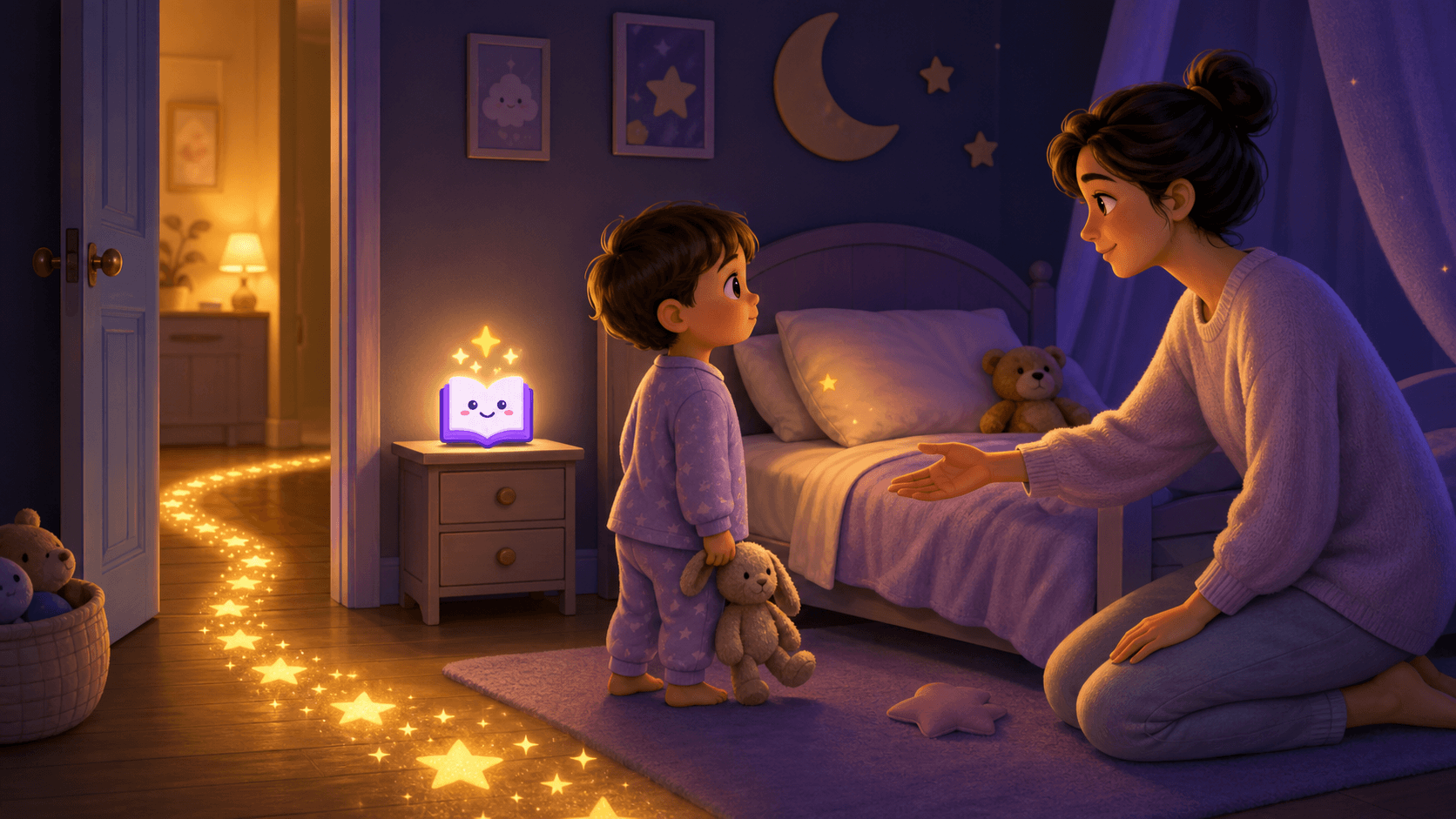
Almost every parent of a toddler or young child has experienced it: the endless requests for water, one more story, a trip to the toilet, a hug, a forgotten toy. Bedtime that should take 30 minutes stretches to 90. The child is exhausted. So are you.
Bedtime resistance is rarely about the child not needing sleep. It is almost always about something else entirely.
Why Children Resist Bedtime
Bedtime resistance has many possible drivers, and identifying the right one matters because each requires a different response:
Fear or Anxiety
Many children resist bedtime because they are afraid — of the dark, of being alone, of bad dreams, or of something more abstract they cannot name. This is especially common between ages 3 and 6 as imagination develops and children begin to understand that scary things exist.
Separation Anxiety
The prospect of being separated from parents at night is genuinely distressing for many children. Separation anxiety at bedtime peaks in infancy and toddlerhood but can resurface at any age.
Overtiredness
Counterintuitively, children who are too tired often resist sleep more intensely, not less. The cortisol spike of overtiredness makes the child wired and emotionally dysregulated — the opposite of ready for sleep.
Undertiredness
If bedtime is too early relative to the child's actual sleep need, or if naps have been too long, the child simply is not tired enough to fall asleep yet. Resistance in an undertired child tends to be calm and playful rather than distressed.
Insufficient Wind-Down
Children transitioning directly from high stimulation — screens, physical play, noisy environments — to expected sleep often struggle. The nervous system needs time to shift gears.
Testing Limits
Older toddlers and preschoolers are developmentally driven to test boundaries. Bedtime, where the stakes feel high and parents are often tired and less consistent, is a prime arena for this testing.
Seeking Connection
Some children resist bedtime because it feels like a loss of connection with the people they love. The resistance is less about sleep and more about wanting more time together.
The "Curtain Calls" Pattern
A classic bedtime resistance pattern is what many families call curtain calls — the repeated trips out of bed or calls from the bedroom after lights out:
- "I'm thirsty"
- "I need another hug"
- "I forgot to tell you something"
- "There's a noise"
- "Can you check under the bed?"
Each request seems reasonable in isolation but the pattern reveals an underlying need — usually for reassurance, connection, or delay of the feared separation.
How to Reduce Bedtime Resistance
Build a Consistent Bedtime Routine
A predictable bedtime routine is the single most effective tool against bedtime resistance. When the sequence of events is consistent and familiar, children know what to expect and feel less anxious about what comes next.
Start the Routine Earlier
Bedtime resistance is significantly worse in overtired children. Starting the routine 20–30 minutes earlier than you think necessary often produces dramatically calmer bedtimes.
Use a Calming Story as the Final Step
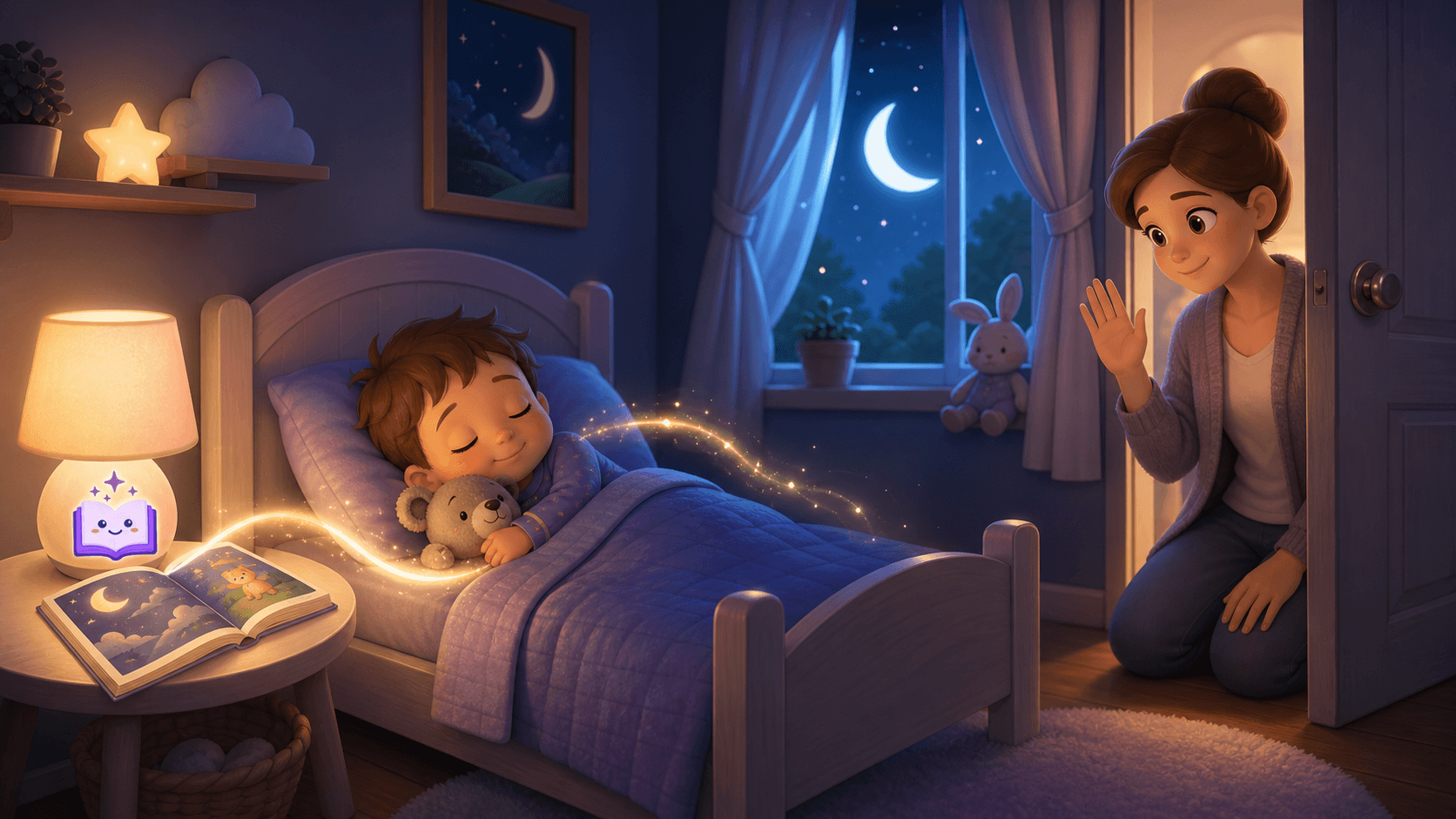
A calming bedtime story or sleep story provides the child with something to look forward to at bedtime, replacing dread with anticipation. It also gives the child a defined, comforting end point — the story ends, then sleep begins.
Offer Limited, Structured Choices
Children who feel some control over bedtime resist it less. Letting the child choose which pyjamas, which story, or which stuffed animal comes to bed gives agency without opening the door to endless negotiation.
Address Fears Directly
If fear is driving the resistance, dismissing or minimising it tends to make things worse. Acknowledging the fear ("I know the dark feels scary"), providing concrete reassurance, and using tools like nightlights or comfort objects is more effective than insisting there is nothing to be afraid of.
Set Clear Expectations and Hold Them Calmly
Children test limits more when they are uncertain whether the limit will hold. A calm, warm, completely consistent response to bedtime resistance — the same words, the same return to bed, without frustration — teaches the child that the boundary is real.
What Not to Do
- Don't threaten or punish — it increases anxiety and association of bedtime with negative emotions
- Don't give in to escalating demands — one extra story becomes two, then three; consistency matters
- Don't stay until the child is asleep if the goal is independent sleep — it creates a sleep association that causes night waking
- Don't engage in lengthy negotiations — brief, warm, firm is the goal