What Is a Sleep Association?
A sleep association is something a child connects with falling asleep, such as rocking, feeding, white noise, or a bedtime story.
Sleep associations are not automatically good or bad.
They become helpful or difficult depending on whether the child can rely on them calmly and consistently during bedtime and night wakings.
How Sleep Associations Form
Sleep associations form through repetition.
When the same thing happens before sleep night after night, a child's brain begins to connect that condition with falling asleep.
Common sleep associations include:
- being rocked
- nursing or bottle-feeding
- using a pacifier
- white noise
- a comfort blanket or stuffed animal
- a parent lying nearby
- a familiar bedtime story
- a consistent bedtime routine
This is why predictable bedtime routines matter. The more familiar the routine becomes, the more clearly it signals that sleep is approaching.
Positive vs Negative Sleep Associations
Not all sleep associations cause problems.
They are usually grouped into two types: parent-dependent sleep associations and self-sustaining sleep associations.
Parent-dependent sleep associations
These require a caregiver to help the child fall asleep or return to sleep.
Examples include:
- being rocked to sleep
- nursing or bottle-feeding to sleep
- being held until fully asleep
- needing a parent to lie beside them
These are not "bad" or harmful. They can be loving and age-appropriate, especially for babies.
They may become difficult when a child wakes during the night and needs the same help again before falling back asleep.
Self-sustaining sleep associations
These are calming sleep cues a child can experience without ongoing parent involvement.
Examples include:
- a comfort object
- a dark, calm room
- soft white noise
- a predictable bedtime routine
- a bedtime story that ends before sleep
These associations can help children feel safe while gradually supporting more independent sleep.
Why Bedtime Stories Can Be a Positive Sleep Association
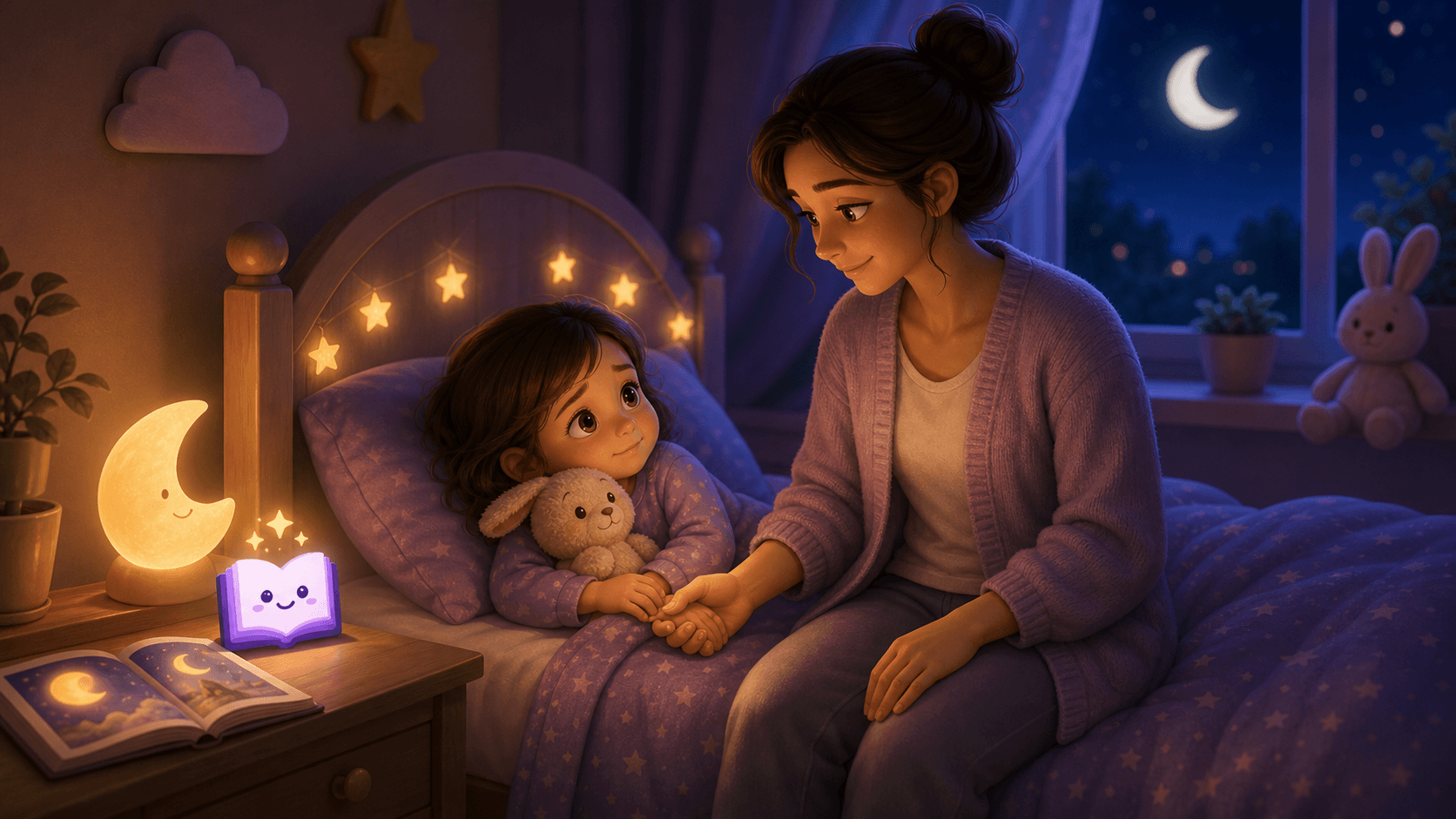
A bedtime story can become a powerful positive sleep association because it is calm, predictable, and emotionally comforting.
A good bedtime story helps children:
- slow down after a busy day
- feel connected to a parent or caregiver
- transition from play into rest
- focus on one gentle narrative
- understand that bedtime is coming next
Unlike rocking or feeding, a bedtime story has a natural ending.
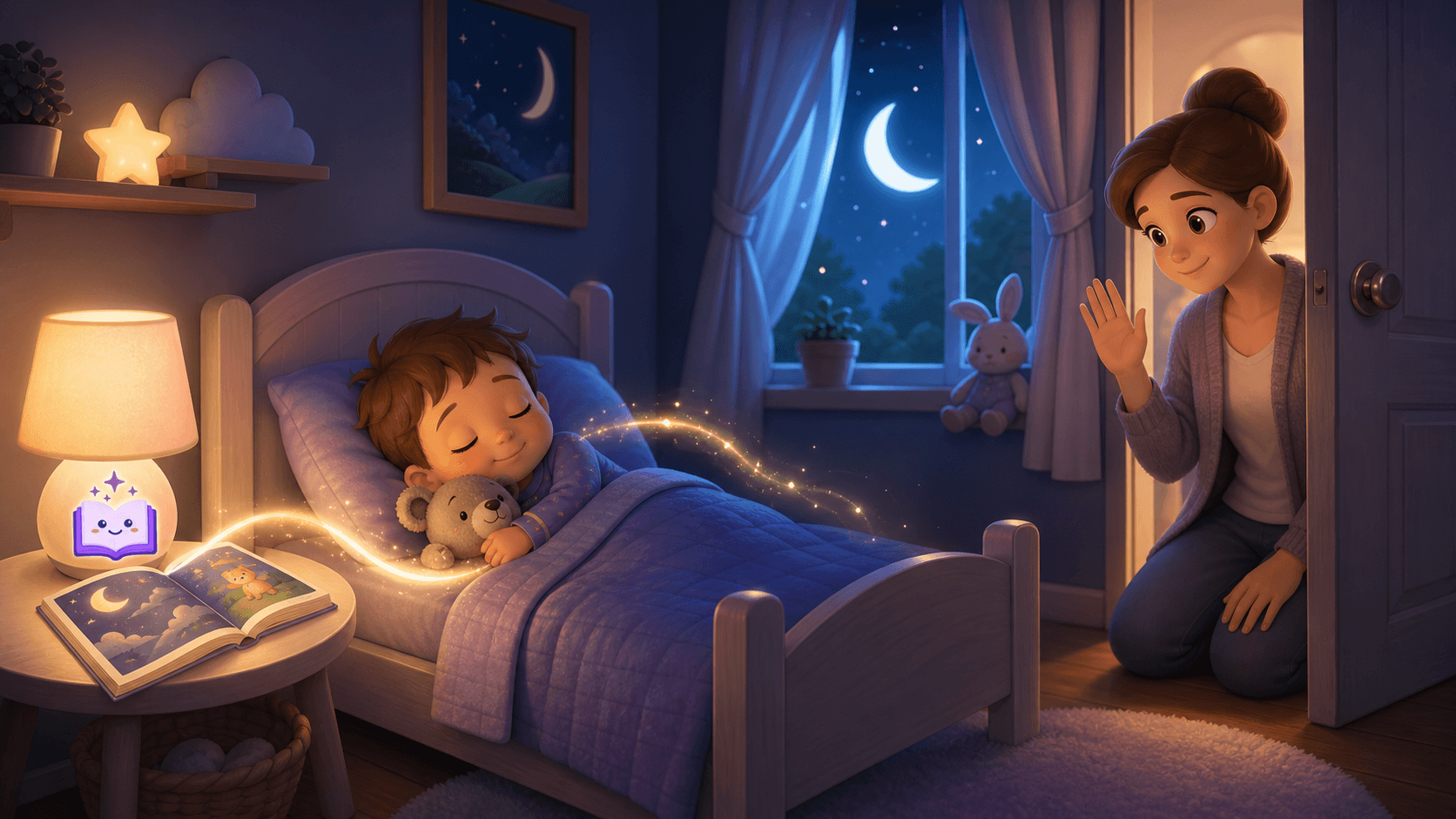
That ending helps children move from connection into sleep without needing the parent to continue the same action throughout the night.
This is one reason bedtime stories often become an important part of a healthy bedtime routine.
Sleep Associations and Night Wakings
Night wakings are normal.
Children, like adults, move through lighter and deeper sleep stages during the night.
The challenge happens when a child wakes briefly and cannot fall back asleep without the same condition they had at bedtime.
For example:
- if they fell asleep being rocked, they may need rocking again
- if they fell asleep nursing, they may want nursing again
- if they fell asleep with a calm bedtime routine, they may find it easier to settle
The goal is not to remove all comfort.
The goal is to build sleep cues that feel safe, predictable, and sustainable.
How to Create a Healthy Sleep Association
A healthy sleep association should feel simple, calming, and repeatable.
Good examples include:
- dimming the lights
- reading one bedtime story
- using the same calming phrase each night
- playing soft white noise
- cuddling briefly before sleep
- saying goodnight in the same order
The key is consistency.
Children usually respond best when the same bedtime cues happen in the same order every night.
How to Change a Sleep Association
Changing a sleep association usually works best gradually.
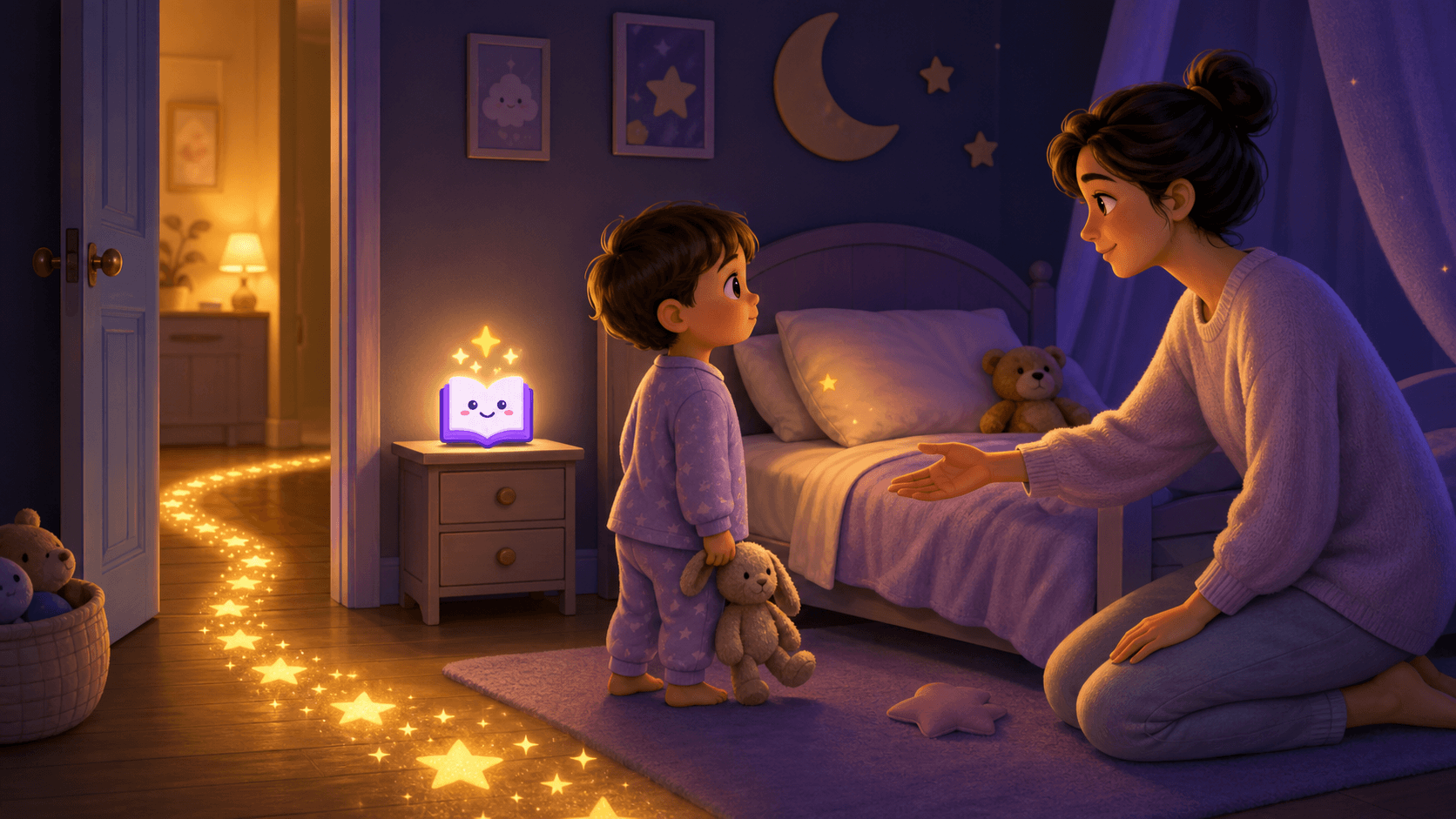
Instead of suddenly removing the old sleep cue, many parents introduce a new calming cue first.
For example, you might:
- keep the usual bedtime comfort
- add a calming bedtime story every night
- slowly reduce the parent-dependent part
- keep the story and routine consistent
Over time, the new bedtime routine becomes more familiar and trusted.
Sleep Association vs Bedtime Routine
A sleep association is one cue the child connects with sleep.
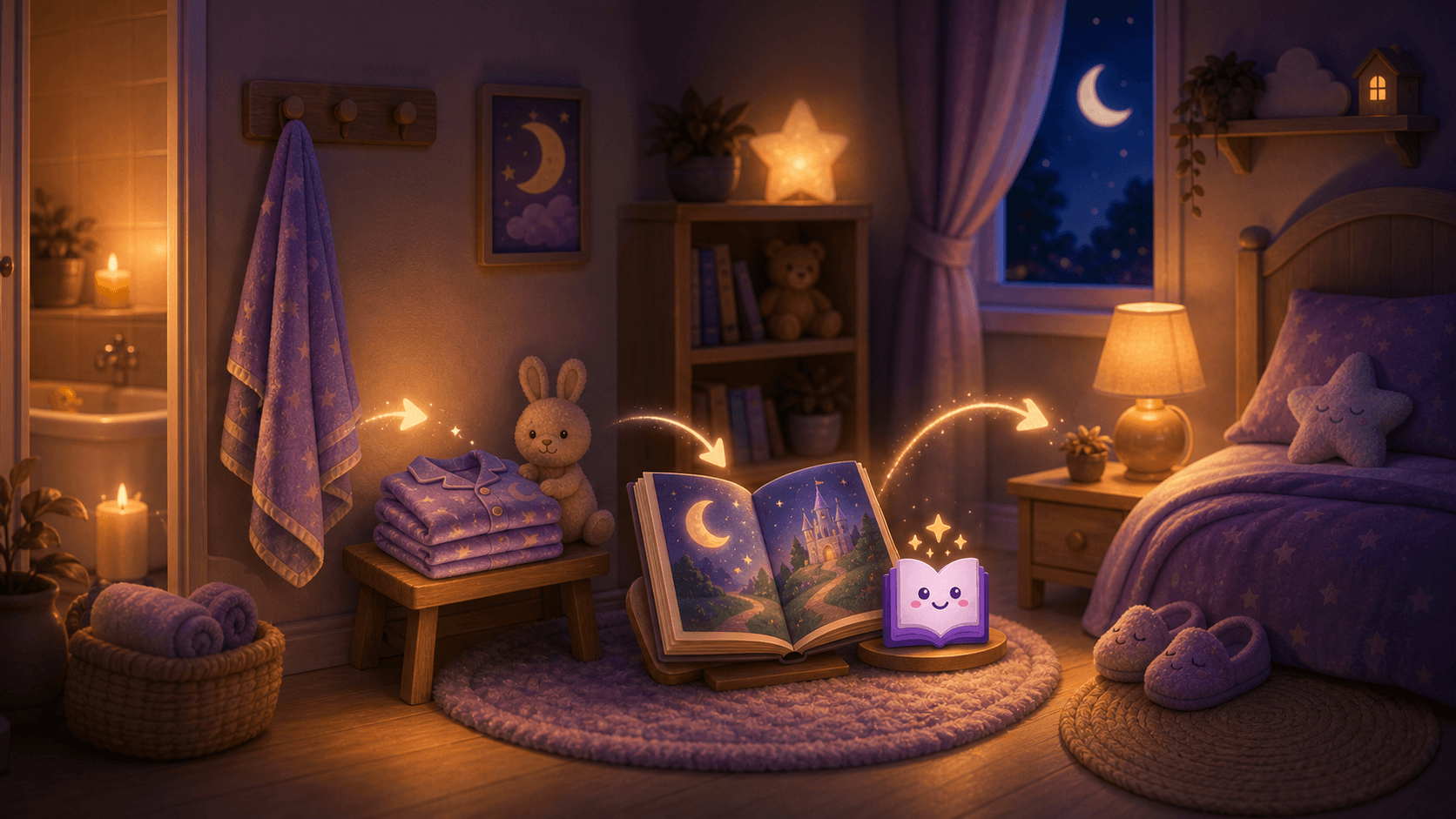
A bedtime routine is the full sequence of calming steps before bedtime.
For example:
- bath
- pajamas
- brushing teeth
- bedtime story
- cuddle
- lights out
Together, these steps create a strong and predictable sleep signal.
The bedtime story may be one sleep association inside the larger bedtime routine.