What Is Self-Settling?
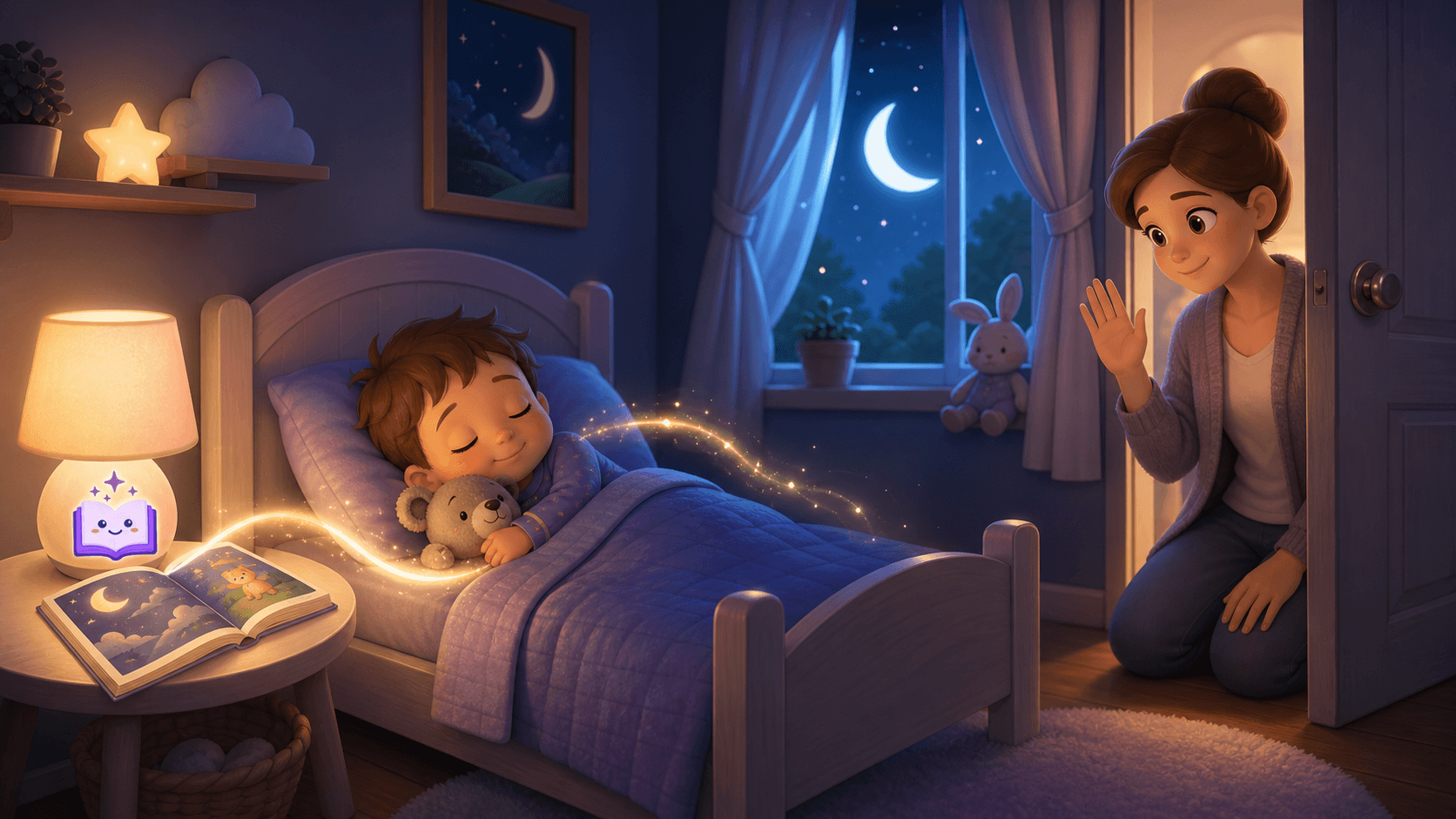
Self-settling is a child's ability to fall asleep or return to sleep independently during natural night wakings.
It does not mean a child never needs comfort or emotional support.
Instead, self-settling describes the gradual ability to feel safe enough to transition back into sleep without needing the exact same help every time.
How Self-Settling Develops
Self-settling develops gradually through repetition, emotional safety, and predictable bedtime routines.
Children are more likely to self-settle when they:
- feel calm before sleep
- have a consistent bedtime routine
- experience predictable sleep cues
- feel emotionally secure
- practice falling asleep under similar conditions each night
This process looks different for every child.
Some children develop self-settling skills quickly, while others need more support and reassurance over time.
Self-Settling vs Sleep Training
Self-settling and sleep training are not exactly the same thing.
Sleep training refers to broader methods used to improve sleep habits.
Self-settling specifically refers to the ability to return to sleep with less outside help during natural night wakings.
Many parents support self-settling gently through calm bedtime routines rather than strict sleep-training approaches.
How Bedtime Stories Support Self-Settling
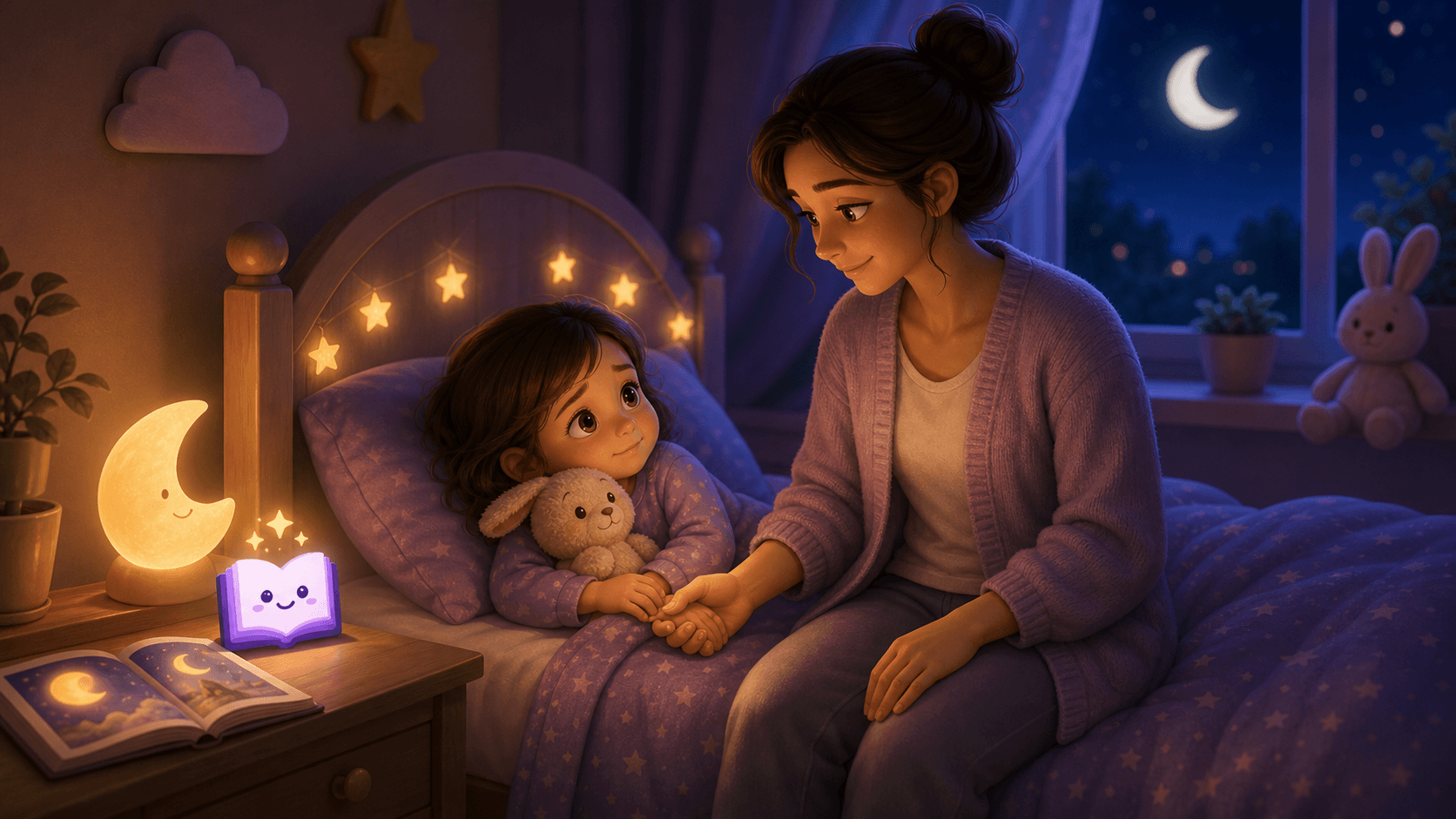
Bedtime stories can support self-settling because they create emotional predictability before sleep.
A familiar bedtime story helps children:
- slow down emotionally
- focus attention calmly
- connect bedtime with safety and comfort
- transition gradually into sleep
Over time, the bedtime story itself can become a trusted sleep cue connected with calmness, safety, and rest.
Personalized bedtime stories may feel especially comforting because children recognize familiar people, emotions, and experiences inside the story.