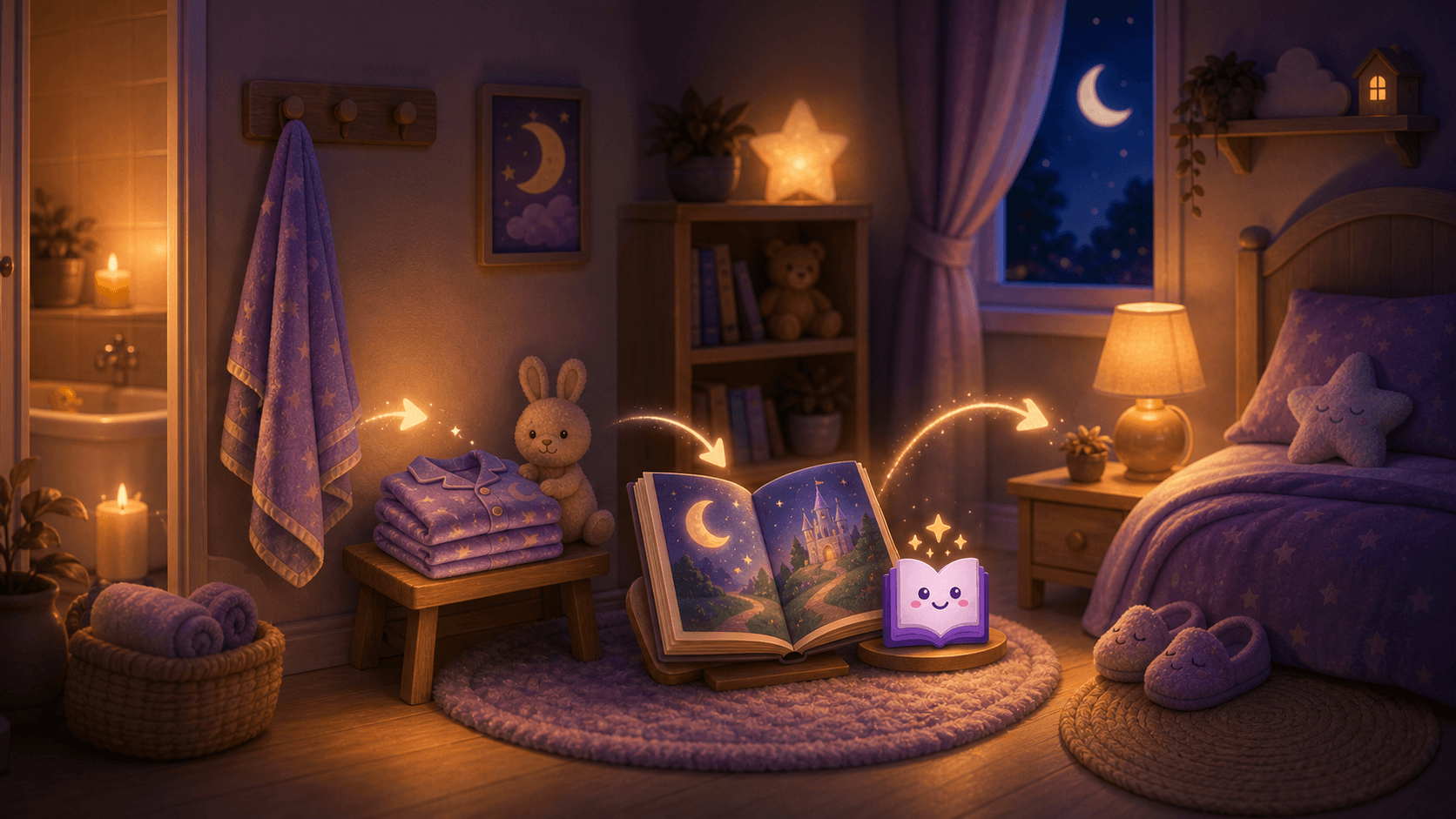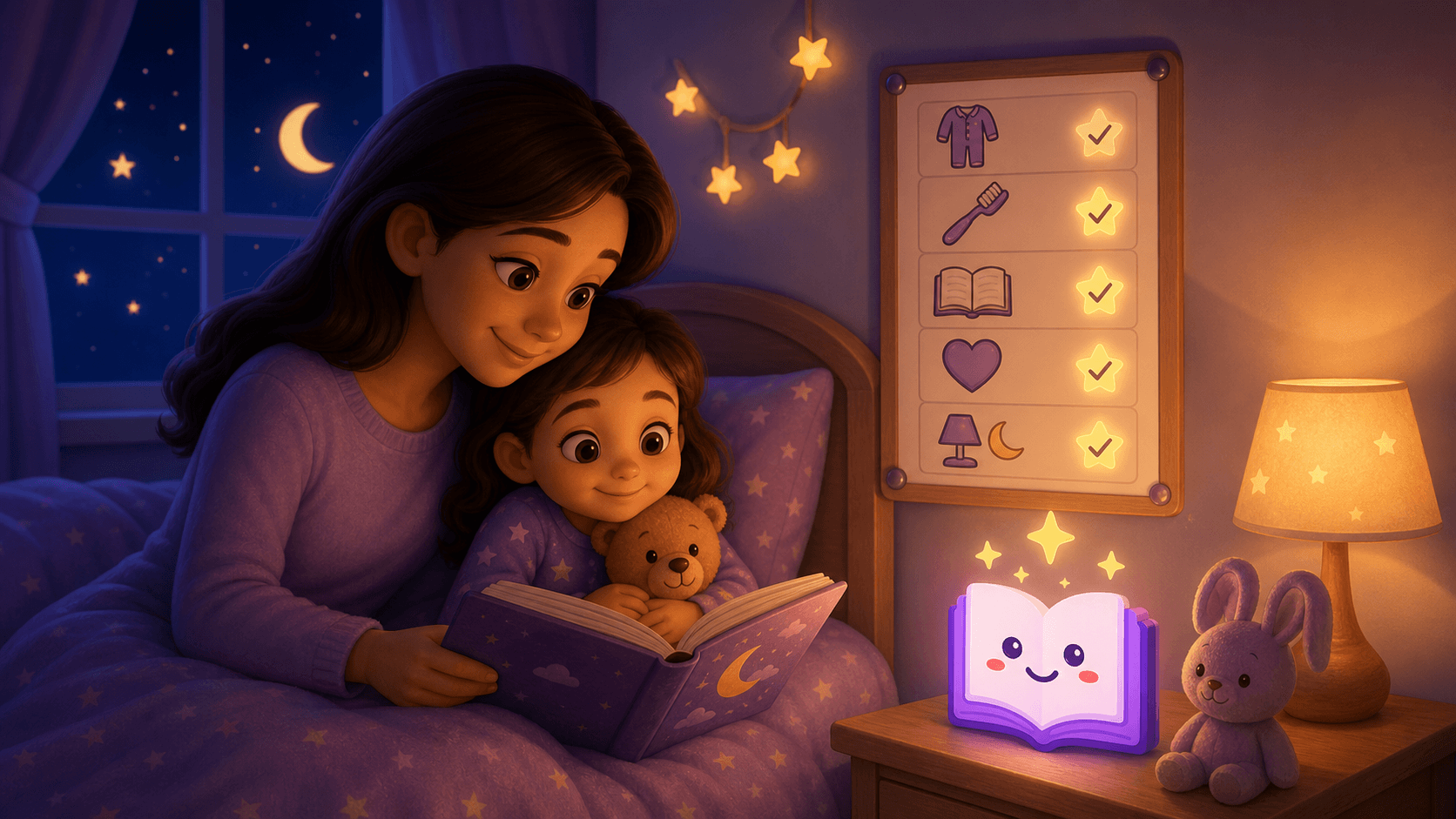
A kids bedtime routine checklist is a short, repeatable sequence of calming steps that helps children move from busy evening energy to sleep. The strongest checklist is simple: screens off, wash, pajamas, teeth, one story, connection, goodnight phrase, and lights out.
Bedtime routines fail when they become too complicated.
Children do not need a perfect evening system. They need the same safe pattern enough nights in a row that their body starts to recognize it.
This checklist gives parents a practical routine to use tonight, plus age adjustments, scripts, and story ideas that fit naturally into the last part of the day.
Quick Checklist
Use this as the default order:
| Step | What to do | Why it helps |
|---|---|---|
| 1 | Screens off | Reduces stimulation and bargaining |
| 2 | Dim lights | Signals the day is slowing down |
| 3 | Bathroom or bath | Clears practical delays |
| 4 | Pajamas | Starts the sleep sequence |
| 5 | Brush teeth | Creates a non-negotiable anchor |
| 6 | One bedtime story | Adds connection and calm focus |
| 7 | Cuddle or check-in | Meets emotional needs before goodbye |
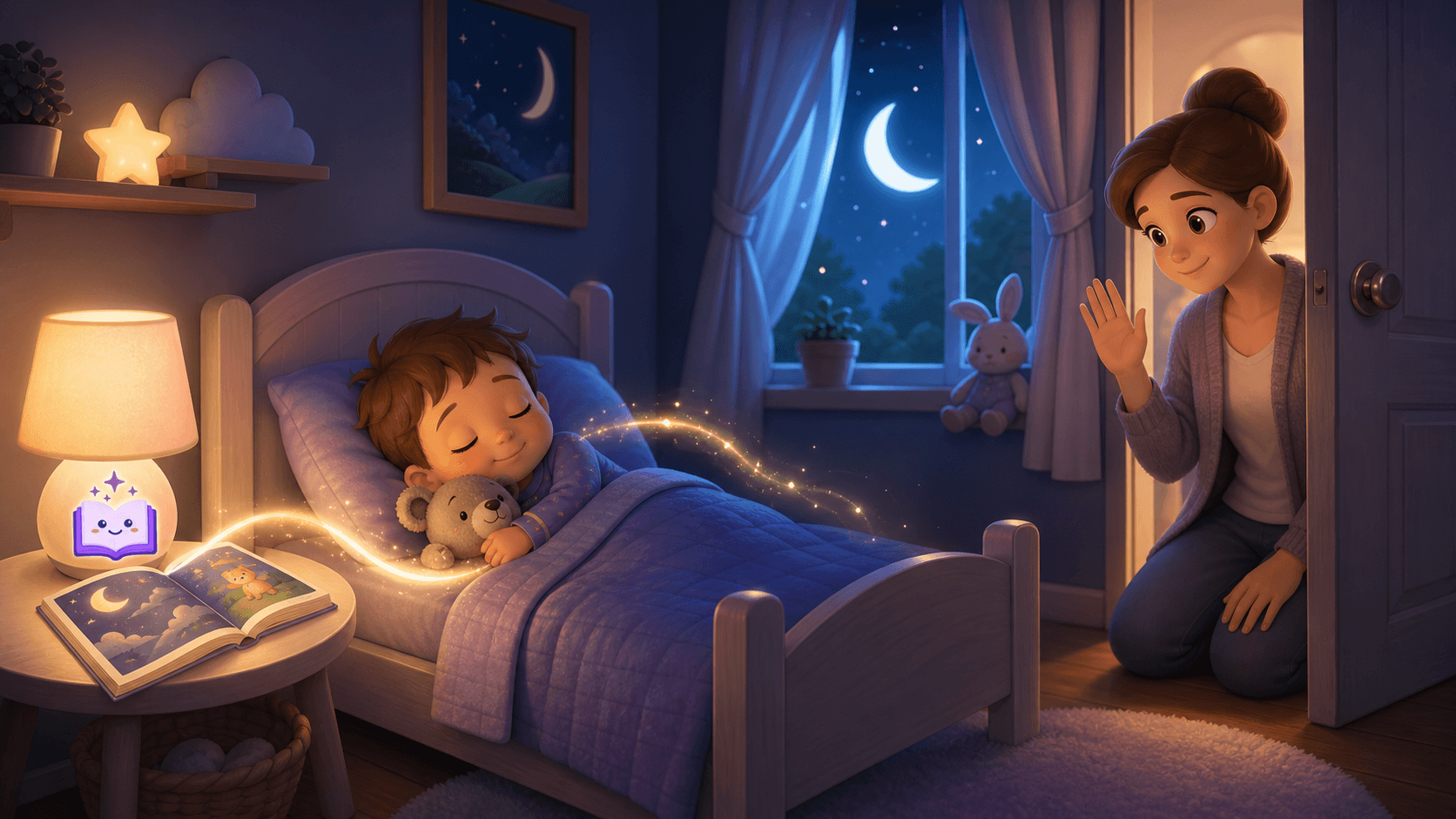
| 8 | Goodnight phrase | Repeats the same sleep cue |
| 9 | Lights out | Ends the routine clearly |
If your current routine is messy, do not add more steps. Make the existing steps easier to repeat. For age-specific timing, use the bedtime routine chart by age.
Why a Checklist Helps
A bedtime routine works because children feel safer when they know what comes next.
Predictable steps reduce negotiation. They also make bedtime less dependent on parent mood, child mood, or how busy the day was.
The American Academy of Pediatrics' Brush, Book, Bed guidance uses a simple pattern: brush teeth, read together, then get to bed at a regular time. That is the spirit of a good checklist. Clear, repeatable, and not overbuilt.
The 20-Minute Bedtime Routine
Start here if bedtime feels chaotic.
| Minute | Step |
|---|---|
| 0 | Screens off and devices away |
| 1-5 | Bathroom, wash, pajamas |
| 5-8 | Brush teeth |
| 8-15 | One calming bedtime story |
| 15-18 | Cuddle, recap one good thing from the day |
| 18-20 | Goodnight phrase and lights out |
Short routines are easier to protect. Once the child trusts the pattern, you can expand it.
The 45-Minute Bedtime Routine
Use this for children who need more transition time.
| Time before bed | Step |
|---|---|
| 45 minutes | Screens off, lights lower |
| 40 minutes | Quiet play, drawing, or bath |
| 25 minutes | Pajamas, teeth, bathroom |
| 15 minutes | One story or one chapter |
| 5 minutes | Cuddle, phrase, lights out |
Keep the last 15 minutes nearly identical every night. The final stretch matters most because it becomes the strongest sleep cue.
Checklist by Age
| Age | Routine focus | Story length |
|---|---|---|
| 2-3 | Repetition, simple choices, parent closeness | 2-5 minutes |
| 4-5 | Predictable order and one clear ending | 5-8 minutes |
| 6-8 | More independence with the same sequence | 8-12 minutes |
| 9-10 | Quiet reading, journaling, or one chapter | 10-15 minutes |
For younger children, give two choices:
Pajamas first or teeth first?
Avoid open-ended choices:
What do you want to do now?
Bedtime needs small choices inside a parent-led structure.
Where the Story Fits
The story should come after the practical tasks and before the final goodbye.
That order matters.
If the story happens before teeth or pajamas, the calm often gets interrupted. If the story happens after repeated delays, it can become a reward for stalling.
Use one story as the bridge from doing to resting.
Good options:
- Bedtime Stories for Kids
- Calming Bedtime Stories for Kids
- Bedtime Story Prompts for Kids
- Personalized Bedtime Story Examples
Screen-Free Checklist
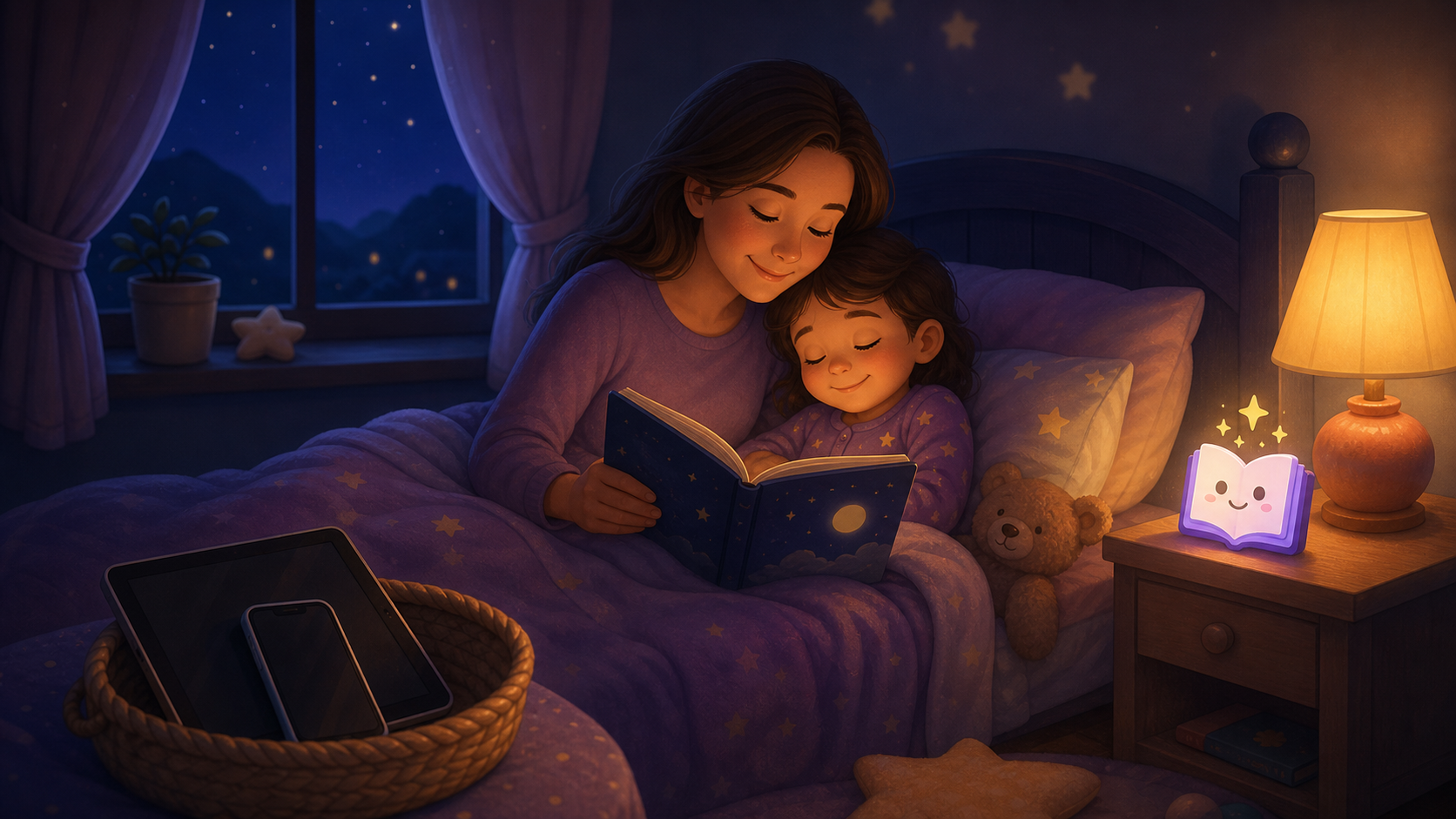
A screen-free bedtime routine usually works better when the device leaves before the child is exhausted.
Use this sequence:
- Device charges outside the bedroom.
- Child gets one short warning.
- Parent offers the next step immediately.
- The routine continues without renegotiating screens.
The AAP recommends avoiding screens for at least 1 hour before bedtime and keeping devices out of children's bedrooms at night. If 60 minutes feels too hard, start with a reliable 20-minute screen-free routine and move earlier as the habit settles.
Scripts for Common Delays
| Child says | Parent script |
|---|---|
| "One more show." | "Screens are done. Now pajamas, teeth, story." |
| "One more story." | "We read one story. Story is done. Sleep time." |
| "I'm not tired." | "You do not have to sleep yet. You do need to rest in bed." |
| "Stay forever." | "I will check on you. You are safe. It is sleep time." |
| "I'm scared." | "I hear you. Let's check the room, then use our goodnight phrase." |
Short scripts work better than bedtime debates.
Printable-Style Checklist
Copy this into your own family routine:
- Screens off
- Lights low
- Bathroom
- Pajamas
- Teeth
- One calm story
- Cuddle or quick check-in
- Goodnight phrase
- Lights out
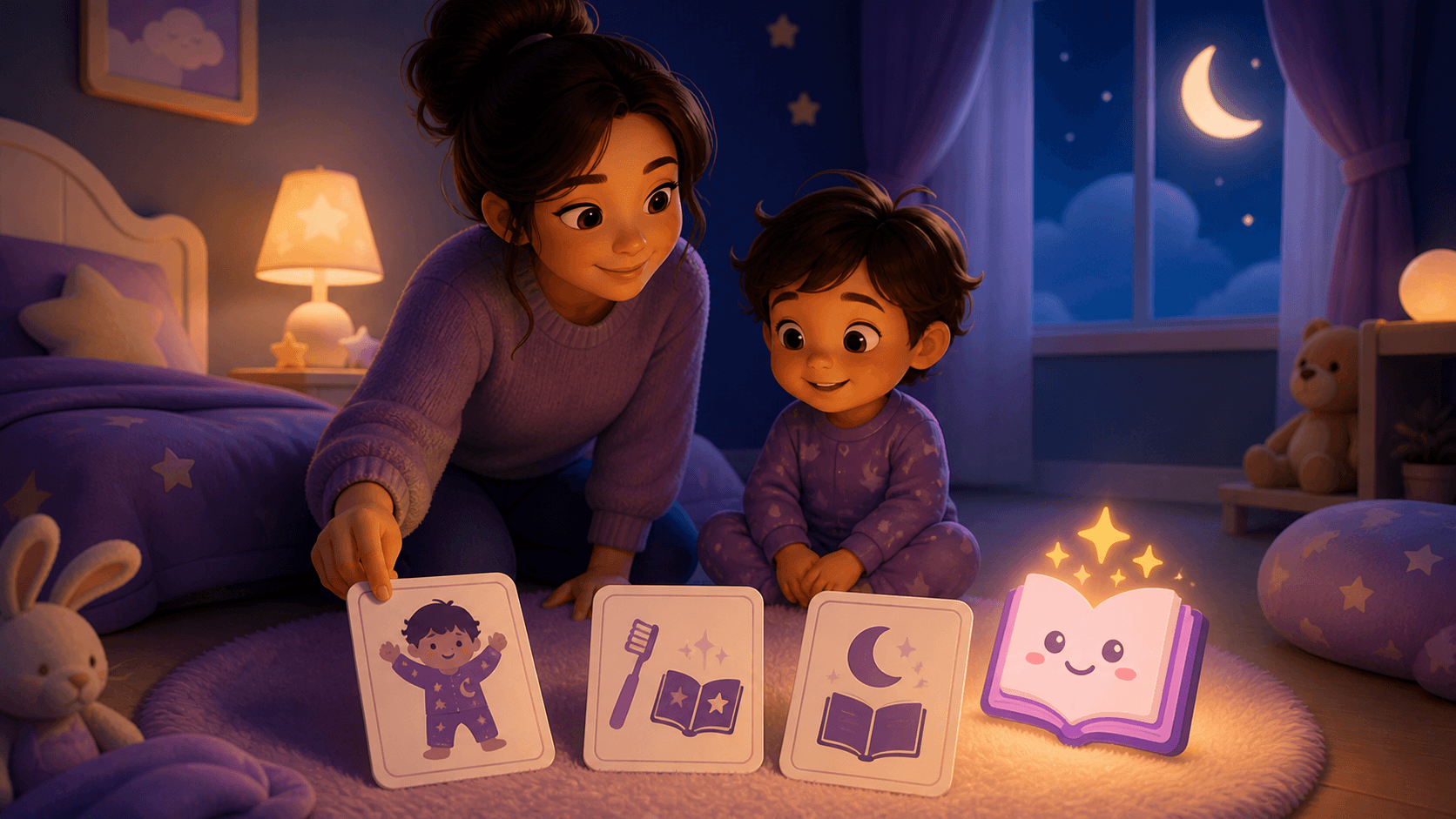
For children who like visual routines, draw one small icon next to each step. Let the child point to the next step instead of renegotiating it.
When the Checklist Does Not Work
If a checklist fails, the problem is usually one of these:
| Problem | Fix |
|---|---|
| Routine starts too late | Begin 15 minutes earlier |
| Too many choices | Offer two controlled choices |
| Screens end too close to bed | Move cutoff earlier |
| Parent leaves too abruptly | Add a predictable check-in |
| Child is anxious | Use a reassurance story and slower withdrawal |
| Child keeps getting up | Repeat the same return script |
For parent-dependent sleep, read Child Won't Sleep Without Parent. For repeated leaving, read Toddler Keeps Getting Out of Bed.
Final Takeaway
A kids bedtime routine checklist should make bedtime smaller, calmer, and more predictable.
Keep the same order. Put screens away early. Use one gentle story. End with the same phrase.
The checklist is not there to control every minute.
It is there to help the child feel, night after night, that sleep follows a path they already know.