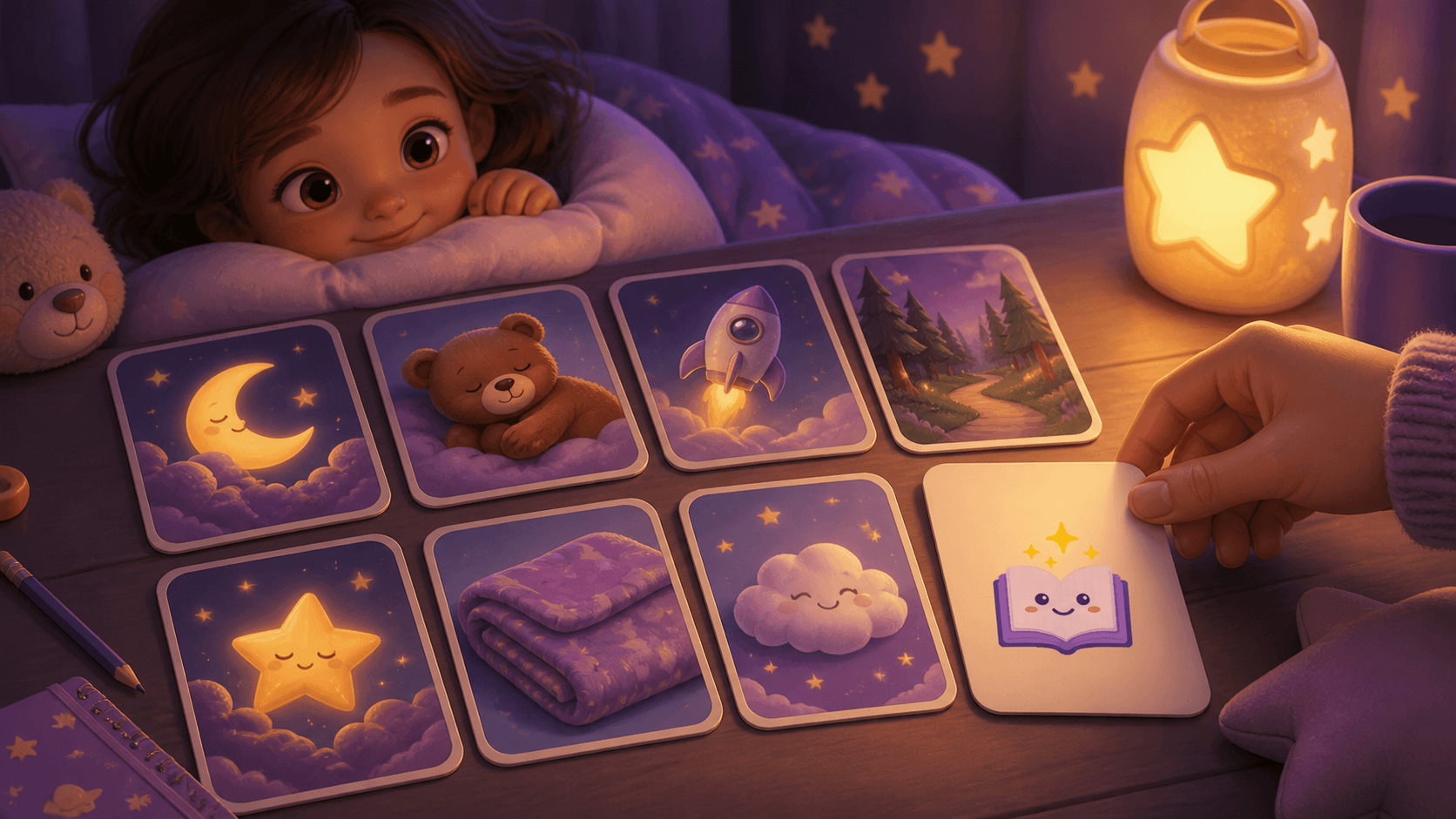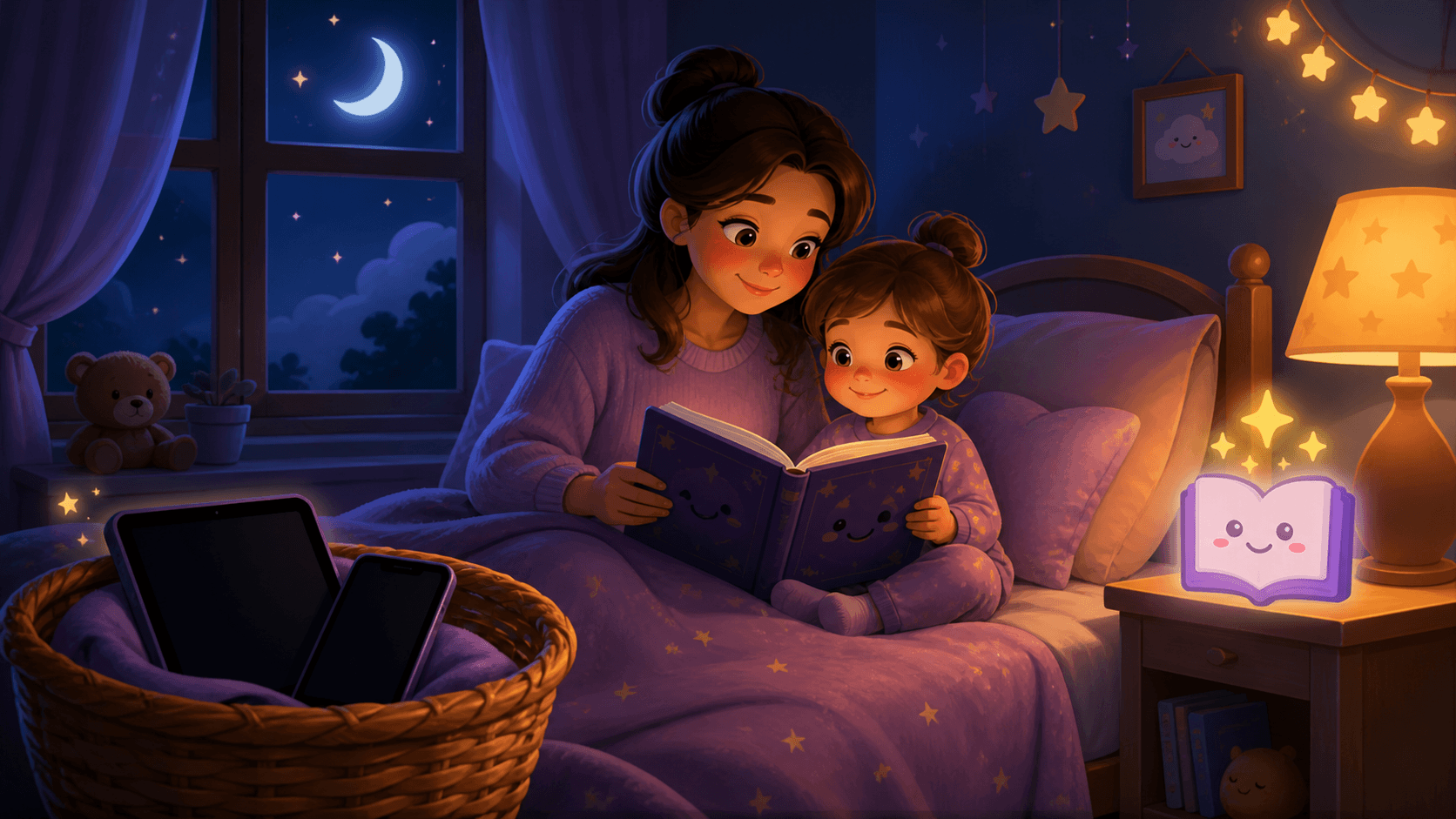
A screen-free bedtime routine for kids replaces tablets, TV, phones, and games with predictable calming activities before sleep. The goal is not to make bedtime boring. The goal is to make the last part of the day easier for a child's body and brain to exit.
Screens are powerful because they offer color, control, novelty, and one more thing.
Bedtime needs the opposite.
It needs fewer choices, softer light, slower rhythm, and a clear end.
This guide gives you 30 screen-free bedtime ideas and a 7-night plan for moving from screen battles to a calmer story-led routine.
Quick Screen-Free Routine
Try this sequence for one week:
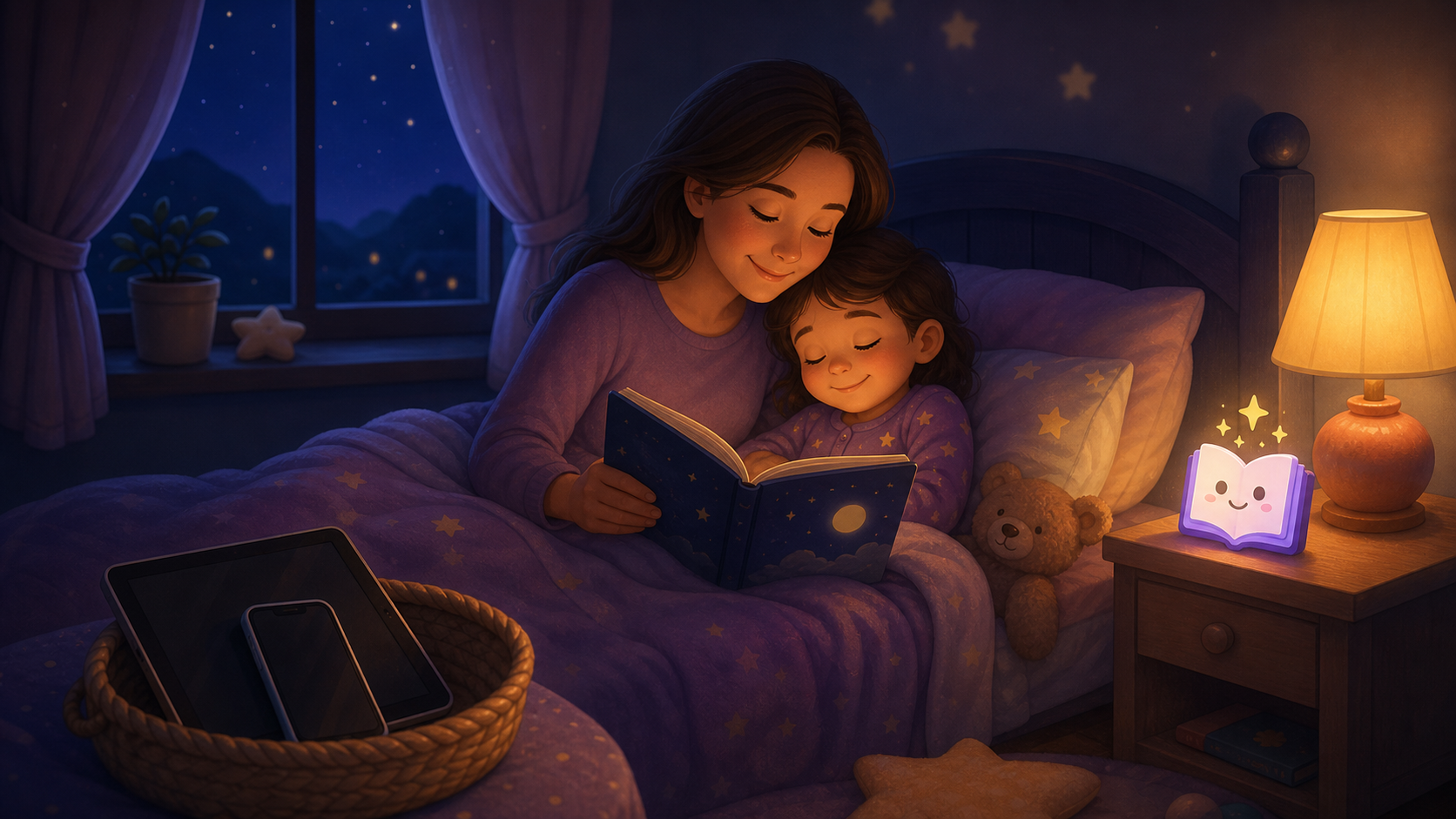
- Screens off and charging outside the bedroom.
- Lights dim.
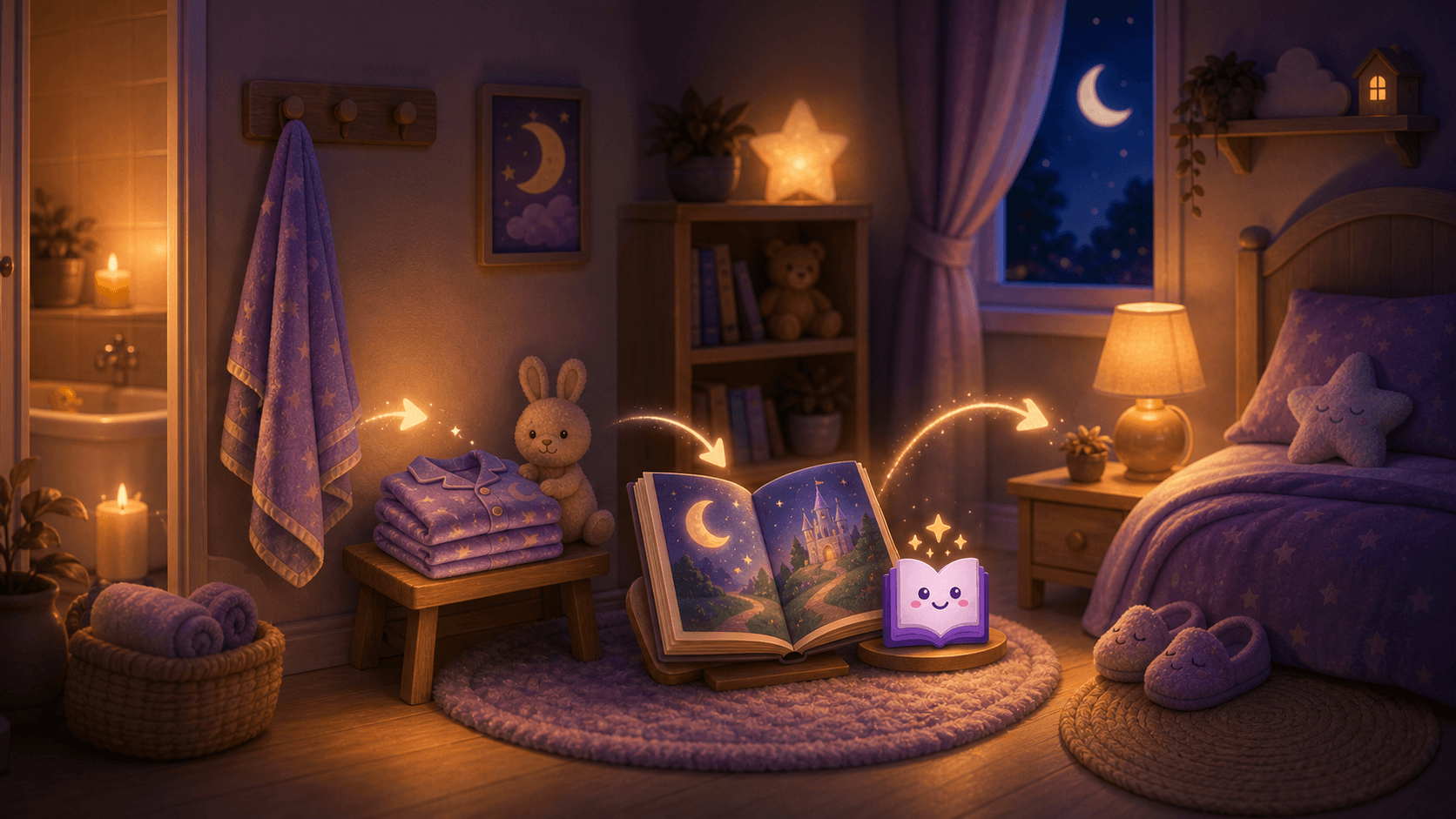
- Bathroom, pajamas, teeth.
- One quiet activity.
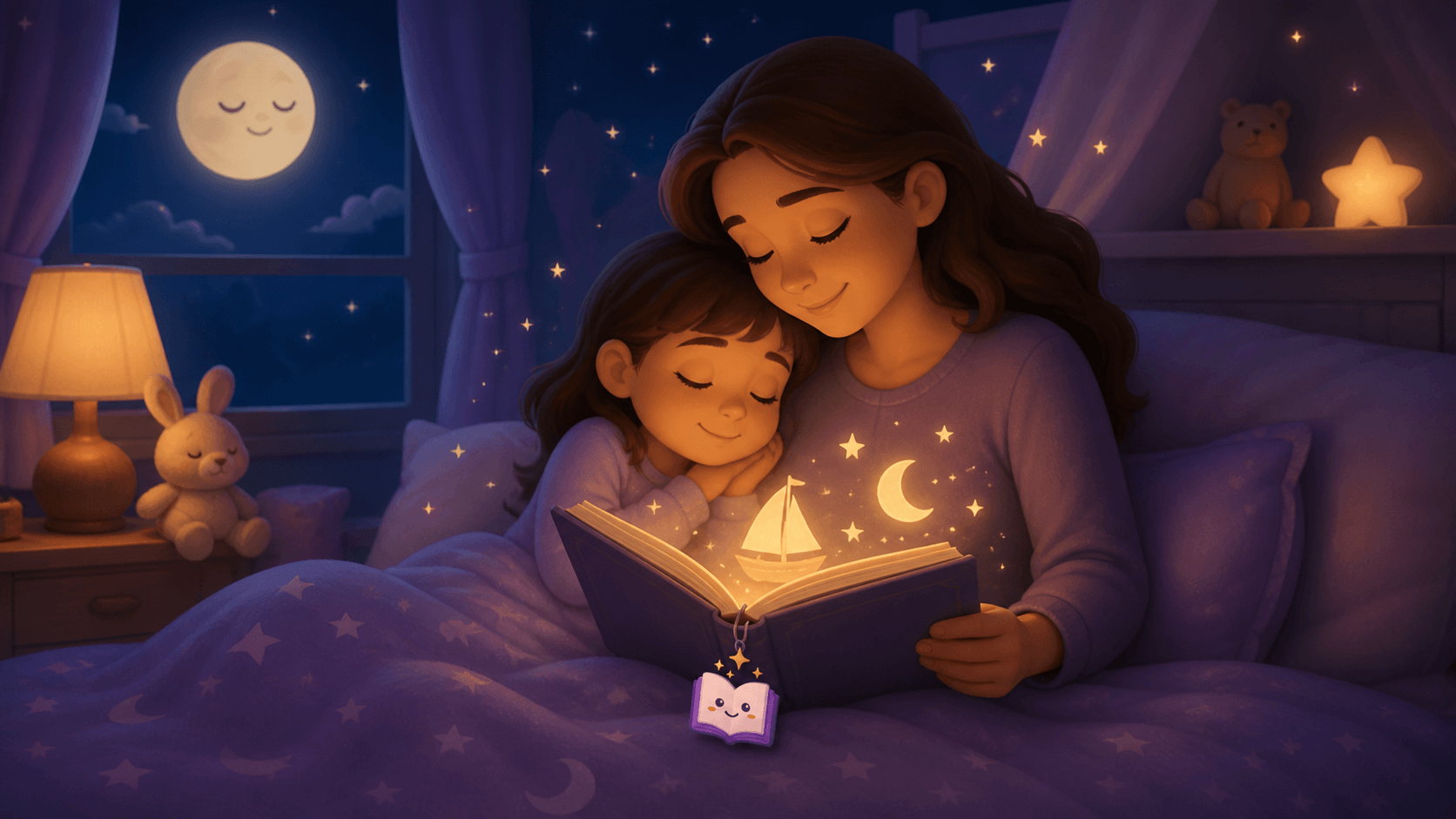
- One calming bedtime story.
- Cuddle or check-in.
- Same goodnight phrase.
- Lights out.
If your child currently uses screens until bed, start with 20 minutes screen-free and work toward 60.
Why Screen-Free Bedtime Helps
A screen-free bedtime routine gives children a predictable wind-down window.
The American Academy of Pediatrics explains that screens can make children more alert before sleep and recommends avoiding screens for 1 hour before bedtime. HealthyChildren.org also recommends keeping screens out of children's bedrooms at night.
For parents, the practical takeaway is this:
Do not only remove the screen. Replace it with a routine the child can recognize.
30 Screen-Free Bedtime Ideas
Use two or three ideas per night. Too many activities can make bedtime longer.
| Idea | Best for | Keep it calm by |
|---|---|---|
| Read one picture book | Ages 2-6 | Let the child choose from two books |
| Read one chapter | Ages 6+ | Stop at a planned page |
| Make up a story | All ages | Use a gentle ending |
| Personalized story | Ages 3+ | Include familiar safe details |
| Draw tomorrow's dream | Ages 4+ | Use soft colors and a time limit |
| Choose pajamas | Toddlers and preschoolers | Offer two choices |
| Pack tomorrow's bag | School-age children | Keep it practical and short |
| Pick tomorrow's clothes | Ages 4+ | Avoid fashion debates at bedtime |
| Brush teeth song | Young children | Use the same short song |
| Goodnight room walk | Ages 2-5 | Say goodnight to 5 objects |
| Gratitude question | Ages 4+ | Ask for one good thing |
| Worry basket | Anxious children | Put worries away until morning |
| Stretching | School-age children | Use three slow stretches |
| Quiet music | Some children | Keep volume low |
| Low-light puzzle | Ages 4+ | Choose an easy puzzle |
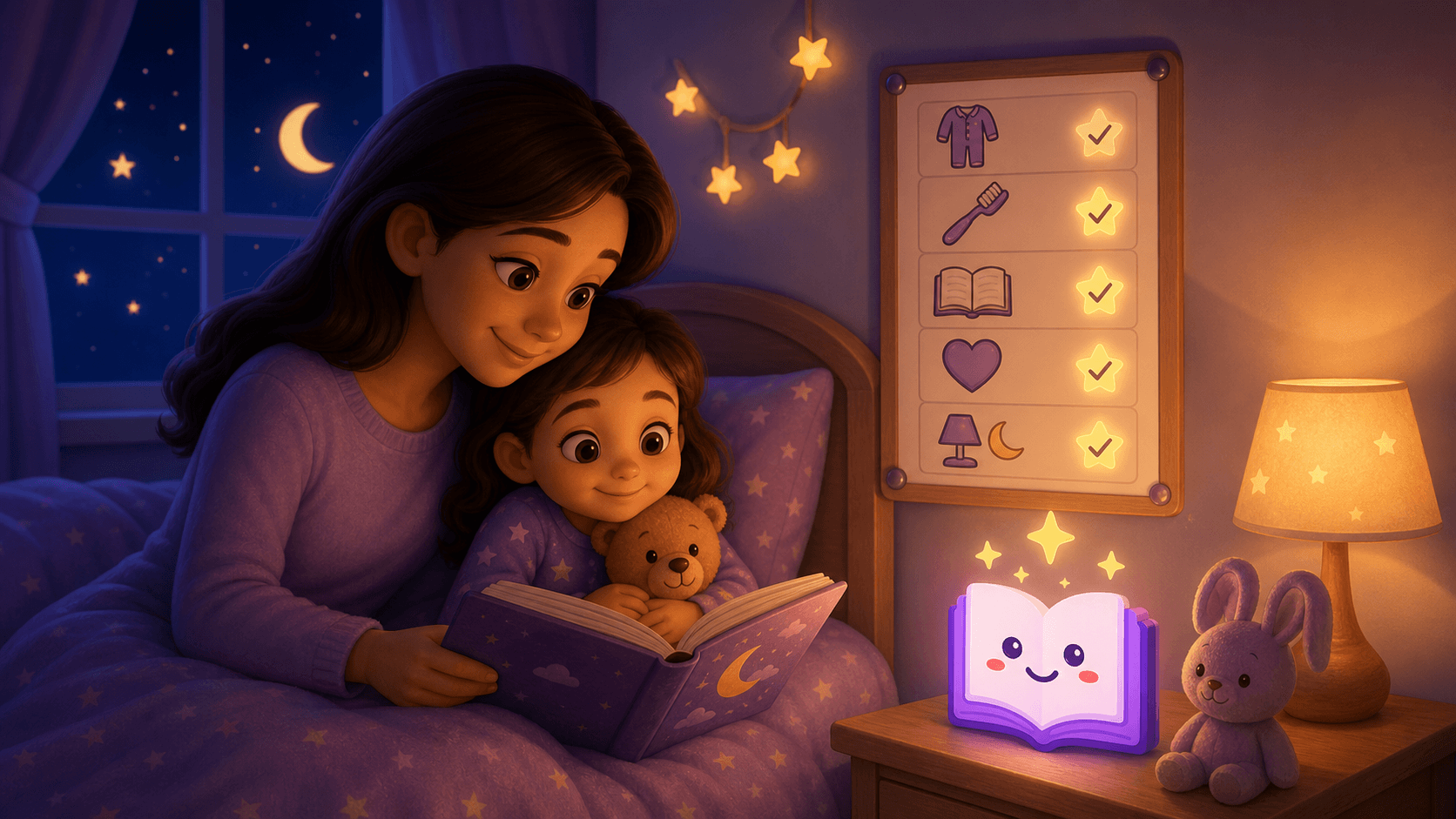
| Sticker routine chart | Ages 3-7 | Reward consistency, not perfection |
| Breathing story | Ages 4+ | Pair breaths with story rhythm |
| Bath | Many children | Keep play gentle |
| Warm drink | Older children | Avoid caffeine and sugar |
| Room reset | Ages 5+ | Put away only 5 items |
| Story prompt choice | Ages 4+ | Let child choose theme, parent controls tone |
| Comfort object check | Young children | Same object each night |
| Nightlight check | Anxious children | One check, then done |
| Family read-aloud | Siblings | One shared story |
| Audio story | Some children | Device out of reach |
| Quiet Lego or blocks | Some children | Set a timer |
| Prayer or reflection | Families who use it | Keep wording familiar |
| Parent check-in | Parent-dependent sleepers | Make the check-in predictable |
| Lights-out phrase | All ages | Repeat exactly |
| Morning promise | Anxious children | "We will talk more tomorrow" |
What to Use Instead of "One More Episode"
Screens often win because they are easy.
Prepare the replacement before the cutoff:
| If child wants | Offer |
|---|---|
| One more episode | One short story |
| More game time | One low-light drawing |
| More videos | A read-aloud story |
| Scrolling in bed | Quiet book in bed |
| Phone nearby | Device charging outside the room |
For story-based replacements, try Bedtime Stories for Kids or Calming Bedtime Stories for Kids.
A 7-Night Screen-Free Reset
Night 1: Move the cutoff earlier
Choose a realistic cutoff. If the current cutoff is lights out, move it 20 minutes earlier.
Night 2: Create a device home
Pick one charging spot outside the bedroom. Do not rely on willpower at the bedside.
Night 3: Add one story bridge
Use one calm story after teeth. Keep the ending clear.
Night 4: Reduce choices
Offer two options:
Do you want the moon story or the cozy-room story?
Night 5: Repeat the same phrase
Use one lights-out phrase word for word.
Night 6: Hold the boundary
Expect a request for screens. Repeat the script calmly.
Night 7: Review what worked
Keep the pieces that made bedtime calmer. Remove anything that made bedtime longer.
Parent Scripts
| Situation | Script |
|---|---|
| Child asks for more screen time | "Screens are done. Now story." |
| Child says it is unfair | "I hear you. Screens charge outside bedrooms at bedtime." |
| Child refuses story | "You can listen or rest quietly. Screens are still done." |
| Child wants the device nearby | "The device sleeps in the kitchen. You sleep in your bed." |
| Child delays after story | "Story is done. It is rest time." |
Scripts should be calm, short, and boring.
Where AI Stories Fit
An AI bedtime story generator can help if the parent chooses the story before the final wind-down and reads it aloud without turning bedtime into a browsing session.
Good use:
- create the story before pajamas
- keep it under 10 minutes
- include a calm story goal
- avoid cliffhangers
- end with the child safe and sleepy
Poor use:
- generating stories in bed
- letting the child keep changing prompts
- reading from a bright phone inches from the child
- choosing intense themes close to sleep
For better prompts, use Bedtime Story Prompts for Kids.
Final Takeaway
A screen-free bedtime routine works best when it feels like a replacement, not a punishment.
Move the device away. Make the next step obvious. Use one calm story. End the same way every night.
The less interactive bedtime becomes, the easier it is for sleep to arrive.