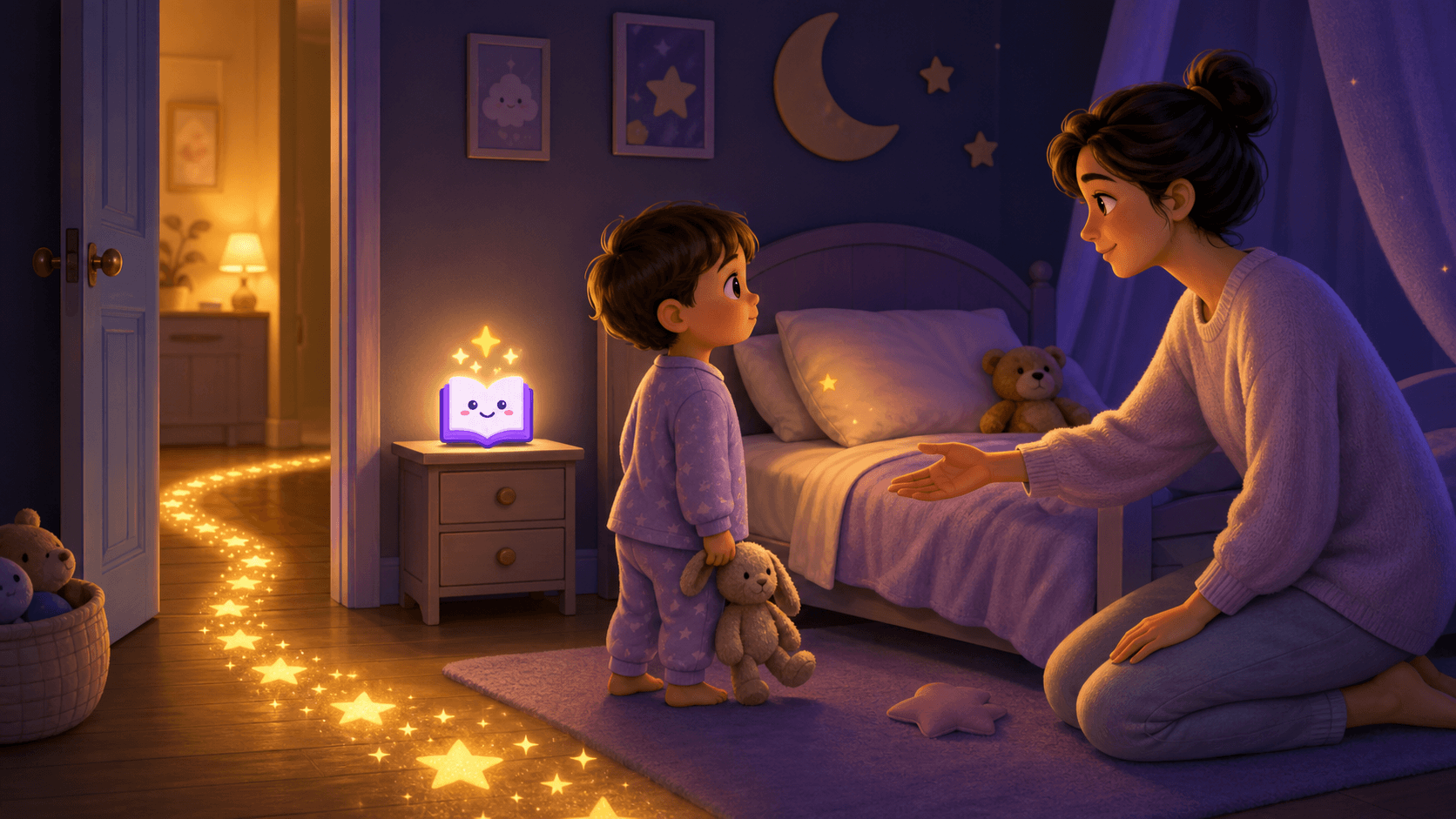
If your toddler keeps getting out of bed, respond with a calm, repeated return-to-bed routine: same words, same action, no extra negotiation. The fix usually starts before lights out, with a predictable routine, enough connection, a clear final story, and realistic sleep timing.
The first few bed exits can feel almost funny.
Then it becomes water, toilet, teddy, one more hug, "I forgot something," and a small person appearing in the hallway every six minutes.
This pattern is common in toddlerhood. It is also exhausting.
The goal is not to scare a toddler into staying in bed. The goal is to make bedtime predictable enough that getting out of bed stops being the most interesting option.
Quick Plan
Use this plan for one to two weeks:
- Start wind-down earlier.
- Build connection into the routine before lights out.
- Decide the final story in advance.
- Do water, toilet, cuddle, and check-in before the goodnight.
- Use the same short phrase every time your toddler gets out.
- Return them calmly with minimal attention.
- Repeat without changing the rules.
The first nights may involve many returns. That does not mean the plan is failing. It often means your toddler is learning whether the new pattern is real.
Why Toddlers Keep Getting Out of Bed
Repeated bed exits usually come from one of these drivers:
| Driver | What it looks like | What helps |
|---|---|---|
| Bedtime resistance | Refusal, leaving bed, arguing | Predictable routine and calm limits |
| Bedtime procrastination | Water, toilet, hugs, questions | Pre-bed checklist and repeated phrase |
| Separation anxiety | Distress when parent leaves | Gradual reassurance and connection |
| Overtiredness | Wired, emotional, frantic exits | Earlier bedtime and longer wind-down |
| Undertiredness | Playful, calm exits | Adjust nap or bedtime timing |
| Sleep association | Needs parent nearby to fall asleep | Shift toward independent sleep cues |
If the exits are mostly playful, timing or limits may be the issue. If they are tearful or panicked, anxiety or separation may be driving the pattern.
Step 1: Build the "No More Requests" Checklist
Many toddlers leave bed because something in the routine feels unfinished.
Before lights out, cover the predictable requests:
- bathroom or potty
- sip of water
- favorite stuffed toy
- blanket
- short cuddle
- one bedtime story
- room check if needed
- goodnight phrase
Say it clearly:
We did potty, water, story, cuddle, and teddy. Now it is sleep time.
This helps because you are not refusing connection. You are showing that connection already happened.
Step 2: Make the Bedtime Story the Endpoint
A story is useful because it creates a gentle finish line.
For toddlers who keep getting out of bed, choose a calming bedtime story that is:
- short
- repetitive
- not funny enough to restart play
- not scary
- easy to end
- followed by the same goodnight phrase
Example:
We read one story. Then we say, "You are safe. Teddy is here. It is sleep time."
The story should not become a bargaining chip for more stories. It should become the signal that bedtime is closing.
Step 3: Use the Same Return Phrase
When your toddler gets out of bed, keep your response boring and kind.
Try:
It is sleep time. Back to bed.
Or:
You are safe. I love you. It is sleep time.
Use the same phrase every time. Walk them back. Tuck briefly. Leave or return to your planned position.
Avoid:
- long explanations
- visible frustration
- new negotiations
- extra snacks
- extra stories
- big emotional reactions
Toddlers repeat what gets a strong response. Calm consistency teaches the new pattern faster than a different speech each time.
Step 4: Decide Whether It Is Anxiety or Limit Testing
The response changes depending on the reason.
| If it is anxiety | If it is limit testing |
|---|---|
| Child is distressed, clingy, fearful | Child is playful, bargaining, performing |
| Use more reassurance before lights out | Use firmer routine boundaries |
| Consider gradual parent withdrawal | Keep returns brief and boring |
| Add comfort object or nightlight | Avoid giving extra rewards |
For anxious children, pair this article with Bedtime Stories for Kids with Anxiety and separation anxiety at bedtime.
Step 5: Watch the Sleep Timing
Some toddlers leave bed because they are not actually ready to sleep.
Others leave bed because they are too tired to regulate.
Signs bedtime may be too late:
- wild energy
- crying over small things
- clumsiness
- frantic requests
- falling asleep very quickly after a long battle
Signs bedtime may be too early:
- calm playing
- no signs of sleepiness
- long happy chatter
- repeated exits without distress
If bedtime is consistently difficult, adjust by 15 minutes for several nights and watch what changes.
Step 6: Use a Gradual Door Plan
If your toddler panics when you leave, try a gradual plan instead of leaving abruptly.
| Nights | Parent position |
|---|---|
| 1-2 | Sit beside bed, quiet and boring |
| 3-4 | Sit near the middle of the room |
| 5-6 | Sit near the door |
| 7-8 | Sit outside the door with brief check-ins |
| 9+ | Goodnight phrase, leave, predictable return if needed |
This is similar to the approach in How to Get a Toddler to Sleep Alone.
What Not to Do
Try to avoid:
- turning each exit into a conversation
- restarting the bedtime routine
- adding new rewards after bed exits
- threatening or shaming
- suddenly removing all reassurance from an anxious child
- letting the toddler choose a new activity after lights out
Also avoid unsafe setups. If your toddler is climbing, wandering, or leaving the room in a way that creates danger, focus first on room safety and speak with a pediatrician or qualified sleep professional about safe boundaries.
A Simple Script
Before lights out:
We did potty, water, story, cuddle, and teddy. Now it is sleep time. If you get up, I will bring you back to bed.
After each exit:
It is sleep time. Back to bed.
At check-in:
You are safe. I am nearby. It is sleep time.
The script works because it is predictable. You are not improvising at 9:40 p.m. with a tired brain and a determined toddler.
When to Get Help
Speak with a pediatrician, GP, sleep professional, or child psychologist if:
- bedtime distress is intense or worsening
- your toddler is unsafe at night
- sleep disruption has lasted months
- there are breathing concerns, snoring, pain, reflux, or frequent illness
- parents are dangerously sleep deprived
- anxiety is also affecting daytime life
Bedtime boundaries matter, but safety and wellbeing come first.
Final Takeaway
When a toddler keeps getting out of bed, the solution is usually not one perfect trick.
It is a repeated pattern:
connection before lights out, one calm story, a clear endpoint, the same return phrase, and a boringly consistent response.
Toddlers learn through repetition.
Make the pattern kind, simple, and steady.