Calming bedtime stories for kids are short, predictable, emotionally safe stories that help the child slow down before sleep. The best ones use gentle conflict, familiar details, soft repetition, and a complete ending where the character is safe and ready to rest.
Not every children's story belongs at bedtime.
Some stories are wonderful at 4 p.m. and terrible at 8 p.m. They are too funny, too loud, too suspenseful, or too open-ended.
A calming bedtime story has a different job.
It helps the room become quieter.
Quick Answer
Choose a calming bedtime story with:
- a familiar or cozy setting
- one small problem
- kind characters
- slow language
- repeated phrases
- no scary scenes
- no cliffhanger
- a peaceful ending
If you are using an AI tool, say these instructions directly. AI does not always know that "kids story" means "sleepy bedtime story."
The Calming Story Formula
Use this structure:
- The character is in a safe place.
- One small problem appears.
- The character gets kind help or remembers what to do.
- The pace slows.
- The character returns to comfort.
- The ending clearly says the day is done.
This gives the story shape without turning it into a big adventure.
Calming vs Exciting Bedtime Stories
| Calming story | Exciting story |
|---|---|
| Slow beginning | Sudden action |
| Familiar setting | Dangerous place |
| Gentle problem | Big threat |
| Kind helper | Villain |
| Repetition | Surprise twist |
| Peaceful ending | Cliffhanger |
Exciting stories can be great earlier in the day. For bedtime, the story should lower energy, not raise it.
Good Calming Themes
Try themes like:
- saying goodnight to the room
- a child placing worries in a basket
- a cozy journey home
- a light helping the room feel familiar
- a character learning to rest
- a slow walk through a quiet place
- a blanket, pillow, or nightlight doing its bedtime job
- a parent-nearby story for separation worries
For anxious children, pair this with Bedtime Stories for Kids with Anxiety. If the fear is specifically about darkness, shadows, or being alone in the room, read Nighttime Fears in Children.
What to Avoid
Avoid:
- chases
- battles
- cliffhangers
- punishments
- sudden noises
- scary darkness
- unresolved conflict
- "one more chapter" endings
- intense jokes that restart play
Children often replay the most intense part of a story after lights out. Give their imagination something safe to replay.
A Ready-to-Use Calming Story
The Room That Remembered
Nora climbed into bed and looked around her room.
The day had been busy. Her socks were on the chair. Her book was on the rug. Her blanket was folded at the bottom of the bed.
"Everything feels awake," Nora whispered.
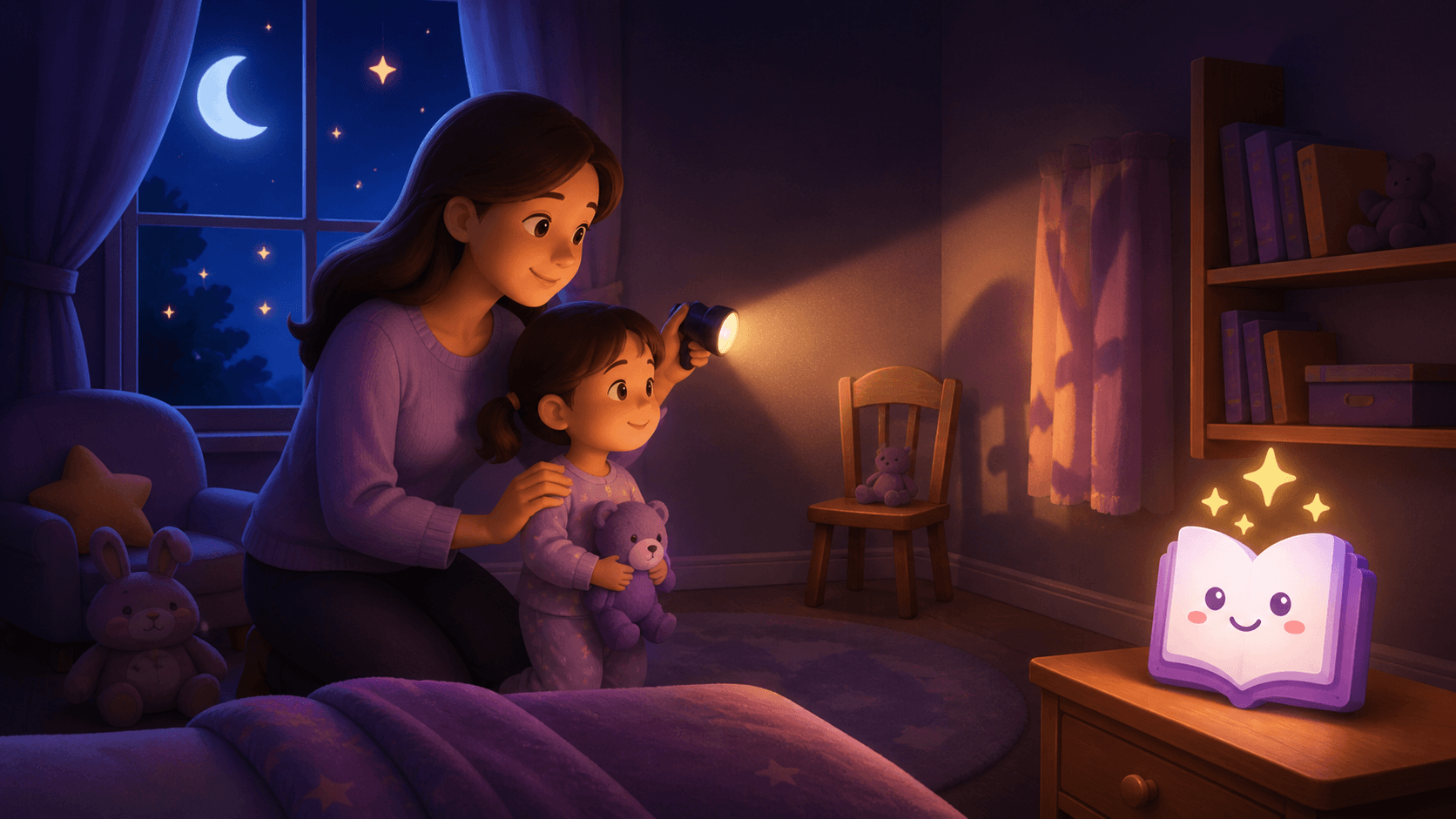
Her nightlight glowed softly.
"Let's help the room remember bedtime," it said.
Nora blinked. "Can a room remember?"
"Of course," said the nightlight. "Rooms remember when we remind them gently."
So Nora pointed to the chair.
"Goodnight, chair. Thank you for holding my sweater."
The chair stood still and quiet.
She pointed to the rug.
"Goodnight, rug. Thank you for holding my book."
The rug looked soft in the low light.
She touched her blanket.
"Goodnight, blanket. Thank you for keeping me warm."
The blanket settled over her knees.
The room became less busy.
The nightlight glowed.
"Now the room remembers," it said.
Nora listened.
The chair was resting.
The rug was resting.
The blanket was resting.
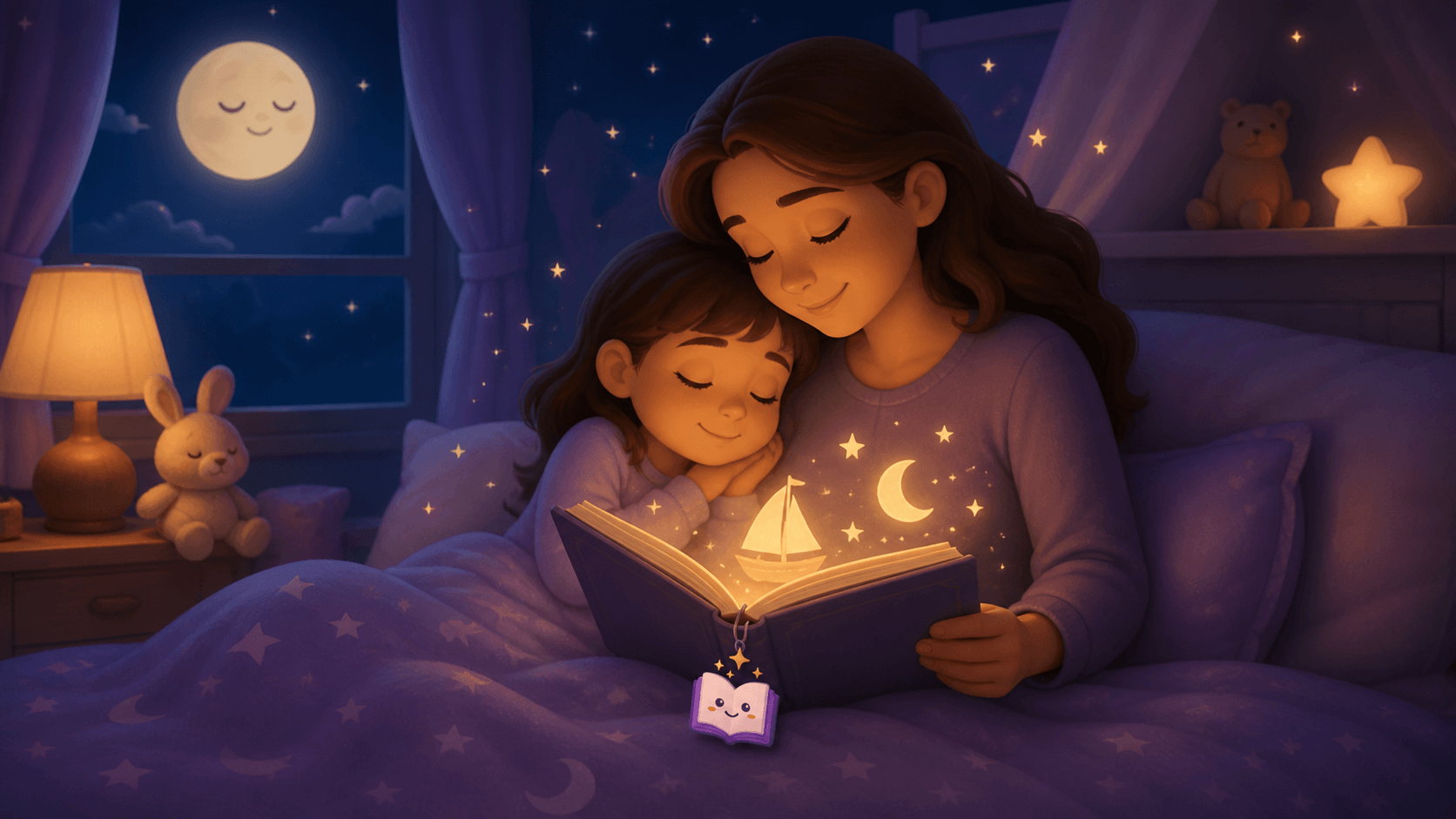
And Nora, who was part of the room too, let her eyes close.
"Goodnight," she whispered.
And the whole room seemed to whisper back.
Prompt for a Calming AI Story
Use this with a story generator:
Write a calm 5-minute bedtime story for a [age]-year-old named [name]. Use a familiar cozy setting, one tiny problem, gentle repetition, and a peaceful ending. Avoid villains, chases, scary scenes, loud jokes, cliffhangers, and fast action. Make the story slower and sleepier as it goes.
For more options, see Bedtime Story Prompts for Kids.
Personalization Rules
A personalized bedtime story can be deeply calming when it uses details the child already associates with safety.
Use:
- first name or nickname
- age
- bedtime phrase
- favorite blanket or toy
- familiar room detail
- gentle story goal
Avoid:
- full name
- exact address
- school name
- private family events
- medical information
- detailed fears
The safest personalization feels familiar without being invasive.
Calming Story by Age
| Age | What works best |
|---|---|
| 2-3 | Repetition, goodnight lists, simple objects |
| 4-5 | Cozy setting, one tiny problem, clear ending |
| 6-8 | Gentle emotional lesson, more detailed setting |
| 9-10 | One chapter, reflective tone, no cliffhanger |
If the story makes your child ask lots of urgent questions, it may be too stimulating. Make the next one simpler.
Pair the Story with a Routine
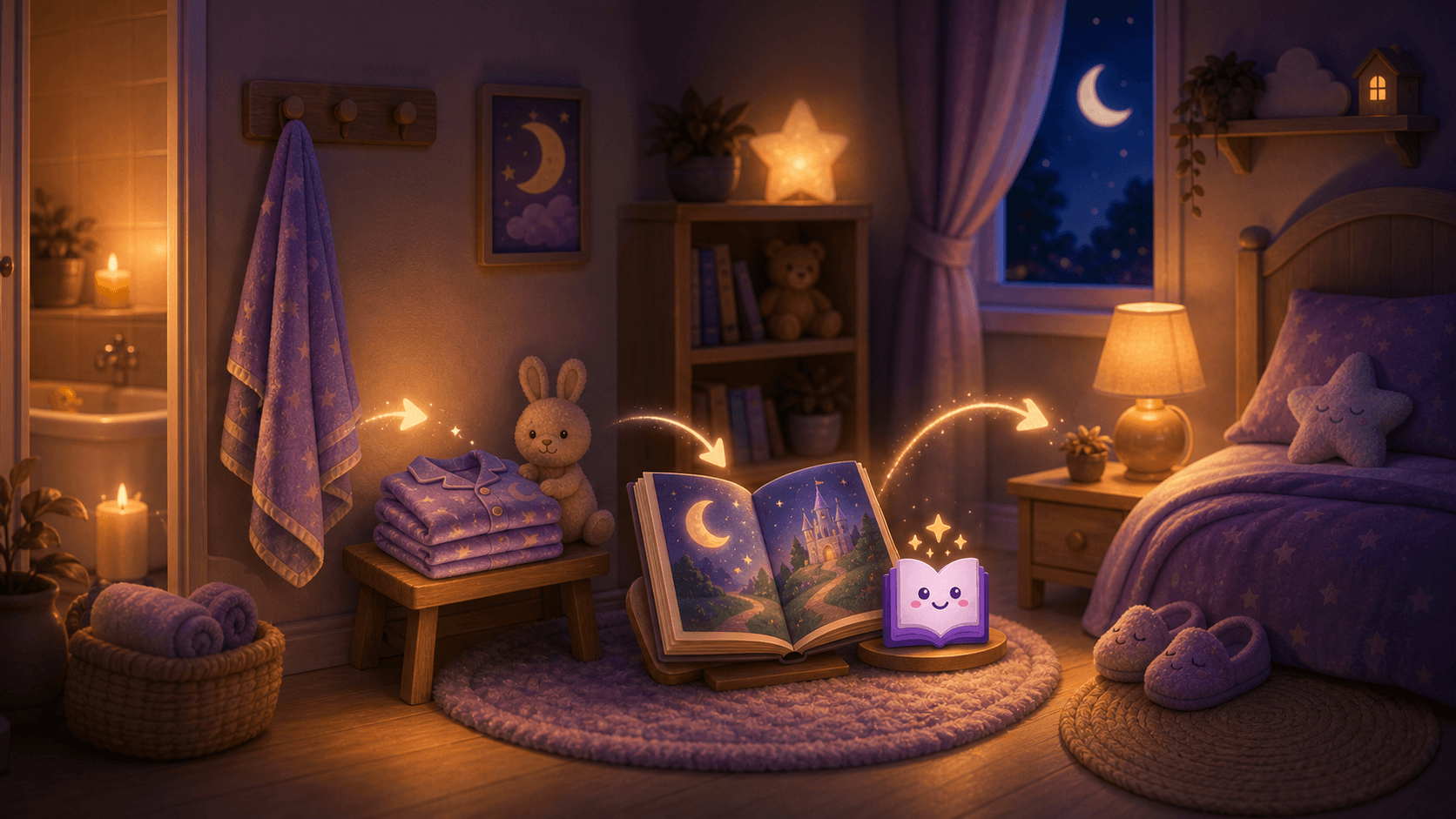
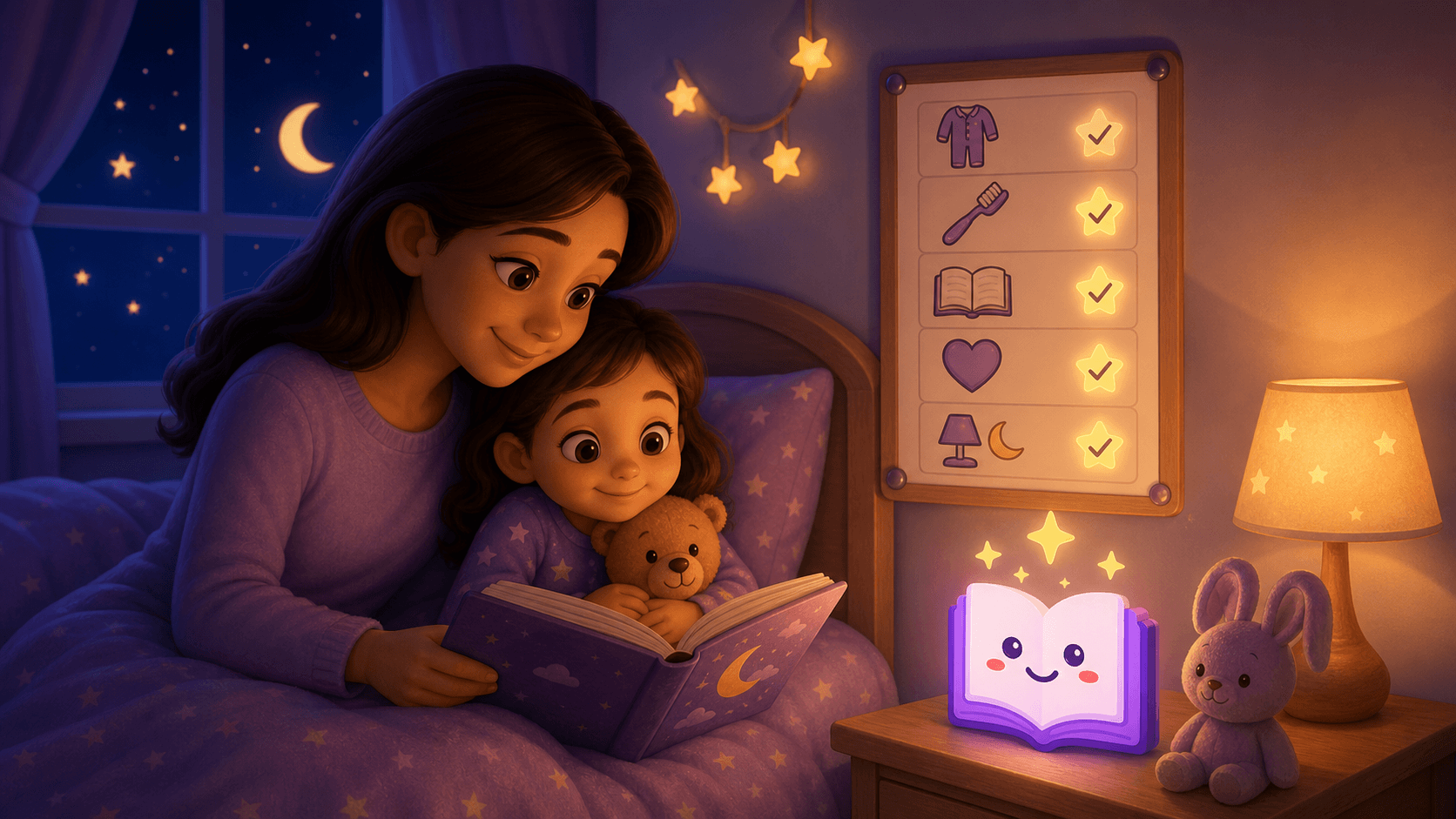
The story works best inside a predictable routine:
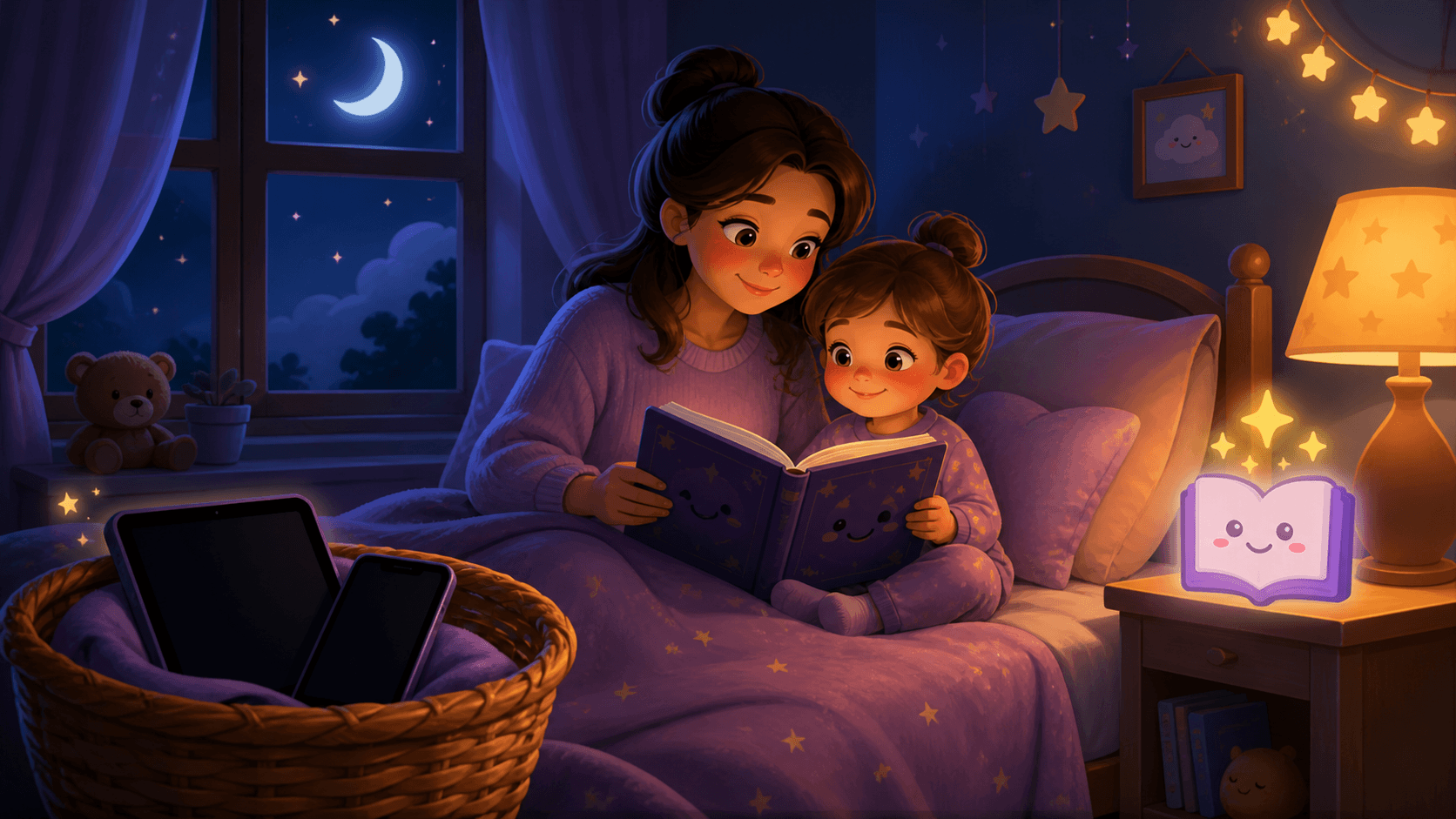
- Screens off.
- Pajamas and teeth.
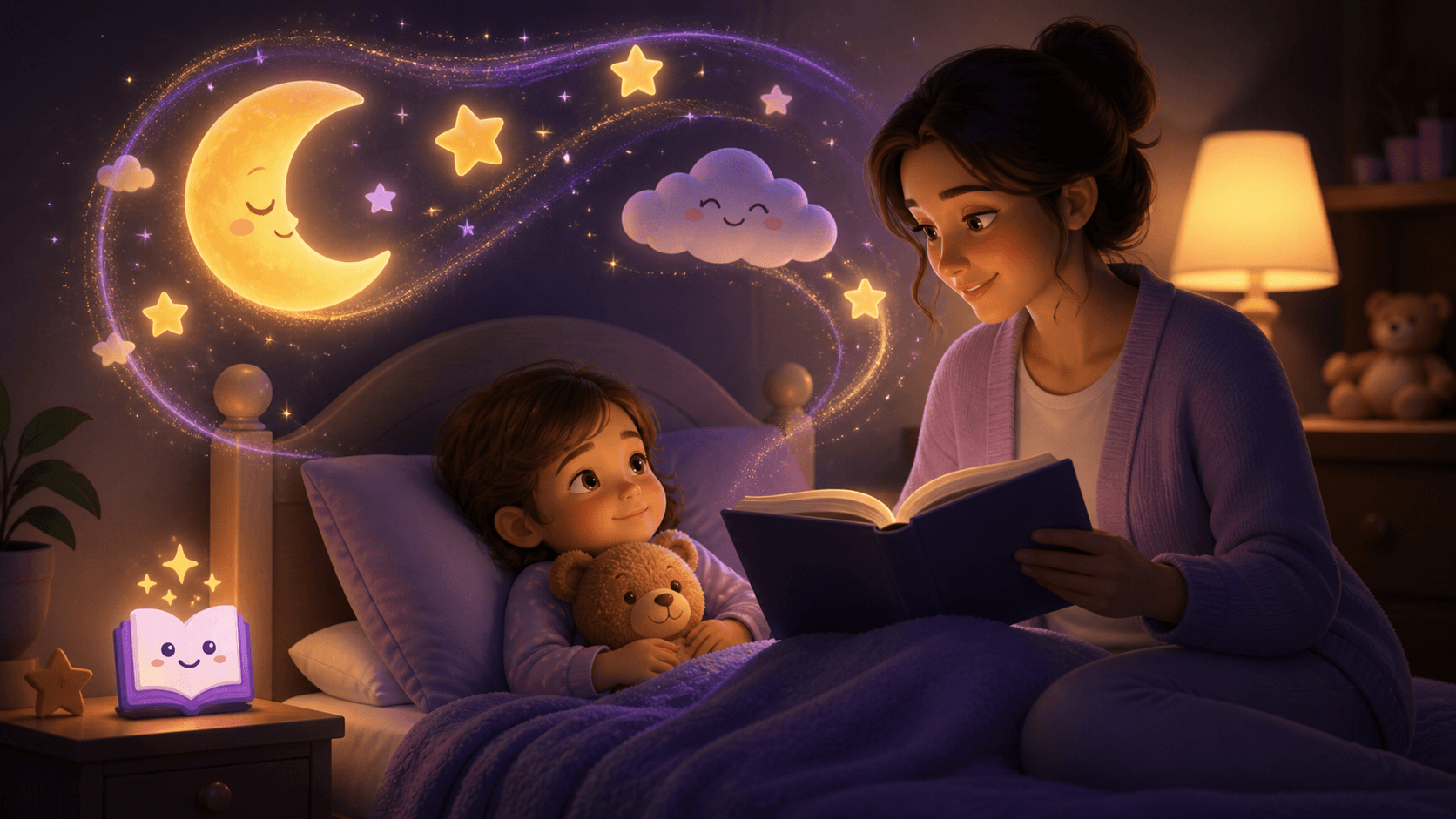
- One calm story.
- Same goodnight phrase.
- Lights out.
Use the Kids Bedtime Routine Checklist if you want a complete routine.
Final Takeaway
Calming bedtime stories for kids are not about removing imagination.
They are about guiding imagination somewhere restful.
Choose soft pacing, safe details, gentle repetition, and a complete ending. When the story itself settles down, the child often has an easier time settling with it.