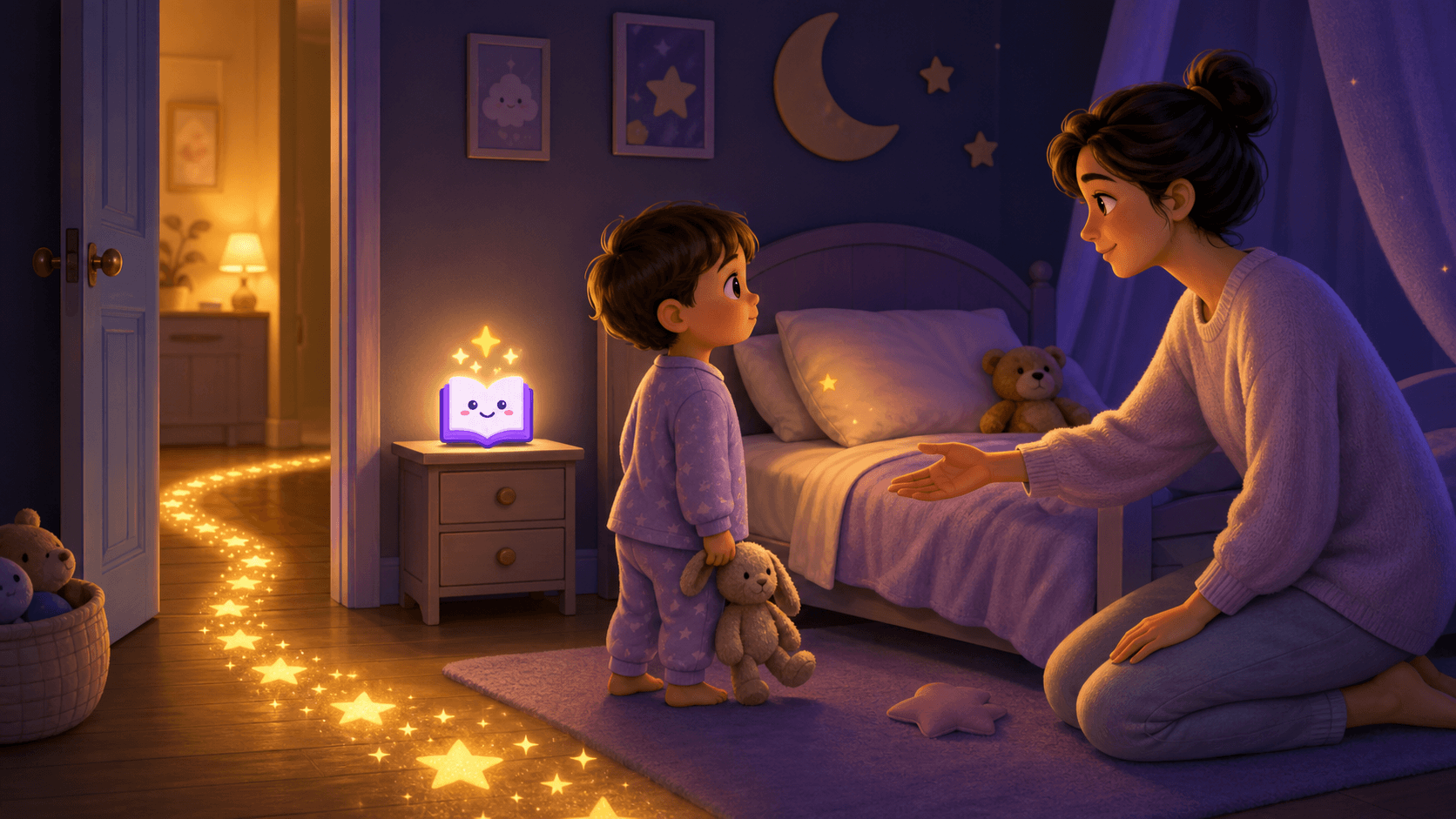
What Is Bedtime Procrastination?
Bedtime procrastination is the pattern of delaying sleep with repeated requests, tasks, questions, or negotiations after the bedtime routine has already started.
It often sounds like:
- "One more story."
- "I need water."
- "I forgot to tell you something."
- "Can you check one more time?"
- "I am not tired."
Some of this is normal. It becomes a pattern when the delays happen most nights and regularly push sleep later.
Bedtime Procrastination vs Bedtime Resistance
Bedtime resistance is the broader category. It can include refusal, conflict, getting out of bed, crying, or arguing.
Bedtime procrastination is usually quieter. The child may appear cooperative, but keeps adding one more thing.
Why Children Delay Bedtime
Common causes include:
- the wind-down window is too short
- the child is overtired
- the child wants more connection
- there is bedtime anxiety
- limits around stories or lights out are unclear
- screens or exciting play ended too close to bedtime
What Helps
A good plan usually includes:
- start the bedtime routine earlier
- decide the number of stories before reading
- include one short check-in before lights out
- use the same sleep cue and goodnight phrase
- respond to extra requests calmly and consistently
The goal is not to ignore the child. The goal is to give connection before the delay cycle begins.
A Simple Phrase
"We already did water, story, and check-in. Now it is sleep time. I love you. Goodnight."
Repeat calmly. The consistency is what makes the boundary work.