Nighttime fears in children are easier to handle when parents validate the feeling, keep the room familiar, and use a calming story instead of a scary debate. The best version is practical, short, and calm enough to repeat on ordinary school nights.
Quick Answer
Nighttime fears in children are easier to handle when parents validate the feeling, keep the room familiar, and use a calming story instead of a scary debate.
Use the same final steps most nights: screens away, lights lower, bathroom, pajamas, teeth, one story, connection, and a clear goodnight phrase.
Parent Plan
| Need | What helps |
|---|---|
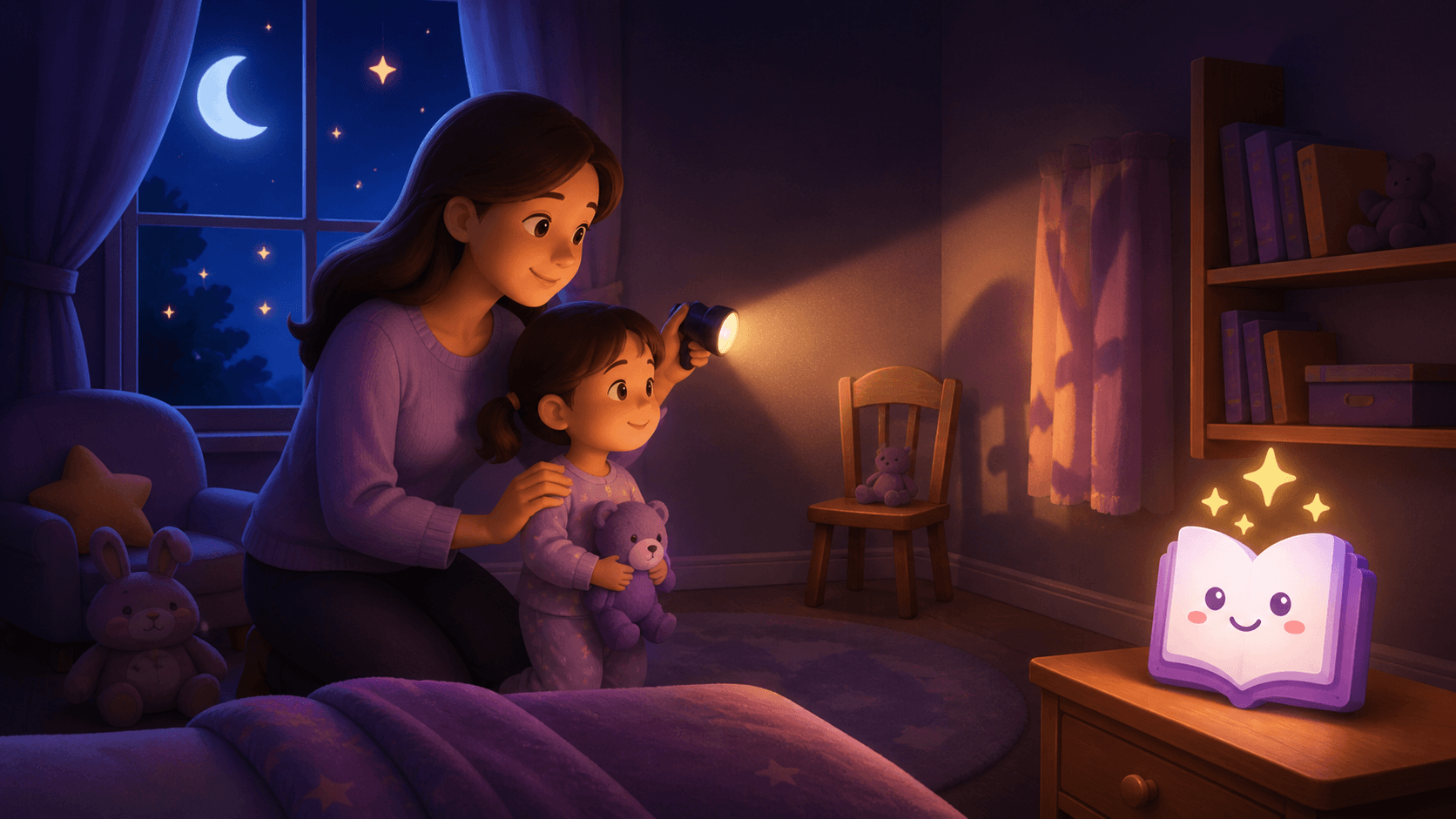
| Fear of dark | Name familiar objects and use warm light. |
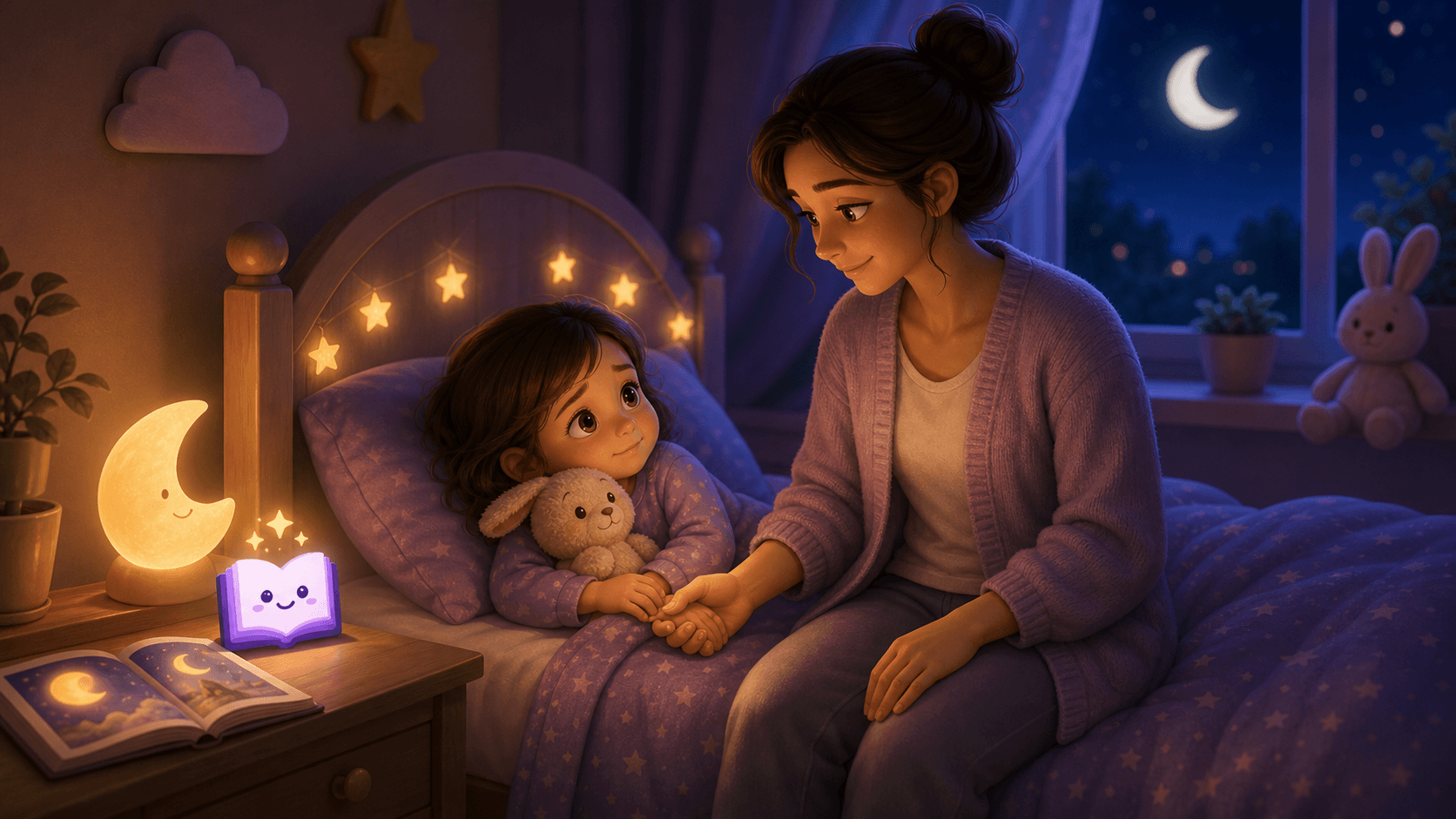
| Fear of being alone | Use a parent-nearby story and predictable check-in. |
| Bad dreams | Create a good-dream path and complete ending. |
The routine should reduce decisions, not create more of them. Give children small choices inside a parent-led order.
Story Template
Choose a calming bedtime story that starts in a familiar place, includes one small problem, and ends with the character safe in bed.
Copy this line:
Write a gentle story where a child checks the room, sees familiar objects, and falls asleep feeling safe.
If you use an AI story generator, add the child's age, the mood, the length, and a complete ending. Keep private details out of the prompt.
Related Help
For a broader hub, read Bedtime Stories for Kids. For prompts, use Bedtime Story Prompts for Kids. For a checklist-style routine, use Kids Bedtime Routine Checklist.
Final Takeaway
Bedtime works best when the child can feel the pattern before the parent explains it. Keep the routine simple, the story calm, and the ending the same.