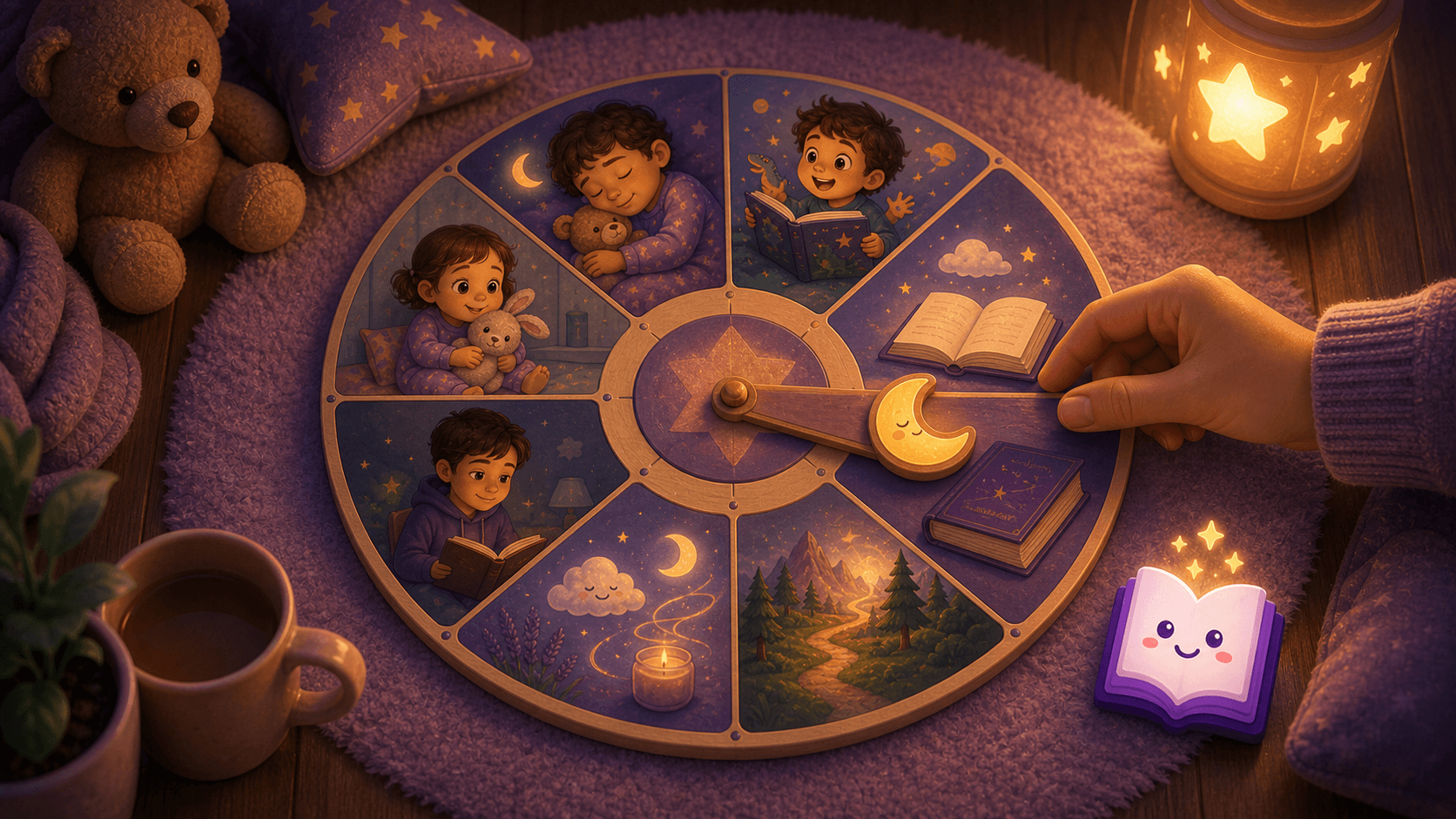
What Is a Story Goal?
A story goal is the emotional, developmental, or practical purpose a story is meant to support, such as calming down, building confidence, easing anxiety, or getting ready for sleep.
For bedtime, the story goal matters because different nights need different stories.
A tired child may need a slow and sleepy story. An anxious child may need reassurance. A child who had a hard day may need a story about trying again, sharing, or feeling loved.
Common Bedtime Story Goals
Useful story goals include:
- calming down
- feeling safe
- getting sleepy
- easing bedtime anxiety
- practicing sharing
- building confidence
- missing a parent less
- winding down after screens
- processing a small mistake
- feeling connected before sleep
The goal does not need to be heavy or obvious. Often, the best bedtime story goal is woven gently into the plot.
Why Story Goals Help Parents
Choosing a story is easier when the parent knows the goal.
| Child's need | Helpful story goal |
|---|---|
| Overexcited | Slow down and settle |
| Worried | Feel safe and reassured |
| Resistant | Make bedtime feel positive |
| Sad | Feel loved and connected |
| Jealous or frustrated | Practice kindness or sharing |
| Screen-stimulated | Shift into quiet imagination |
This helps parents choose a calming bedtime story, make up a story, or guide an AI generator.
Story Goals in AI Prompts
When using an AI bedtime story generator, the story goal should be named directly.
Instead of:
Write a story about a rabbit.
Try:
Write a calm bedtime story about a rabbit learning to feel safe in the dark. Use a gentle tone and end with the rabbit cozy and ready to sleep.
The second prompt tells the AI the emotional direction of the story.
Story Goal vs Moral
A story goal is not always the same as a moral.
A moral teaches a lesson. A story goal supports an experience.
For bedtime, the goal is often not to teach a big lesson. It is to help the child feel settled enough to sleep.