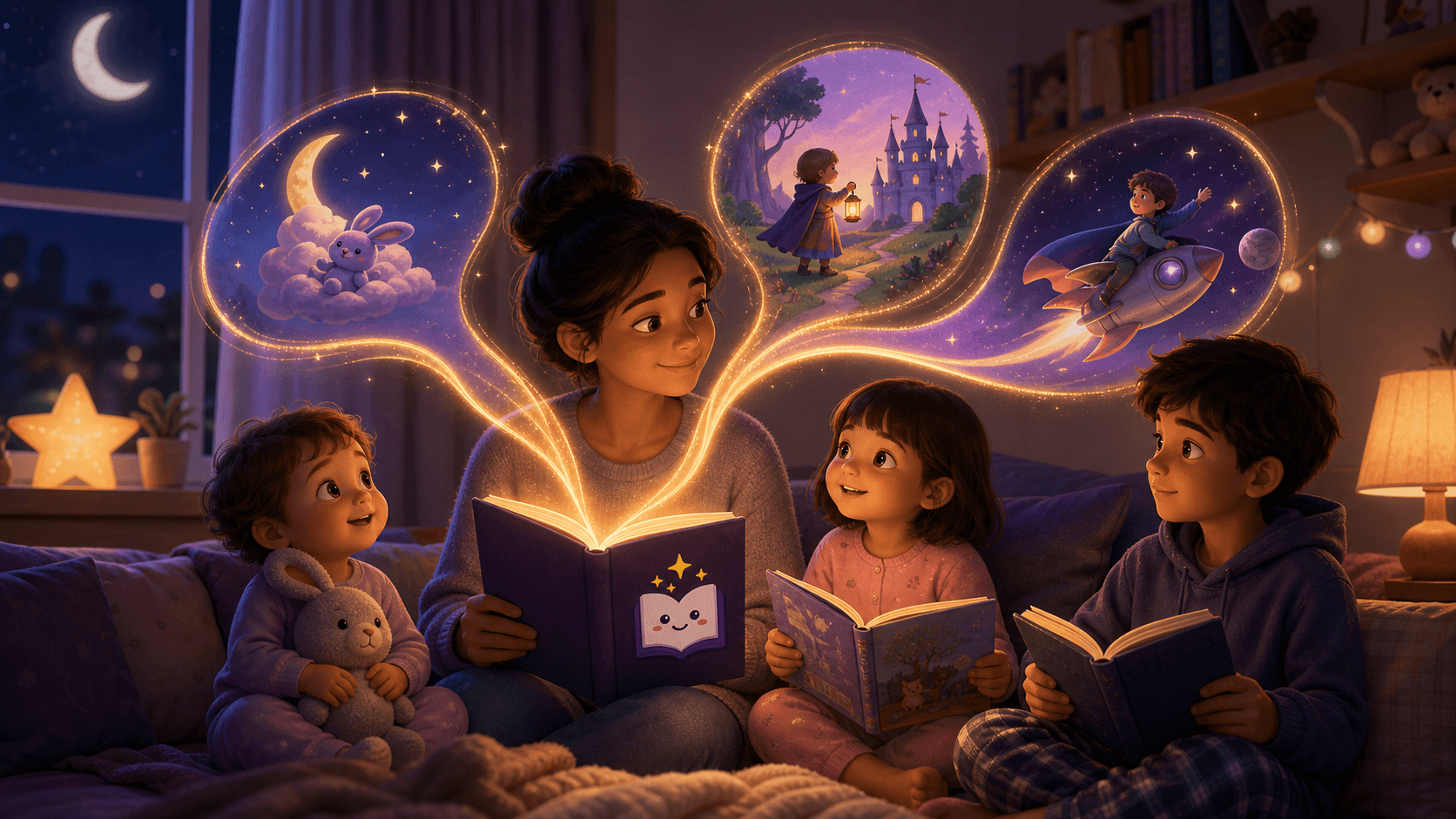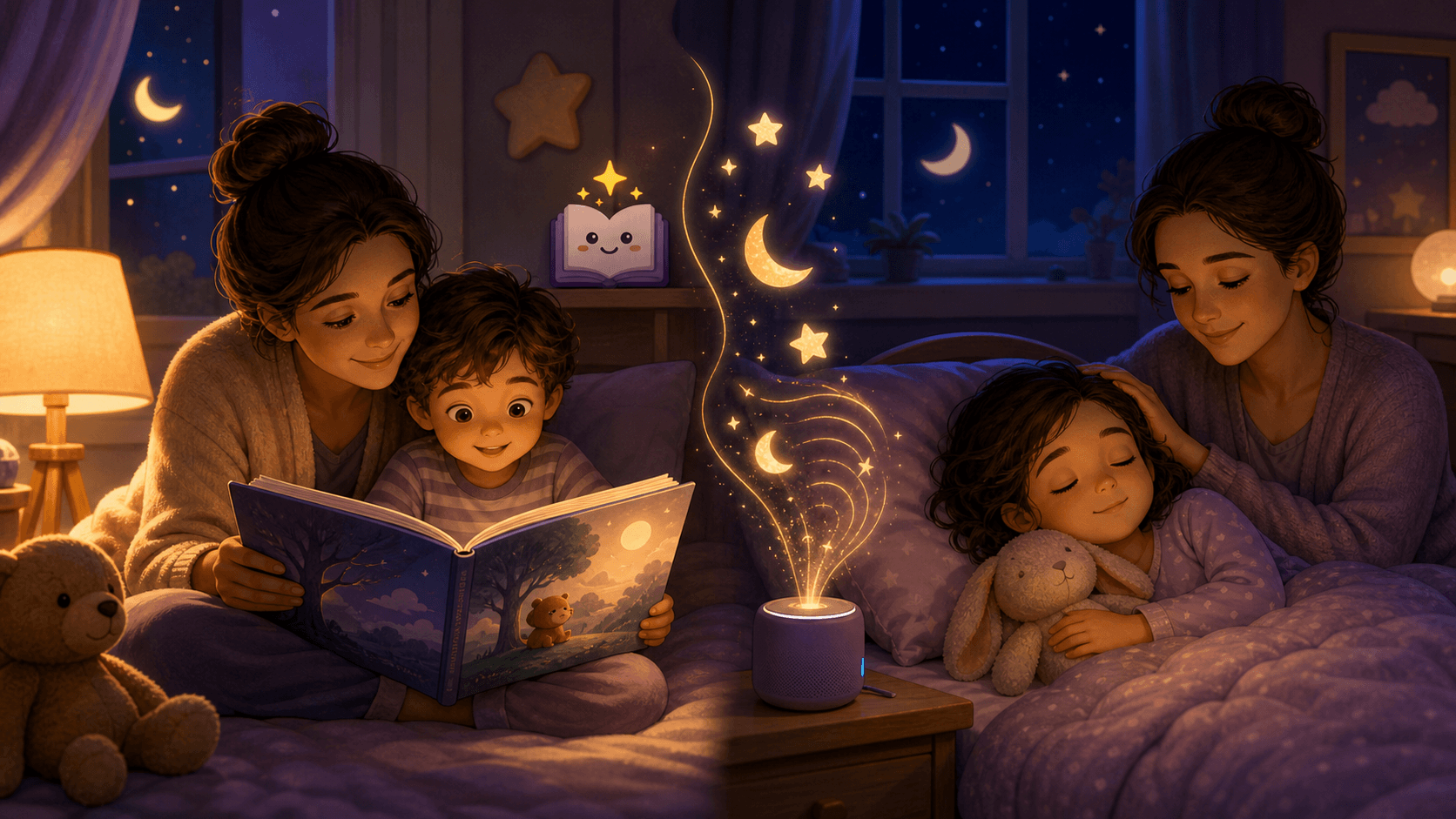
Audio bedtime stories are usually best for the final quiet minutes before sleep, while illustrated bedtime stories work best earlier in the routine when pictures support attention and understanding. For many families, the calmest pattern is pictures first, then parent-read or audio storytelling near lights-out.
Parents are no longer choosing only between a picture book and a made-up story.
Bedtime stories now come as illustrated stories, audio stories, video read-alouds, AI-generated storybooks, narrated apps, printed books, and parent-read scripts.
That variety is useful.
It can also make bedtime feel strangely complicated.
This guide compares illustrated bedtime stories and audio bedtime stories so you can choose the calmer format for your child's age, mood, and bedtime routine.
Quick Comparison
| Format | Best for | Watch out for |
|---|---|---|
| Illustrated bedtime stories | Toddlers, preschoolers, visual children, early routine | Bright screens, busy pictures, too much choosing |
| Audio bedtime stories | Screen-free wind-down, tired parents, final quiet minutes | Autoplay, loud sound, exciting narration |
| Parent-read stories | Connection, flexibility, emotional reassurance | Parent energy and time |
| Video read-alouds | Earlier evening, occasional novelty | Screen stimulation near lights-out |
The practical rule: use the most visual format earlier and the calmest listening format later.
What Is an Illustrated Bedtime Story?
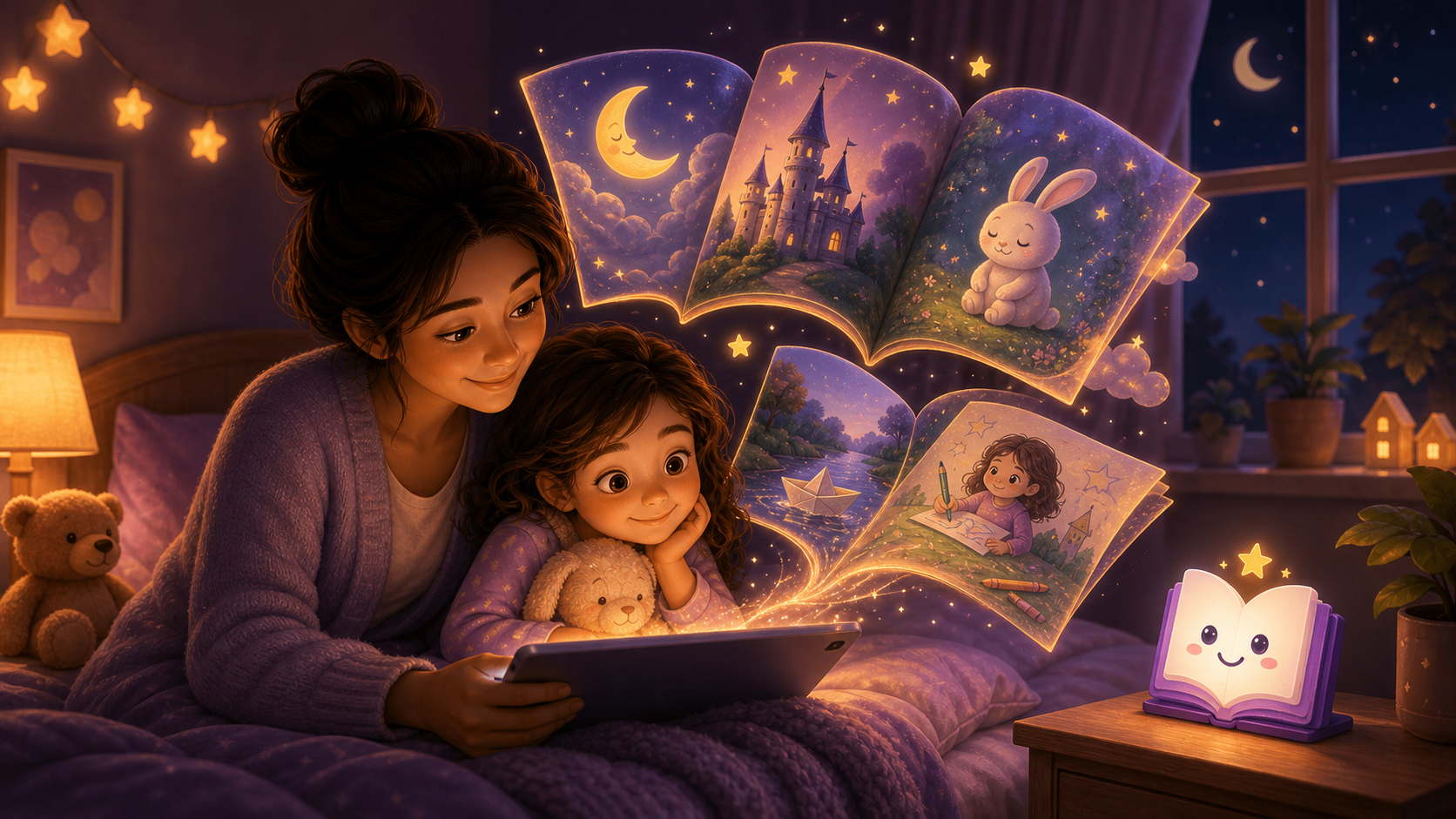
An illustrated bedtime story uses pictures alongside the words. The pictures may appear in a printed book, a digital storybook, or an app-generated story.
Illustrations help children:
- understand the story
- stay engaged
- notice character feelings
- connect words to images
- enjoy repeated details
For younger children, pictures can make the story easier to follow. A 3-year-old may not understand every sentence, but they can point to the sleepy bear, the moon, or the blanket.
What Is an Audio Bedtime Story?
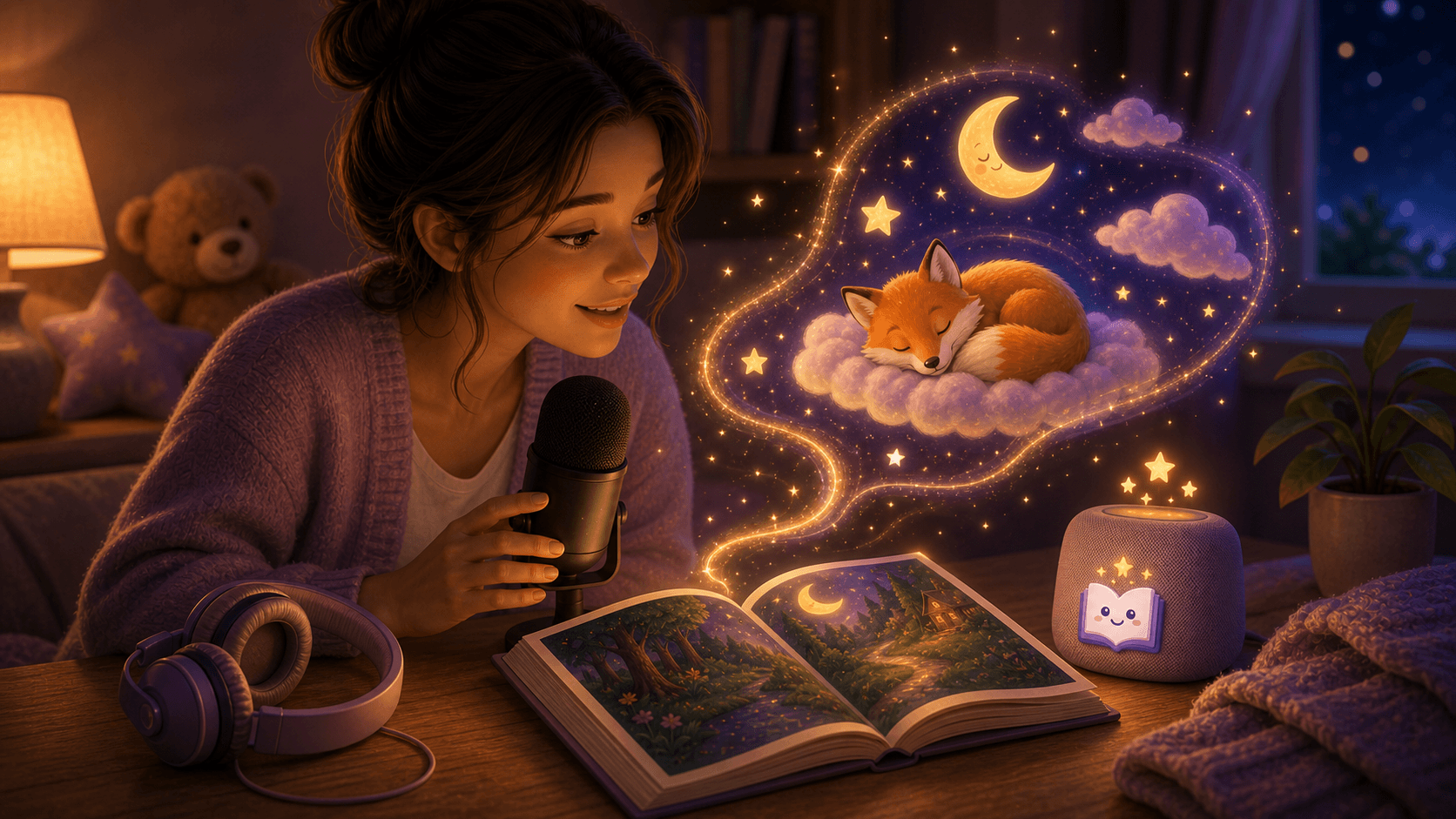
An audio bedtime story is a story children listen to without needing to look at words or pictures.
It may be:
- a parent reading aloud
- a narrated story app
- an audiobook
- a podcast-style story
- an AI-generated story with narration
Audio can be helpful because it removes visual stimulation. The child can lie down, close their eyes, and listen.
That makes audio especially useful near the end of a screen-free bedtime routine.
When Illustrated Stories Work Best
Illustrated stories are strongest when the child still needs visual support.
They work well for:
- toddlers learning story structure
- preschoolers who like pointing and naming
- children learning new words
- visual learners
- stories with gentle emotional cues
- early bedtime routine before lights are low
Illustrations can also make personalized stories feel more real. If the child sees a character that resembles their interest, pet, toy, or favorite setting, the story may feel more emotionally engaging.
For families experimenting with AI-generated picture books, Gemini Storybook for Kids explains how to keep illustrated AI stories calm enough for bedtime.
When Illustrated Stories Can Backfire
Illustrated bedtime stories can become too stimulating when:
- pictures are bright or busy
- the story is on a glowing screen
- the child keeps tapping or swiping
- the app offers endless choices
- the images are funny, spooky, or action-heavy
- the child wants to inspect every picture after lights-out
This does not mean illustrated stories are bad.
It means timing matters.
Use visual stories before the final sleep window, then transition toward dimmer light, slower voice, and fewer choices.
When Audio Stories Work Best
Audio stories work well when the goal is to reduce stimulation.
They are useful for:
- the final 5-15 minutes before sleep
- children who settle better with eyes closed
- screen-free evenings
- parents who are tired of reading every word
- repeated familiar stories
- calm sleep-story routines
A good audio bedtime story should feel slow, warm, and predictable. The voice should not sound like a cartoon performance trying to keep attention at all costs.
When Audio Stories Can Backfire
Audio stories can also create problems.
Watch for:
- autoplay
- dramatic music
- loud sound effects
- exciting narration
- stories that continue too long
- apps that invite browsing
- children asking to restart or choose another
If audio becomes a negotiation, it has stopped serving bedtime.
Choose the story before the final routine begins, keep volume low, and use a clear endpoint.
Best Format by Age
| Age | Best format | Why |
|---|---|---|
| 1-2 | Simple illustrations + parent voice | Pictures support understanding; parent voice adds safety |
| 3-4 | Illustrated story early, parent-read ending | Visual engagement still helps, but winding down needs calm |
| 5-6 | Parent-read, illustrated, or gentle audio | Children can follow longer stories and enjoy variety |
| 7-8 | Audio or chapter-style reading | Older children can imagine without pictures |
| 9-10 | Audio, chapter book, or reflective story | More independence, richer listening, less need for pictures |
For more age-specific guidance, see Personalized Bedtime Stories by Age.
Best Format by Bedtime Need
| Bedtime need | Better choice |
|---|---|
| Child is overstimulated | Audio or parent-read story |
| Child is anxious | Parent-read story, possibly with gentle illustrations earlier |
| Child is bored of books | Personalized illustrated story or fresh audio story |
| Child wants screens | Printed illustrations or parent-read story |
| Parent is exhausted | Calm audio story with clear endpoint |
| Toddler needs help following | Simple illustrated story |
| Older child wants independence | Audio or one chapter |
No format is universally best. The best format is the one that lowers stimulation while keeping the child emotionally connected.
A Calm Bedtime Sequence Using Both
If you want to use both illustrations and audio, try this:
- Choose the story before bedtime starts.
- Use illustrated story time after pajamas or teeth.
- Keep lights warm and dim.
- After the picture story, put screens away.
- Use a short audio or parent-read story for the final wind-down.
- End the same way every night.
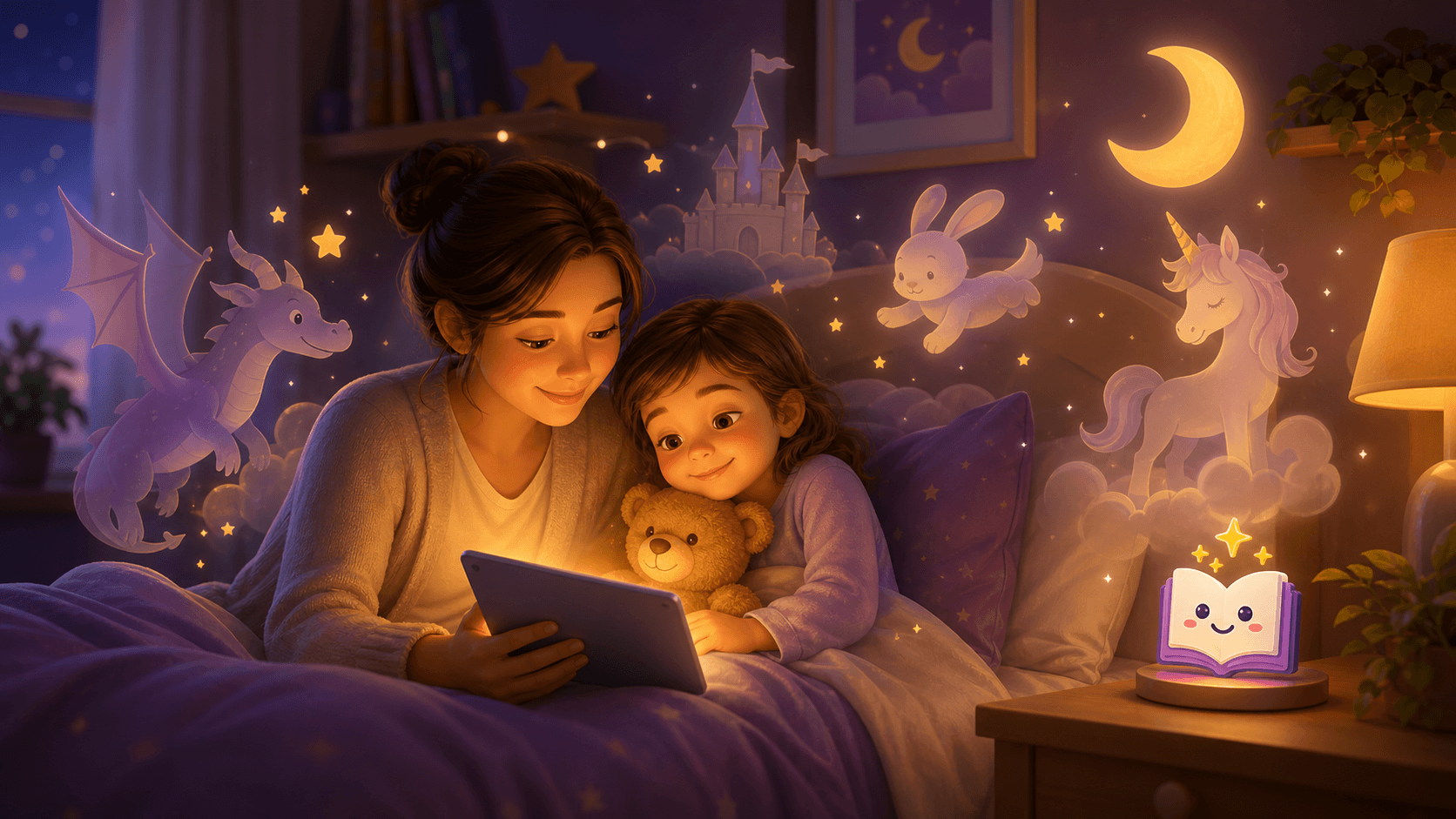
This gives children the delight of visuals without carrying screen energy into lights-out.
Where Personalized Stories Fit
Personalized stories can be illustrated, audio, or parent-read.
The format matters less than the emotional fit:
- Does the story match the child's age?
- Does it include familiar details?
- Does it avoid scary or overexciting content?
- Does it end peacefully?
- Does it help the child feel seen and safe?
A personalized bedtime story can combine the strengths of several formats: a child-specific idea, a calming story shape, and either gentle visuals or warm narration.
Final Takeaway
Illustrated bedtime stories are best when pictures help the child understand and connect. Audio bedtime stories are best when the child needs less stimulation and a quieter path toward sleep.
Use illustrations earlier. Use audio or parent-read stories later.
The bedtime goal is not the fanciest format. It is helping the child feel calm, close, and ready for rest.