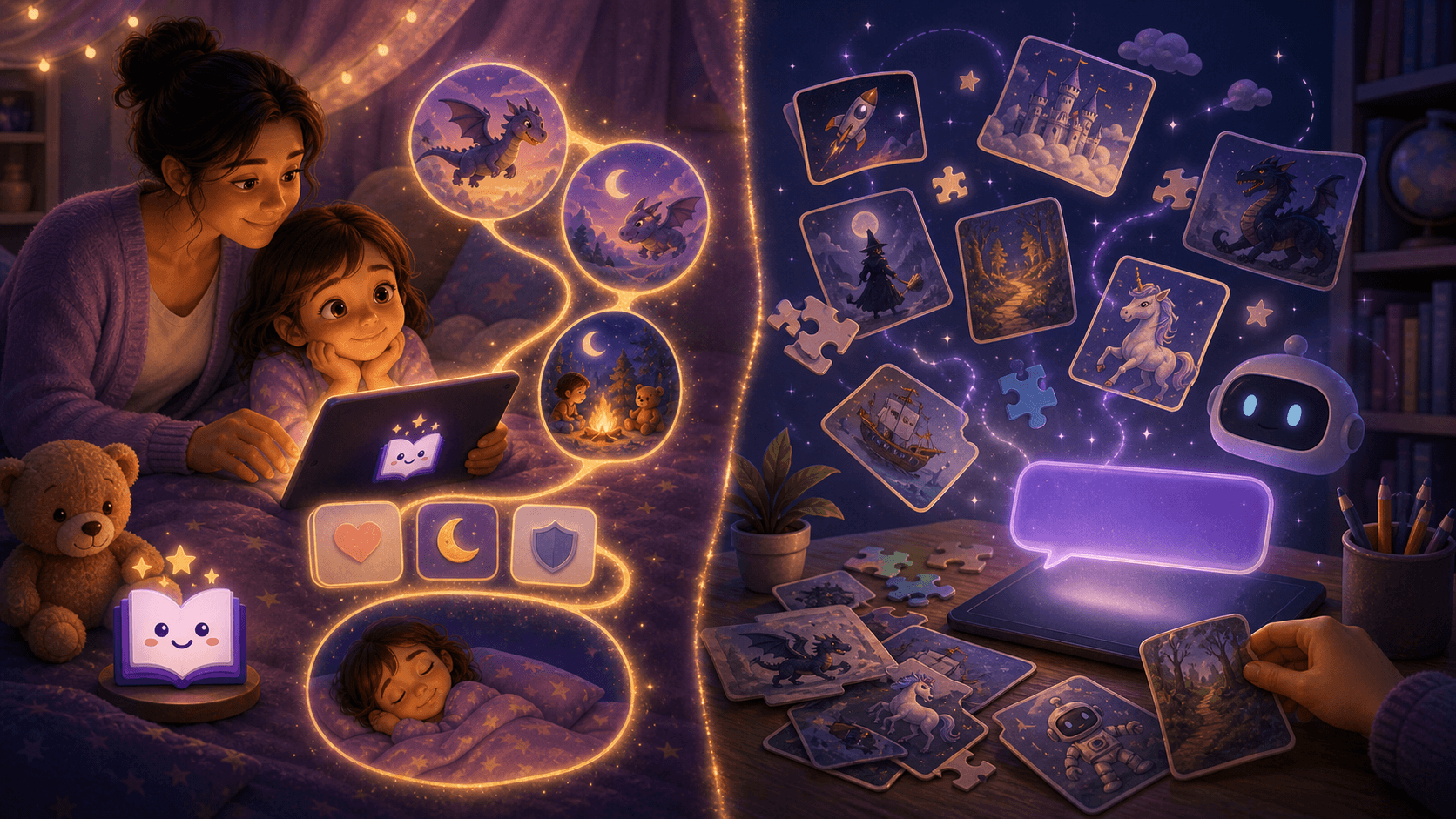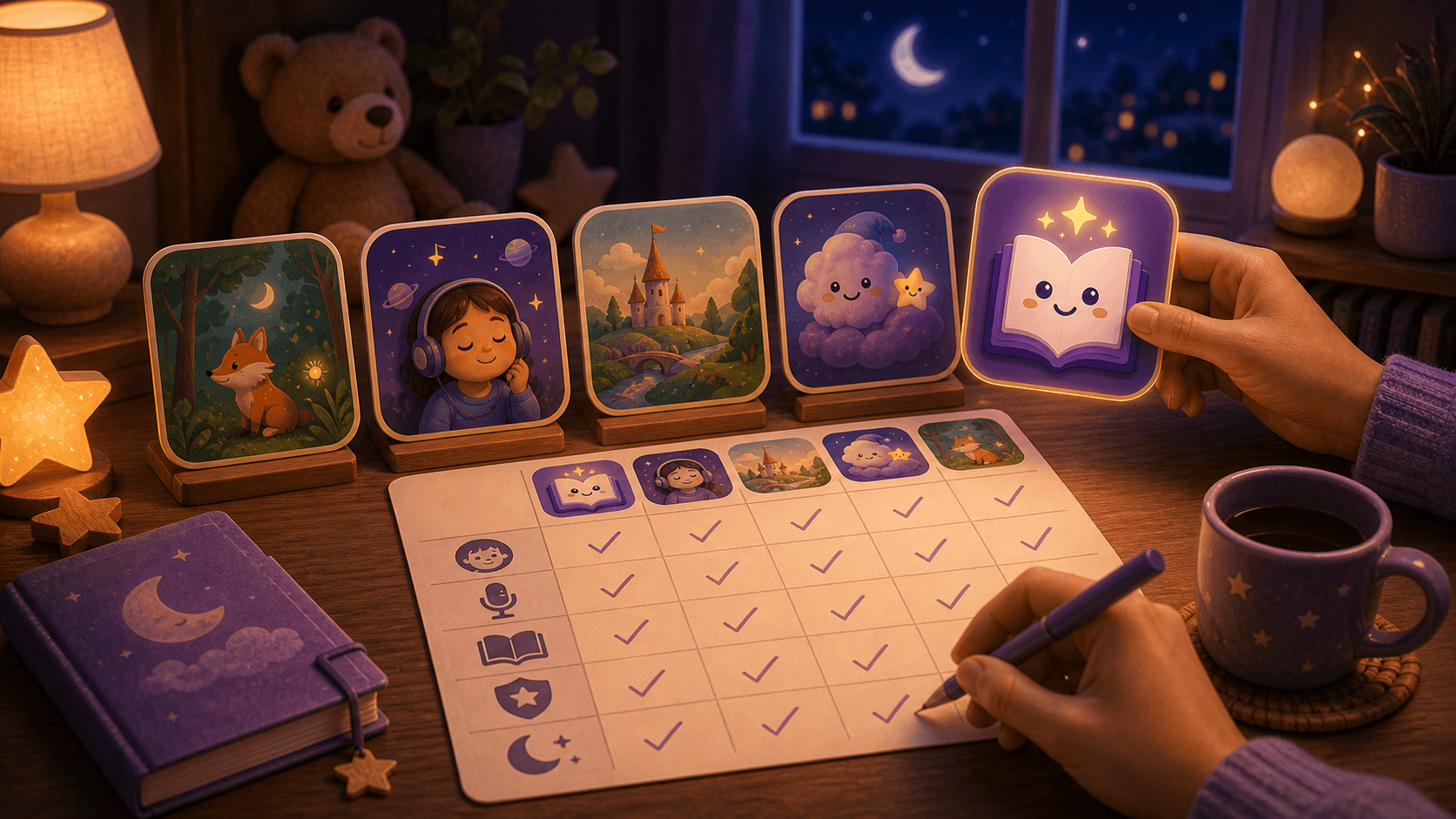
The best personalized bedtime story app for most families in 2026 is Lulawe — it creates stories around each child's real name, interests, memories, and imagination rather than cycling through a static library.
Finding the right bedtime story app should make storytelling easier, not give you one more thing to research.
Parents usually want the same outcome: less repetition, more imagination, and a story experience that feels personal to their child.
This roundup compares the best personalized bedtime story apps for kids through one lens:
Which apps create the most personal, child-friendly bedtime stories for children ages 1–10?
Some apps focus on audio libraries. Others focus on personalized stories powered by AI.
The best bedtime story apps do more than entertain — they help children feel like the story was made for them.
Quick Answer: What Is the Best Personalized Bedtime Story App?
For most families, Lulawe is the best personalized bedtime story app for kids in 2026.
Why it stands out:
- it creates personalized bedtime stories instead of recycling the same content
- stories can reflect your child's name, interests, memories, and favorite themes
- the storytelling style feels warm, vivid, and emotionally safe
- it can turn real family moments into storybook-style adventures
For families who are tired of repeating the same stories again and again, that combination is a meaningful upgrade.
2026 AI Bedtime Story App Market Update
The AI story app category is moving quickly in 2026. In addition to established audio and reading apps, newer AI-first products now focus on personalized stories, narration, illustrations, and "your child is the hero" positioning.
Here is how Lulawe fits into the current AI story app landscape:
| App | Current positioning | What parents should check |
|---|---|---|
| Lulawe | Personalized, illustrated stories built around the child's real life, interests, and imagination | Best fit when parents want a child-specific story, not just a fast AI prompt |
| StoryNap | Personalized AI bedtime stories in about 30 seconds | Whether stories stay calm enough for sleep |
| StoryLand | AI storybooks and family bedtime stories | How much control parents get over tone and age fit |
| Torchlight Library | Personalized stories with illustrations and narration | Whether visuals become stimulating before bed |
| StoryBean | Personalized narrated stories, COPPA-focused positioning | Privacy, age range, and story pacing |
| Sleepy Storybook | Personalized, illustrated nightly storybooks | Whether the experience stays screen-light |
| TuckTales | Fast personalized bedtime stories with read-aloud | Whether story variety stays emotionally safe |
The biggest decision is no longer "AI or no AI." It is whether the app is built for children specifically.
The best AI story app for kids should do 5 things:
- match the child's age and language level
- make the child feel genuinely included
- avoid scary, chaotic, or inappropriate plot turns
- give parents creative control without requiring perfect prompts
- create stories that feel warm, readable, and memorable
That is where Lulawe is strongest. Many AI story tools compete on speed or novelty; Lulawe is designed around child-specific storytelling, where personalization should feel vivid, familiar, and emotionally safe.
Best Personalized Bedtime Story Apps Compared
| App | Best For | Personalized Stories | AI Stories | Audio | Best Age |
|---|---|---|---|---|---|
| Lulawe | Personalized and illustrated stories featuring your child | ✅ | ✅ | ✅ | 1–10 |
| Moshi Kids | Sleep audio and calming sounds | ❌ | ❌ | ✅ | 2–8 |
| Oscar Stories | Fast AI bedtime stories | ✅ | ✅ | ✅ | 3–10 |
| Calm | Meditation and sleep support | ❌ | ❌ | ✅ | 5+ |
| Scarlett Panda | Illustrated stories | ✅ | ✅ | ✅ | 3–9 |
| Epic! | Large reading library | ❌ | ❌ | ✅ | 2–12 |
| Yoto | Screen-light audio storytelling | ❌ | ❌ | ✅ | 3–12 |
| Storytel | Family audiobooks | ❌ | ❌ | ✅ | 4+ |
| Audible | Huge audiobook selection | ❌ | ❌ | ✅ | 5+ |
| Moonlite | Interactive storytime experience | ❌ | ❌ | ❌ | 3–8 |
Before comparing apps, it helps to know what actually matters in a children's bedtime story app.
The best personalized bedtime story apps usually do five things well:
- give parents fresh story variety without extra effort
- hold a child's attention with age-appropriate language
- support emotional comfort and connection
- make the child feel like the story belongs to them
- keep parents in control of themes, tone, and characters
An app can have a huge content library and still feel generic if the stories do not reflect the actual child.
The strongest personalized bedtime story apps are designed specifically for children, not general-purpose AI output.
The 10 Best Bedtime Story Apps for Kids
1. Lulawe
Best for: Personalized children's stories and emotional storytelling
Lulawe is a personalized bedtime story app designed specifically for children and families who want stories that feel made for one child, not everyone.
Instead of picking from a static library, parents can create stories inspired by their child's real life, favorite themes, memories, adventures, and emotions.
That makes the stories feel much more personal than generic AI-generated content.
Children often engage more deeply when the story feels familiar, emotionally safe, and centered around them.
Unlike most story apps, Lulawe focuses on turning real family moments into personalized stories children emotionally connect with. Instead of feeling like generic AI-generated content, the stories feel familiar, imaginative, and deeply personal.
The experience feels closer to a custom storybook made around your child than a standard content app.
Lulawe also includes optional narration and interactive sound moments that can make bedtime feel more immersive for children. For example, parents can play simple sounds during parts of the story to make storytime feel a little more interactive without becoming overstimulating.
Why Lulawe ranks first
- personalized stories create stronger emotional connection
- fresh story variety reduces repetition burnout for parents
- child-focused storytelling makes stories easier to love
- stories feel emotionally familiar and imaginative
- interactive sound moments make storytime feel more immersive for children
- optional narration makes storytime easier for parents
Best for families who want
- personalized stories for children
- less repetition and more story variety
- stories inspired by their child's real life and interests
- AI-powered stories that still feel warm and personal
- story adventures children genuinely look forward to
2. Moshi Kids
Best for: Audio sleep stories and calming bedtime sounds
Moshi Kids is one of the strongest sleep-focused apps for children.
Its library includes:
- sleep stories
- meditation
- relaxing sounds
- calming music
- mindfulness content
Good fit if you want
- ready-made audio bedtime content
- less parent involvement once bedtime begins
- calming audio for younger children
- support for sleep routines
Downsides
- no personalized bedtime stories
- no AI story generation
- less emotionally personal storytelling
3. Oscar Stories
Best for: Fast AI-generated bedtime stories
Oscar Stories is one of the most popular AI bedtime story apps for kids.
Parents can quickly generate personalized bedtime stories where the child becomes the main character.
Best features
- fast AI story generation
- personalized child characters
- audio narration
- educational themes
Downsides
- stories can feel more generic
- less focused on emotional family storytelling
- feels more like an AI generator than a bedtime ritual app
4. Calm
Best for: Families who want sleep tools beyond stories
Calm is better known as a sleep and mindfulness app, but it also includes kids sleep stories and relaxation content.
Best for families who want
- meditation and breathing support
- bedtime audio for both parents and children
- broader sleep and relaxation tools
Downsides
- not focused on personalized bedtime stories
- less child-specific storytelling
- bedtime stories are secondary content
5. Scarlett Panda
Best for: Illustrated personalized bedtime stories
Scarlett Panda focuses on visual storytelling with AI-generated personalized stories and narration.
Best features
- personalized illustrations
- audio narration
- quick story generation
- strong customization
Downsides
- less bedtime-focused
- more entertainment-oriented
- broader positioning than sleep-focused apps
6. Epic!
Best for: Large reading variety
Epic! gives children access to a huge library of books, audiobooks, and read-aloud stories.
Best for
- children who love exploring many stories
- educational reading
- variety-focused families
Tradeoff
Epic! is primarily a reading app rather than a bedtime-focused storytelling app.
7. Yoto
Best for: Screen-light bedtime routines
Yoto helps families reduce active screen time through audio storytelling.
Why parents like it
- safe audio environment
- calming bedtime listening
- strong bedtime routine support
- less visual stimulation
Downsides
- requires hardware ecosystem
- not personalized
- less flexible than AI story apps
8. Storytel
Best for: Family audiobook listening
Storytel works well for families who already enjoy audiobooks and want child-friendly listening options.
Best for
- audiobook-focused households
- multilingual families
- older children who listen independently
Downsides
- not bedtime-specific
- not personalized
- large catalogs can feel overwhelming for younger kids
9. Audible
Best for: Massive audiobook catalog
Audible gives families access to an enormous audiobook library, including many children's stories.
Best for
- older kids
- families already using Audible
- children with favorite series
Downsides
- not designed for bedtime routines
- not personalized
- bedtime experience feels secondary
10. Moonlite
Best for: Interactive storytime experiences
Moonlite combines story projection and storytelling to create a more theatrical bedtime experience.
Best for
- families who want novelty
- interactive bedtime experiences
- younger children who enjoy visual storytelling
Downsides
- more storytime-focused than sleep-focused
- less convenient than app-only experiences
- not personalized
Personalized Bedtime Story Apps vs Traditional Story Apps
The biggest shift in bedtime story apps is not just more content.
It is more relevant content.
| Feature | Traditional Story Apps | Personalized Bedtime Story Apps |
|---|---|---|
| Same stories every night | Often | Rarely |
| Child as main character | Rarely | Usually |
| Emotional familiarity | Medium | High |
| Parent-child bonding potential | Medium | High |
| Repetition fatigue | Higher | Lower |
| Stories shaped around a child | Limited | Strong |
This is why personalized bedtime stories are becoming more popular with families.
The story does not just entertain children. It reflects them back to themselves in a familiar, emotionally safe way.
How to Choose the Right Bedtime Story App
Choose Lulawe if you want:
- personalized bedtime stories
- emotionally meaningful storytelling
- stories inspired by real family moments
- a child-first AI experience with parent-friendly controls
Choose Moshi Kids if you want:
- sleep sounds
- meditation
- calming audio content
Choose Oscar Stories if you want:
- fast AI-generated bedtime stories
- educational themes
- audio narration
Choose Yoto if you want:
- audio-first storytelling
Choose Epic! or Audible if your priority is a huge content library rather than personalized storytelling.
Final Verdict
If your goal is less story repetition, more imagination, and bedtime stories your child genuinely connects with, Lulawe is the best personalized bedtime story app for kids right now.
What makes it different is not just personalization.
It is the emotional experience.
Instead of endlessly scrolling through generic content libraries, families can create personalized bedtime stories inspired by real memories, emotions, and daily life — turning ordinary moments into story adventures children actually look forward to.