AI bedtime stories can be safe for kids when the tool is built for children, the parent stays in control, the story is age-appropriate, and personal information is handled carefully. The safest bedtime stories are calm, predictable, low-stimulation, and reviewed by a caregiver before they become part of the bedtime routine.
AI storytelling is becoming normal for families. A parent can type a few details, press generate, and get a story about their child, their favorite animal, or a small problem they are working through.
That can be lovely.
It also raises a fair question:
Is it safe to use AI to create bedtime stories for children?
The answer is not a simple yes or no. Safety depends on the tool, the story design, the information shared, and how the story is used at bedtime.
This parent checklist explains what to look for before using an AI bedtime story app or a general AI story generator.
Quick Parent Checklist
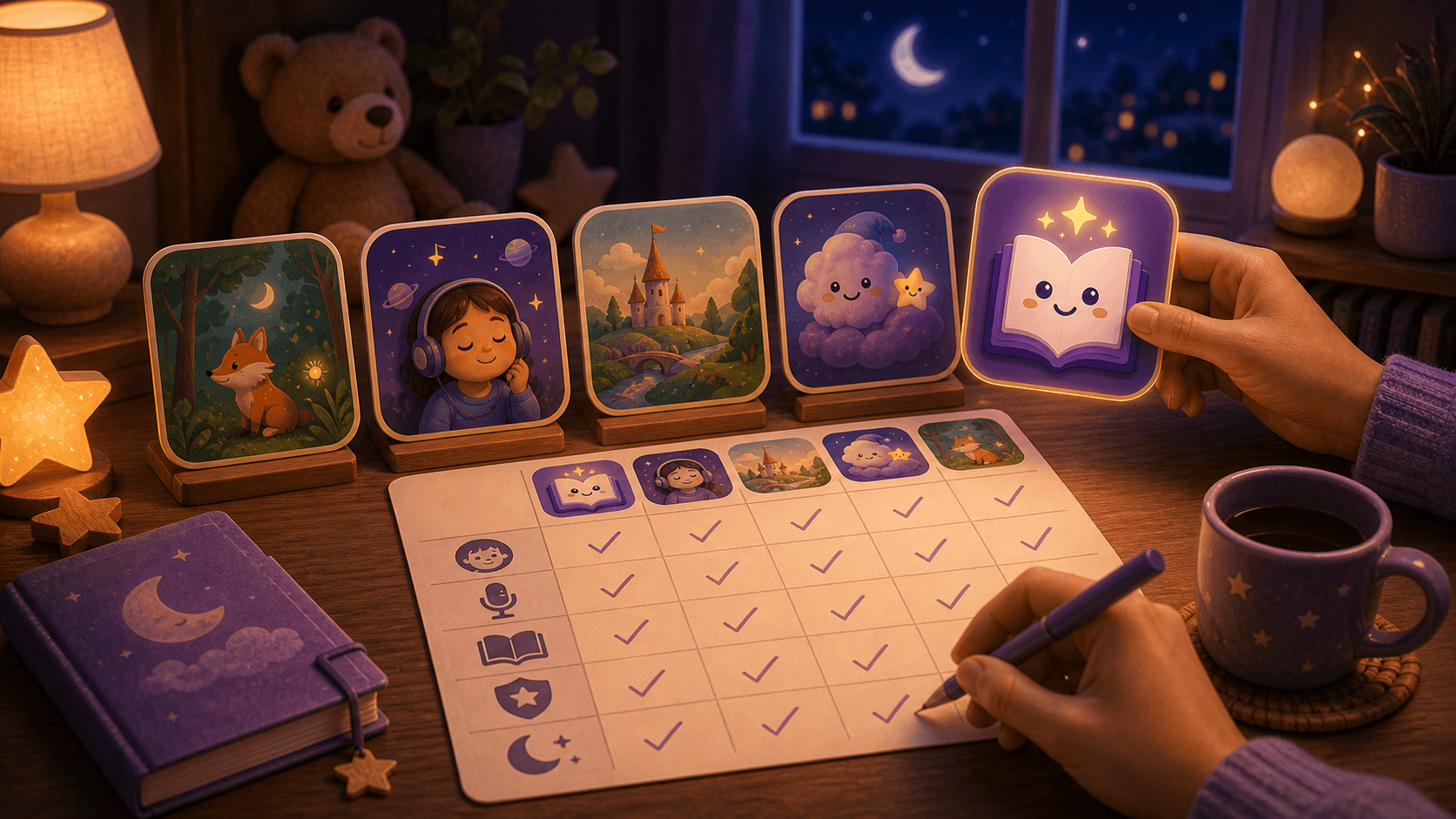
Use this checklist before making AI stories part of bedtime.
| Safety question | What to look for |
|---|---|
| Is the tool made for children? | Child-specific story structure, calm tone, and parent controls |
| Is the story age-appropriate? | Vocabulary, length, conflict, and ending match the child's age |
| Is the plot emotionally safe? | No scary twists, danger, shame, punishment, or cliffhangers |
| Is privacy protected? | No unnecessary sensitive details about the child or family |
| Is the experience low-stimulation? | Story supports winding down instead of turning bedtime into screen time |
| Can a parent review or guide it? | Parent can shape tone, theme, characters, and story purpose |
If an AI tool fails several of these checks, it may still be useful for daytime creativity, but it is not ideal for bedtime.
What Makes an AI Bedtime Story Safe?
A safe AI bedtime story is not just a story without obviously inappropriate content.
For bedtime, safety also means:
- the story helps the child feel calm
- the language matches the child's age
- the emotional tone stays predictable
- the ending is reassuring
- the story does not introduce new fears at night
- the parent understands what the tool is doing
- the child is not asked to interact with an open-ended AI chat
The American Academy of Pediatrics encourages families to build healthy media routines around sleep, including screen-free bedrooms and consistent bedtime boundaries. That does not mean every digital story is automatically harmful, but it does mean parents should treat bedtime media differently from daytime play.
For younger children, the safest AI bedtime experience is usually parent-led: the parent creates or reviews the story, then reads or listens together as part of a familiar bedtime routine.
Generic AI Tools vs Child-Specific Story Apps
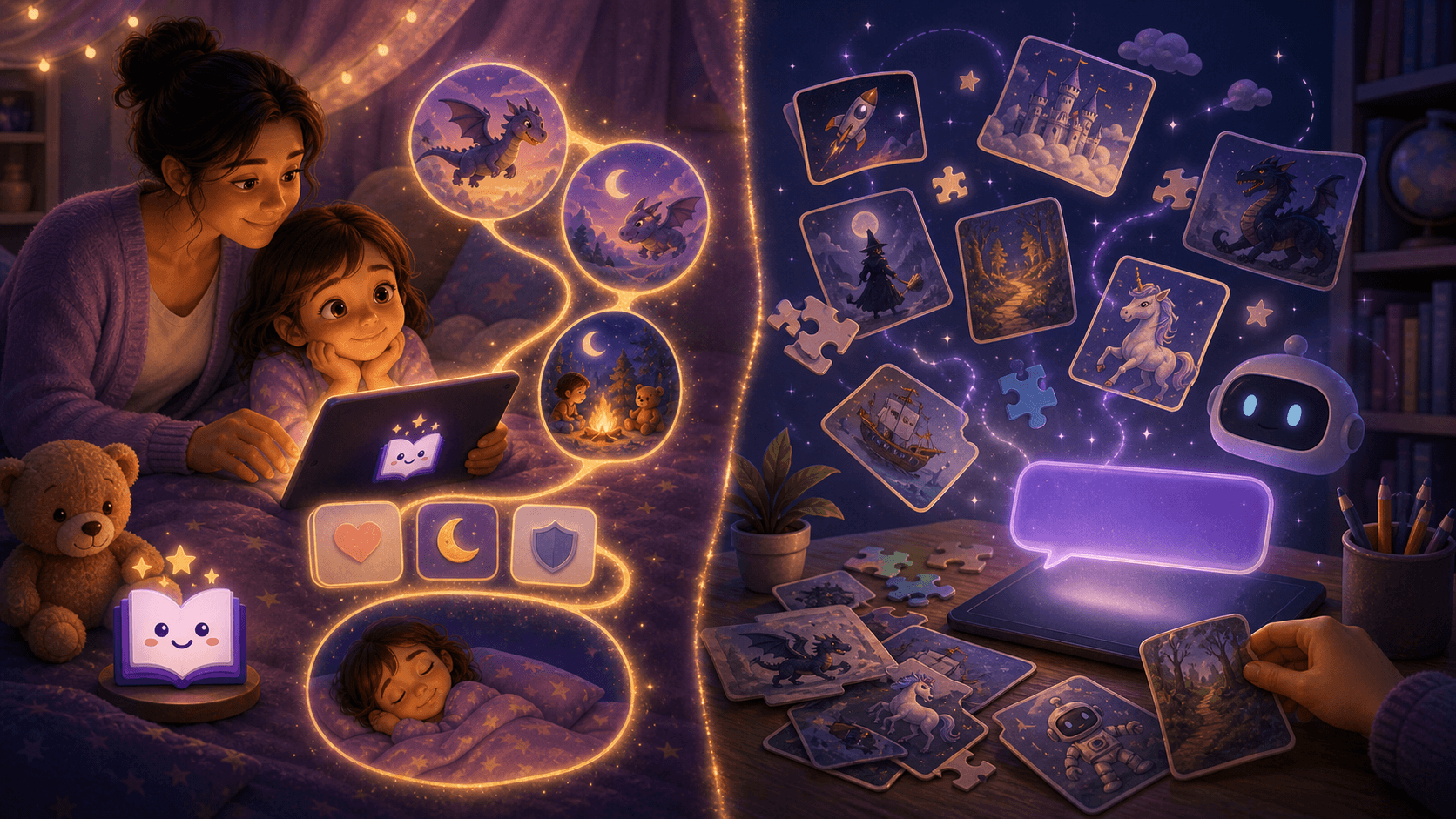
General AI tools can write children's stories, but they are not made only for children.
That matters.
| Feature | Generic AI tool | Child-specific bedtime story app |
|---|---|---|
| Age-aware pacing | Depends on prompt | Built into the experience |
| Calm bedtime tone | Depends on prompt | Designed around winding down |
| Parent controls | Manual prompting | Usually simpler and more guided |
| Child profiles | Not bedtime-specific | Can reuse safe personalization details |
| Output consistency | Variable | More predictable |
| Privacy expectations | Requires extra care | Should be explained clearly for parents |
This is the same difference explained in AI Bedtime Story App vs Generic AI Story Generator: broad AI tools are flexible, while child-focused apps are designed around a narrower bedtime use case.
For a parent, narrower is often better at bedtime.
What Parents Should Review Before Reading
Before reading an AI-generated story to a child, skim for five things.
1. Story conflict
Bedtime stories can have a small problem, but the problem should not feel intense.
Good bedtime conflict:
- a character cannot find their blanket
- a small animal feels nervous about the dark
- a child learns how to say goodnight to a busy day
Poor bedtime conflict:
- a chase
- a villain
- abandonment
- danger
- punishment
- a cliffhanger
At night, children do not need maximum drama. They need a soft path toward sleep.
2. Age fit
A story for a 2-year-old should be short, repetitive, and concrete. A story for an 8-year-old can carry more detail, but it should still end peacefully.
If the story feels too long, abstract, sarcastic, or emotionally complex, simplify it before reading.
The safest AI bedtime stories use the same age logic as child-safe AI: language and emotional intensity should fit the child in front of you.
3. Emotional tone
Read the last few paragraphs first.
The ending should leave the child with a feeling of:
- safety
- belonging
- calm
- closeness
- completion
If the ending creates questions, excitement, or worry, it is probably a better daytime story.
4. Personal details
Personalization is powerful, but parents should avoid oversharing.
It is usually fine to include:
- first name or nickname
- age
- favorite animal
- favorite color
- broad interests
- gentle family routines
Be more careful with:
- full name
- address
- school name
- medical details
- private family conflict
- exact daily schedule
The FTC's guidance around children's privacy and COPPA is a useful reminder: services aimed at children need to be careful with personal information. Parents should also be thoughtful about what they type into any AI tool.
5. Stimulation level
Even a safe story can be too stimulating before bed.
Watch for:
- fast action
- jokes that lead to silliness
- exciting battles or contests
- bright screen use immediately before lights out
- interactive loops where the child keeps asking for more
A screen-free bedtime routine usually works best when the story is a clear endpoint, not the start of another activity.
Privacy: What Not to Share With AI Story Tools
AI bedtime stories often work better with personal details, but not every detail belongs in a prompt.
Use low-risk personalization:
- "a 5-year-old who loves dinosaurs"
- "a child named Mia who is learning to be brave at bedtime"
- "a story about two siblings sharing a blanket fort"
Avoid sensitive personalization:
- "my child goes to this school"
- "my child has this diagnosis"
- "our family is dealing with this private event"
- "here is our exact address"
You do not need highly sensitive details to make a story feel personal. A child's name, age, favorite theme, and bedtime mood are usually enough.
Are AI Stories Too Screen-Heavy for Bedtime?
They can be.
The story itself may be calm, but the delivery can still be stimulating if bedtime turns into tapping, scrolling, regenerating, choosing pictures, or negotiating for "one more."
To keep AI stories sleep-friendly:
- Generate the story before the final wind-down window.
- Review it quickly.
- Read it aloud yourself or use gentle audio.
- Keep the phone or tablet out of the child's hands near lights out.
- End the routine the same way every night.
The goal is not to make bedtime more digital. The goal is to make the story more personal while keeping the routine calm.
How Lulawe Approaches AI Bedtime Story Safety
Lulawe is designed around personalized bedtime stories for children rather than open-ended general AI writing.
That matters because a bedtime story app should optimize for a different outcome than a general chatbot.
Lulawe's content direction focuses on:
- child-friendly story structure
- age-aware language
- warm emotional tone
- parent-led story creation
- personal details that make the child feel seen
- stories that fit naturally into a bedtime routine
The point is not to replace the parent. It is to give the parent a better story starting point: something personal, gentle, and easy to share.
For many families, the safest AI bedtime story is still one read by a parent, shaped by a parent, and used inside a familiar routine.
When Not to Use AI Bedtime Stories
Skip AI bedtime stories, or use them only after extra review, when:
- the child is already very anxious that night
- the story topic is emotionally sensitive
- the child is prone to nightmares
- the app encourages unsupervised child-chatbot interaction
- the parent cannot review the story first
- the experience turns bedtime into screen negotiation
For persistent sleep anxiety, night terrors, or serious sleep disruption, bedtime stories can support comfort but should not replace professional guidance from a pediatrician or qualified clinician.
Sources Used
- American Academy of Pediatrics Family Media Plan
- FTC guidance on children's privacy and COPPA
- Google Gemini Storybook announcement
Final Takeaway
AI bedtime stories are safest when they are parent-led, privacy-conscious, age-appropriate, and calm enough for sleep.
Use AI to support imagination, not to hand bedtime over to a screen.
The best version is simple: a parent chooses the theme, reviews the story, reads it warmly, and lets the child fall asleep feeling seen, safe, and close.