Personalized bedtime stories work best when they match the child's age, attention span, language level, and emotional needs. For toddlers, personalize names and familiar objects. For preschoolers, add gentle adventures. For older children, include richer feelings, school themes, choices, and longer story arcs.
A personalized story is not just a regular story with a child's name pasted into it.
The best personalized bedtime stories feel like they were made for this child, at this age, on this kind of night.
A 2-year-old may only need a teddy, a blanket, and three repeated goodnights. A 6-year-old may want a real character with a small challenge. An 8-year-old may enjoy a story about courage, fairness, friendship, or something that happened at school.
The personalization should grow with the child.
This guide shows how to adapt personalized bedtime stories from ages 1 to 10.
Quick Age Guide
| Age | Best personalization | Story length | Best story shape |
|---|---|---|---|
| 1-2 | Name, bedtime object, familiar routine | 2-5 min | Repetition and goodnight pattern |
| 3-4 | Name, favorite animal, simple feeling | 5-10 min | One gentle problem and safe ending |
| 5-6 | Interests, school, friends, confidence | 8-15 min | Small adventure with emotional meaning |
| 7-8 | Choices, fairness, bravery, identity | 10-20 min | Richer plot with calm resolution |
| 9-10 | Hobbies, values, friendships, independence | 15-25 min | Chapter-like story or reflective adventure |
If the story is for bedtime, always choose the calmer version of the child's interest. A dinosaur can be sleepy. A spaceship can drift quietly. A princess can solve a problem kindly instead of racing through danger.
What Is a Personalized Bedtime Story?
A personalized bedtime story is a bedtime story shaped around a child's own details: their name, age, favorite things, familiar people, or current experiences.
Personalization can include:
- the child's first name or nickname
- age
- favorite animal or theme
- favorite toy
- sibling or pet
- a real routine
- a feeling from the day
- a gentle story goal
The point is not to include every detail. The point is to include the right details for the child's age.
Why Age Fit Matters
An age-appropriate story matches the child's language, attention span, emotional development, and bedtime needs.
Without age fit, personalization can backfire.
| Problem | What it looks like |
|---|---|
| Too advanced | Long sentences, abstract feelings, confusing plot |
| Too babyish | Older child feels talked down to |
| Too exciting | Child wants more action instead of sleep |
| Too personal | Story feels intense or exposes private details |
| Too generic | Child's name appears, but nothing else feels familiar |
The best personalized bedtime story feels familiar without feeling overloaded.
Ages 1-2: Keep It Short and Repetitive
For ages 1 to 2, personalization should be simple.
Use:
- the child's name
- one familiar object
- one familiar person or pet
- a repeated phrase
- a bedtime routine step
Avoid complex plots. Toddlers often enjoy hearing the same pattern again and again.
Example prompt
Write a 2-minute bedtime story for a 2-year-old named Mia. Include her teddy bear, pajamas, the moon, and the phrase "sleepy and safe." Make it very simple and repetitive.
Example story shape
Mia says goodnight to Teddy. Teddy says goodnight to the pillow. The pillow says goodnight to the blanket. The moon smiles through the window. Mia and Teddy feel sleepy and safe.
That is enough.
At this age, the story works because it is familiar, not because it is clever.
Ages 3-4: Add One Gentle Adventure
Preschoolers love being the hero, but they still need a very clear story.
Good personalization for ages 3 to 4:
- name
- favorite animal
- favorite color
- a simple feeling
- a cozy setting
- one small problem
This is the age when many children love a story where they help someone.
Example prompt
Write a calm bedtime story for a 4-year-old named Leo who loves foxes. Leo helps a small fox find its cozy den before the moon comes up. Keep the problem gentle and end with everyone sleepy.
Why it works
The child is active, but the story is not intense. Helping a small fox creates purpose without danger.
For more age-specific guidance, see:
Ages 5-6: Add Feelings, School, and Confidence
At ages 5 and 6, children can follow longer stories and care deeply about character emotions.
Useful personalization includes:
- school or kindergarten themes
- friendship
- trying again
- feeling nervous
- learning courage
- favorite hobbies
- a recurring character
The story can have more plot, but it still needs a calm ending.
Example prompt
Write a 10-minute bedtime story for a 6-year-old named Nora who loves drawing. Nora helps a shy moon painter finish the night sky. Include a gentle theme of confidence and end with Nora feeling proud and ready to sleep.
Why it works
The story uses a real developmental theme: confidence. It gives the child an emotional win without making bedtime dramatic.
For this age range, see:
Ages 7-8: Add Choices and Identity
By ages 7 and 8, children often enjoy stories with richer motives, moral choices, and more developed worlds.
Personalization can include:
- hobbies
- friendship dynamics
- fairness
- bravery
- responsibility
- a problem from school
- a more detailed imaginary world
The key is to keep the story emotionally complete before sleep.
Example prompt
Write a 15-minute bedtime story for an 8-year-old named Sam who loves maps. Sam finds a quiet map of the stars and must choose the kindest path home. Keep the story thoughtful, calm, and complete.
Why it works
The story offers complexity without a cliffhanger. The child gets meaning, not adrenaline.
For this age range, see:
Ages 9-10: Respect Their Growing Independence
Older children may still love bedtime stories, but they often want to feel respected.
At ages 9 and 10, personalization can include:
- favorite books or genres
- personal goals
- friendship complexity
- independence
- values
- humor, used gently
- chapter-style storytelling
Avoid making the story too obviously "little kid." A personalized story can still be warm while giving the child more agency.
Example prompt
Write a calm chapter-style bedtime story for a 10-year-old who loves astronomy and quiet mysteries. The story should be thoughtful, not scary, and end with the main character feeling peaceful and ready for tomorrow.
Why it works
It gives the child a richer narrative identity while preserving bedtime calm.
What to Put in a Child Profile
A child profile stores the details that help a story feel personal without retyping everything every night.
Useful child profile details:
| Detail | Example |
|---|---|
| First name or nickname | Mia, Leo, Sam |
| Age | 4, 6, 8 |
| Favorite themes | dinosaurs, space, cats, trains |
| Favorite tone | cozy, funny, brave, sleepy |
| Current interests | learning to ride a bike, starting school |
| Story goals | confidence, sleep, sharing, feeling safe |
| Boundaries | no monsters, no cliffhangers, no loud action |
The profile should stay practical and privacy-conscious. A story rarely needs full names, exact locations, school names, or sensitive personal information.
Personalized Story Examples by Age
| Age | Prompt |
|---|---|
| 2 | Write a very short story where Ava and Bunny say goodnight to the moon, blanket, pillow, and bed. |
| 3 | Write a calm story where Max helps a sleepy puppy find its basket before bedtime. |
| 4 | Write a gentle story where Isla and a purple butterfly help the garden get quiet for the night. |
| 5 | Write a story where Noah feels nervous about school, then meets a moon teacher who shows him how to be brave. |
| 6 | Write a bedtime story where Emma helps a tiny train carry good dreams to every station. |
| 7 | Write a thoughtful story where Jack learns that being kind can be a quiet kind of courage. |
| 8 | Write a calm adventure where Lily follows a star map and chooses the peaceful path home. |
| 9 | Write a chapter-style story where a child solves a small mystery in a library of dreams. |
| 10 | Write a reflective bedtime story about independence, friendship, and feeling ready for tomorrow. |
What to Avoid
Personalized bedtime stories should not include:
- sensitive private details
- exact addresses
- school names
- medical information
- unresolved fears
- heavy family issues
- scary villains
- cliffhangers
- overexciting action
If a story is meant to support anxiety, separation, or a hard life event, keep it gentle and parent-reviewed. A bedtime story can comfort, but it should not try to replace professional support for serious or persistent problems.
How Lulawe Fits
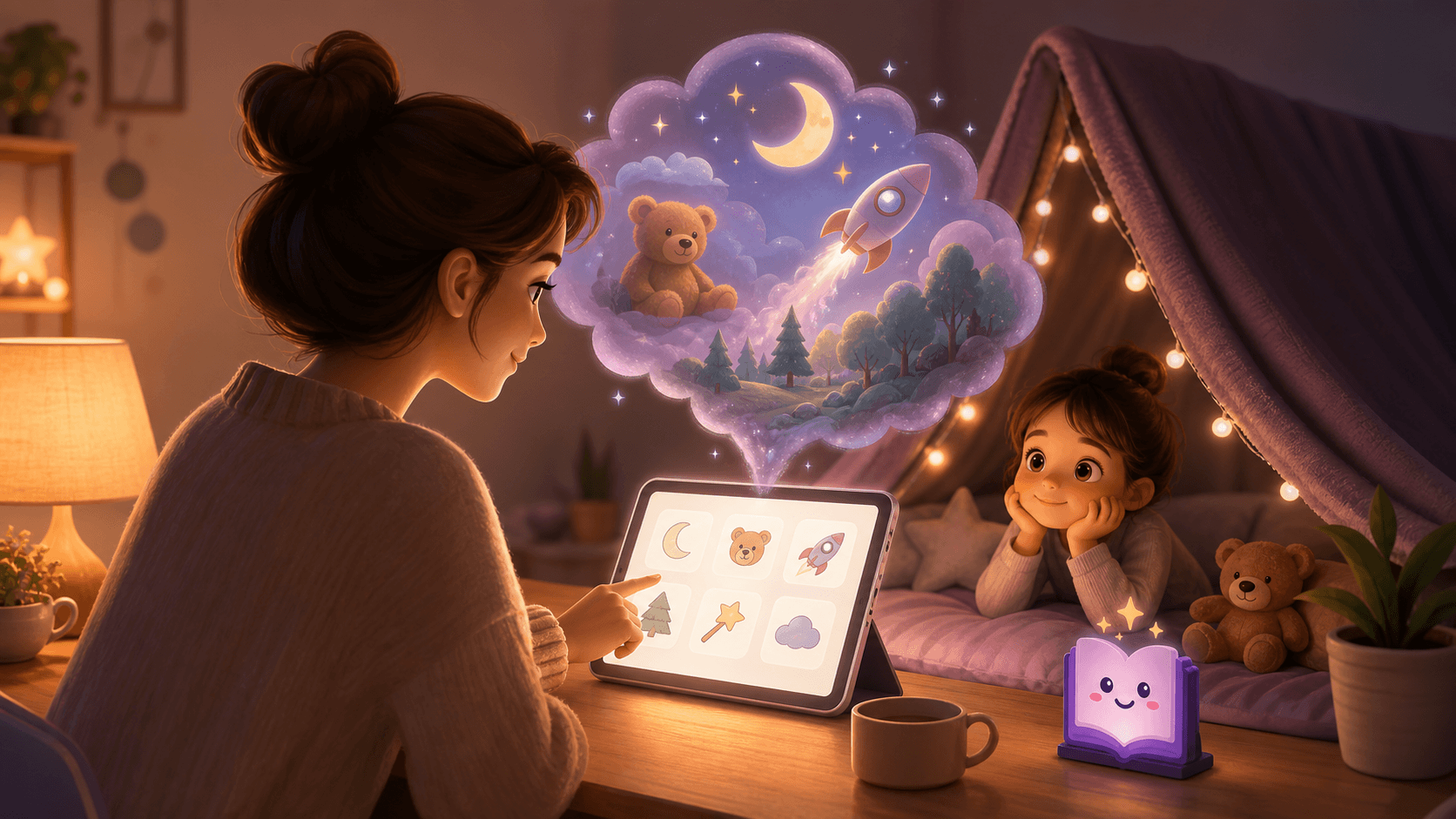
Lulawe is designed around personalized bedtime stories that can reflect a child's age, interests, and familiar details while staying parent-led.
That matters because parents usually do not want a random story. They want something that feels right for their child tonight.
The best personalized story uses just enough detail to make the child feel seen:
- their name
- their age
- something they love
- a mood that fits the night
- a calm ending
That is the sweet spot: personal enough to matter, simple enough for sleep.
Final Takeaway
Personalized bedtime stories become more effective when they grow with the child.
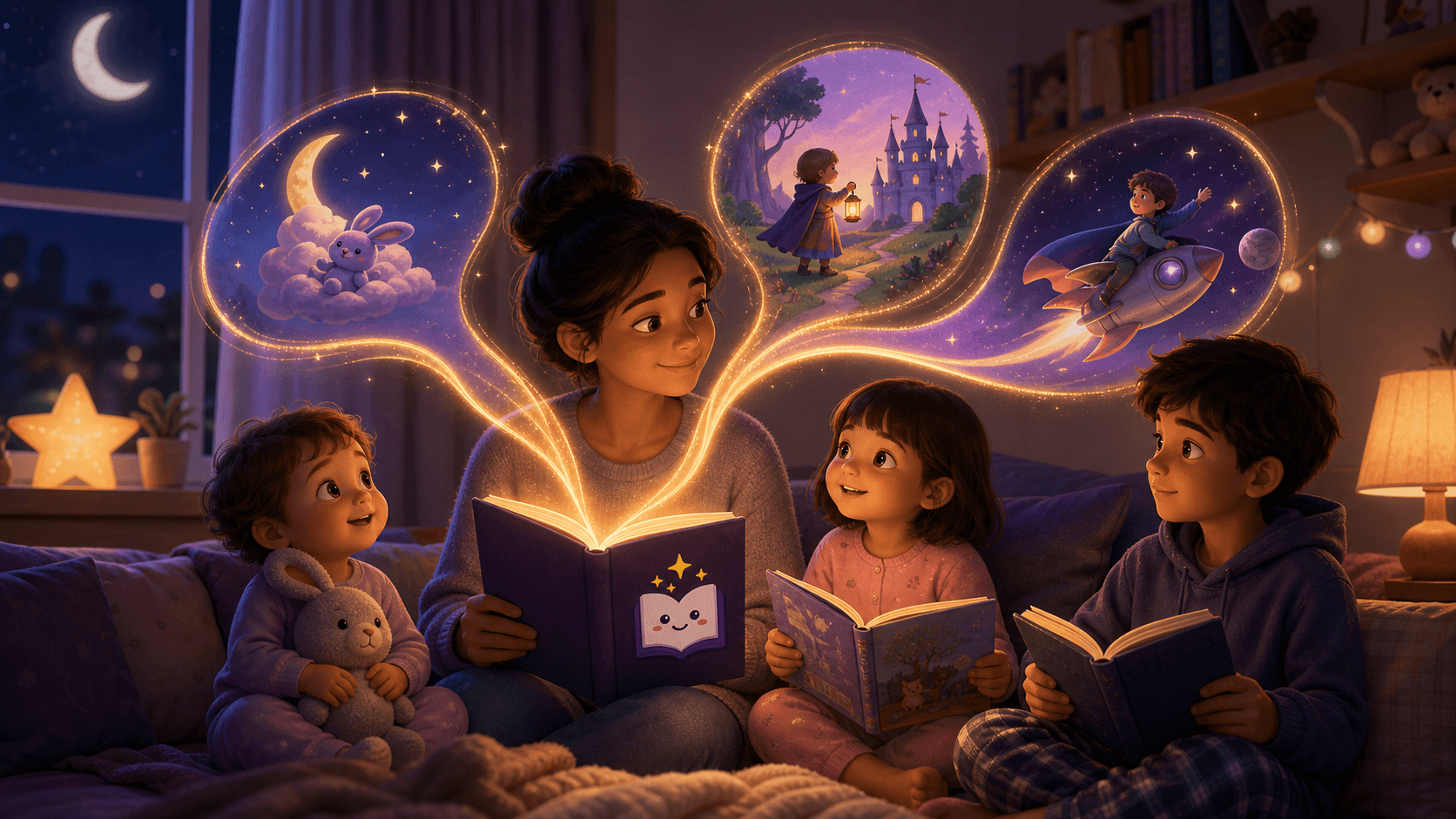
For younger children, personalize familiar objects and repeated goodnights. For preschoolers, add gentle helping adventures. For older children, include feelings, choices, friendships, school, and identity.
The rule is simple: match the story to the child, not just the keyword.