Quick answer: ChatGPT and generic AI tools can write bedtime stories, but they are not built only for children. Child-specific bedtime story apps like Lulawe are purpose-built around personalization, age-appropriate language, emotionally safe plots, and parent-friendly story creation.
AI can generate almost anything now — including stories for children.
That raises a reasonable question for parents:
Why use a dedicated bedtime story app instead of simply asking ChatGPT or another AI tool to create a story?
The answer is that not all AI storytelling experiences are designed for children.
There is a major difference between:
- a generic AI story generator
- and a child-focused storytelling experience built specifically for children ages 1 to 10.
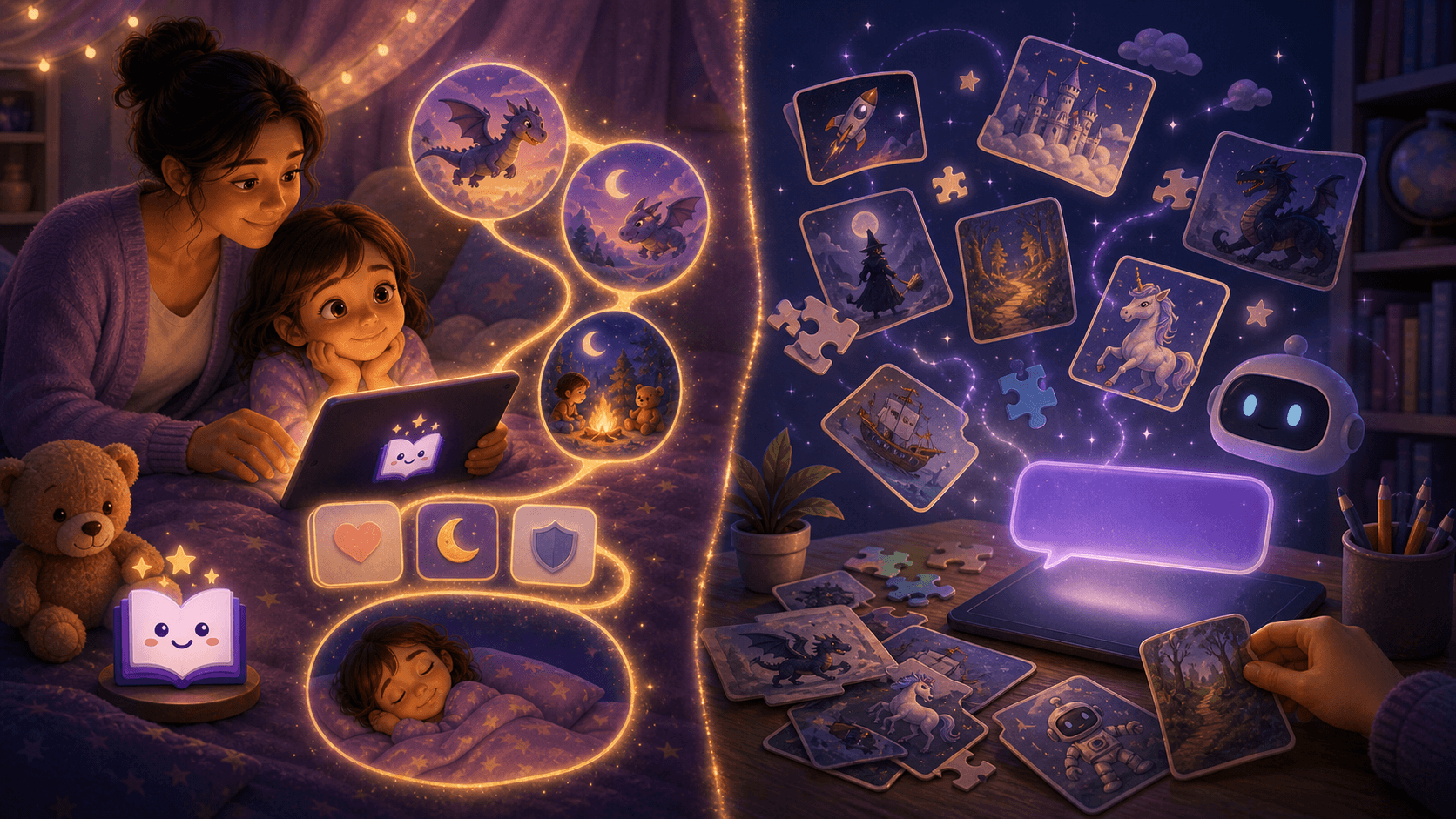
This guide explains why child-specific storytelling apps like Lulawe often work better for families than broad AI tools designed for general content generation.
Quick Answer
Generic AI story generators can create children's stories.
But story apps like Lulawe are designed specifically around:
- emotional safety
- personalized storytelling
- age-appropriate pacing
- child-friendly language
- parent-child connection
That difference matters more than most parents expect.
Generic AI Story Generators vs Bedtime Story Apps for Kids
Quick Comparison
| Feature | Generic AI Story Generator | Lulawe |
|---|---|---|
| Designed specifically for children | ❌ | ✅ |
| Age-aware story creation | Prompt-dependent | ✅ |
| Child-focused storytelling | Sometimes | ✅ |
| Emotionally predictable tone | Inconsistent | ✅ |
| Personalized child profiles | ❌ | ✅ |
| Stories inspired by family moments | ❌ | ✅ |
| Optimized for children ages 1–10 | Rarely | ✅ |
| Parent-friendly story controls | Prompt-dependent | ✅ |
| Built for repeat story creation | ❌ | ✅ |
| Parent-child bonding focus | ❌ | ✅ |
Why Generic AI Story Generators Often Fall Short for Kids
Generic AI tools are incredibly flexible.
But flexibility is not always ideal for children's stories.
Most AI story generators are designed to:
- maximize creativity
- respond to prompts quickly
- generate broad content for many audiences
They are usually not designed specifically for children's storytelling.
That can create problems for younger children.
Common issues with generic AI children's stories
- pacing feels chaotic
- emotional tone changes unpredictably
- language may not match the child's age
- stories prioritize novelty over meaning
- the child may not feel personally included
For adults, those differences may seem small.
For children, they matter a lot.
Why Children's Stories Need Different Storytelling
Children's stories serve a different purpose than general entertainment.
A good personalized story helps children:
- feel seen and connected
- explore imagination safely
- recognize their own name, interests, and world
- enjoy language that fits their age
- experience a story that feels made for them
This requires a very specific storytelling style.
The pacing, emotional tone, sentence rhythm, and structure all influence how child-friendly the experience feels.
That is why child-focused storytelling apps are different from general AI writing tools.
Why Lulawe Feels Different
Lulawe was designed specifically around personalized bedtime stories for children.
Instead of focusing only on generating stories quickly, Lulawe focuses on helping families create stories that feel personal, memorable, and easy to share.
The stories are designed to feel:
- emotionally warm
- vivid
- age-appropriate
- familiar
- child-friendly
Unlike generic AI story generators, Lulawe also focuses heavily on personalization through real family moments.
That means stories can reflect:
- a child's favorite things
- family adventures
- daily experiences
- emotions
- familiar places and characters
This often makes the experience feel more emotionally meaningful for children.
Why Personalized Bedtime Stories Matter
Children respond strongly to familiarity.
When a child recognizes elements of their own world inside a story, the story often feels:
- safer
- more meaningful
- more emotionally engaging
- easier to follow
This is one reason personalized stories can work so well for children.
The child is not just consuming content.
They feel emotionally connected to the story itself.
Can ChatGPT Replace a Personalized Bedtime Story App?
ChatGPT, Gemini Storybook, and other AI tools can absolutely generate bedtime stories.
But they are not specifically optimized for:
- child-specific profiles
- age-aware vocabulary
- emotionally safe story arcs
- parent-friendly controls
- repeat story creation
A child-specific bedtime story app like Lulawe is designed around those goals from the beginning.
That difference becomes especially noticeable when parents want a story that feels personal without writing a detailed prompt from scratch.
For parents specifically comparing Google's illustrated storybook feature with a child-focused bedtime routine, see Gemini Storybook for Kids: Parent Bedtime Guide.
What Makes a Good AI Story for Kids?
The best AI stories for kids usually include:
- emotionally safe storytelling
- familiar characters or routines
- low-conflict structure
- predictable emotional tone
- satisfying endings
- age-appropriate language
- meaningful personalization
This is very different from a generic AI prompt focused mainly on creativity or novelty.
Are AI Bedtime Stories Safe for Children?
Most AI bedtime story apps aim to be child-friendly.
However, parents should still look for storytelling experiences that prioritize:
- emotional safety
- readable pacing
- age-appropriate language
- child-focused design
- predictable storytelling tone
The goal of a children's story is not maximum novelty.
The goal is helping children feel included, safe, curious, and emotionally connected.
Final Thoughts
AI storytelling is becoming more common for families.
But children's storytelling is not just another content format.
It is a relationship between imagination, memory, language, and trust.
That is why child-focused storytelling matters.
Generic AI tools can create stories. But story apps like Lulawe are designed specifically to help children feel included, connected, and excited to hear what happens next.
Instead of simply generating content, Lulawe helps families turn real moments and favorite ideas into personalized stories children genuinely look forward to.