Interactive bedtime stories for kids work best when participation supports the story without delaying sleep. Use two or three calm choices, keep every option low-stakes, and stop the interaction before the final third. If your child is already tired or overstimulated, a simple read-aloud is usually the better choice.
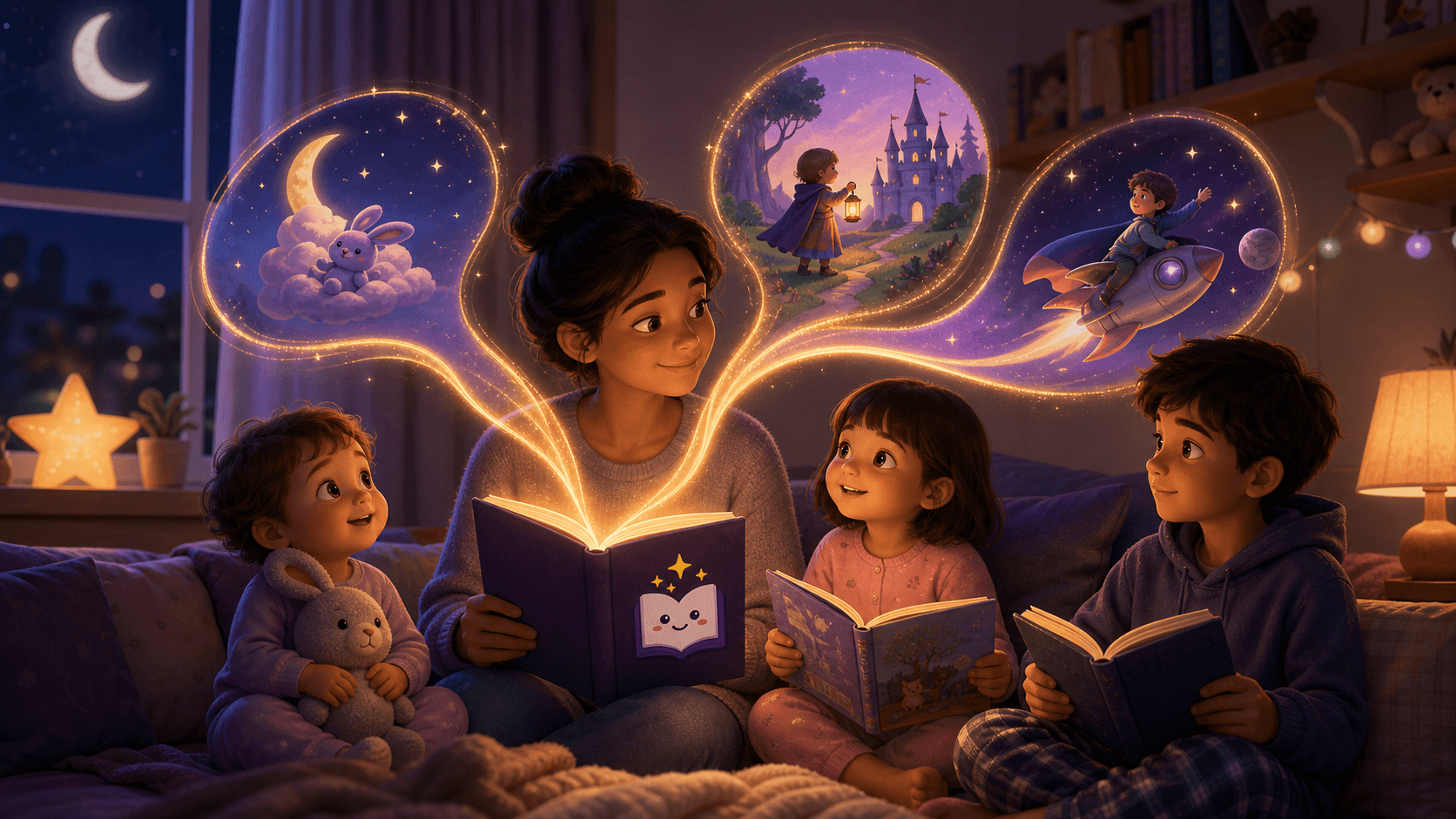
The word interactive can mean two different things. It can describe shared reading, where a parent asks questions and the child helps tell the story. It can also describe a digital story with taps, sounds, animation, or branching paths. Those experiences are not interchangeable, especially at bedtime.
This guide helps parents choose the right level of participation and turn interactivity down as sleep gets closer.
Key Takeaways
- Use interaction to deepen the story, not interrupt it.
- Offer two options at a time and limit a short story to two or three choices.
- Put choices near the beginning or middle, then make the ending linear.
- Prefer a read-aloud when a child is overtired, restless, or negotiating for more.
- Personalize the story before reading so it feels engaging without constant tapping.
What Is an Interactive Bedtime Story?
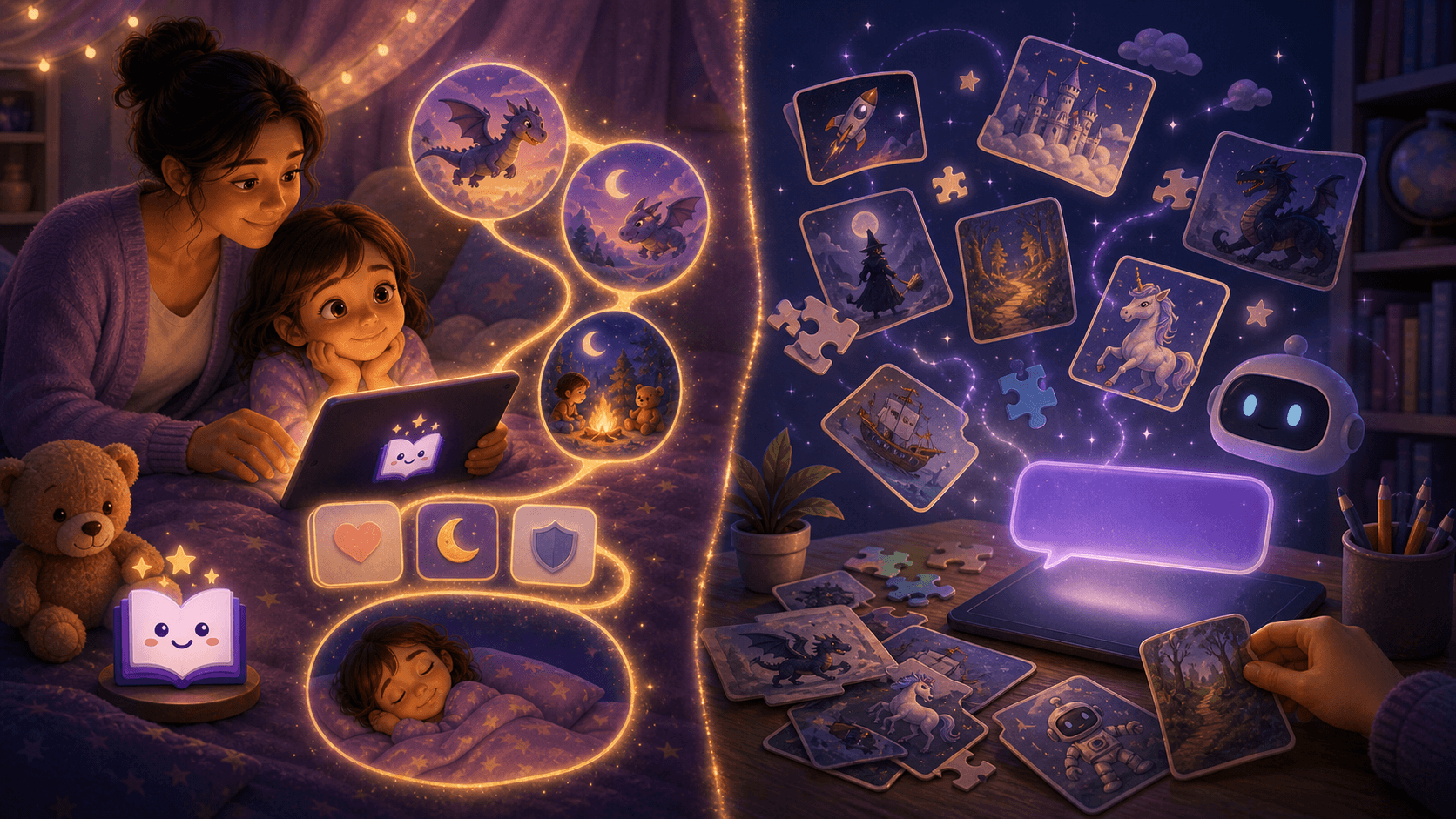
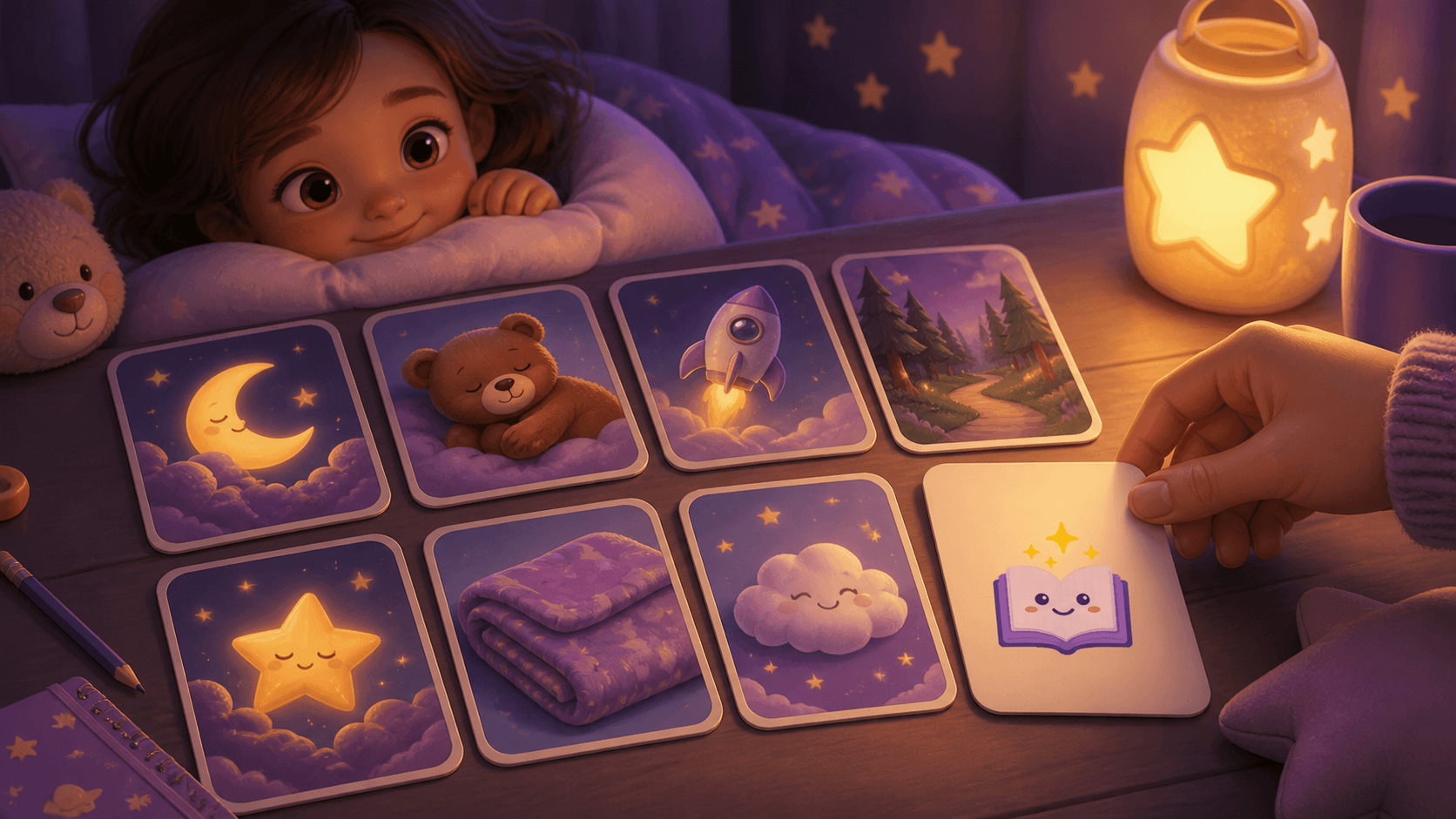
An interactive bedtime story is a story in which a child participates through choices, questions, repeated phrases, sound effects, movement, or predictions. The interaction may happen between parent and child or inside an app, but it should remain connected to the narrative and end when the story ends.
That definition matters because not every clickable story is meaningfully interactive. A child who chooses whether the fox carries a blue blanket or a yellow lantern is shaping the story. A child who taps unrelated objects to trigger noises may simply be switching attention away from it.
For bedtime, good interaction has three qualities:
- It is relevant. The choice, question, or sound belongs to the scene.
- It is limited. The child knows there will not be endless decisions.
- It becomes quieter. Participation decreases as the story approaches sleep.
Interactive Bedtime Stories vs Read-Aloud Stories
The best format depends on the child's energy, the parent's goal, and where the story sits in the bedtime routine.
| Factor | Interactive story | Straight read-aloud |
|---|---|---|
| Child's role | Chooses, predicts, repeats, or adds details | Listens, looks, and follows the plot |
| Best for | An alert child who wants involvement | A tired child who needs fewer decisions |
| Parent effort | Requires pacing and boundaries | Easier to deliver consistently |
| Main benefit | Participation and conversation | Continuity and calm |
| Main risk | Choices become a delay tactic | Child loses interest if the story feels generic |
| Best bedtime position | Earlier in story time | Final story or final third |
Interactive does not automatically mean more educational, and passive does not mean unhelpful. A warm parent voice, a familiar rhythm, and shared attention can make a conventional read-aloud bedtime story deeply engaging.
The practical answer is often a hybrid: involve the child early, then read the ending straight through.
What Research Says About Interactive Reading
Research on dialogic reading gives parents a useful model. In dialogic reading, the adult becomes an active listener and questioner while the child gradually takes more of the storyteller role. The U.S. Department of Education's What Works Clearinghouse review found positive effects on oral language across the reviewed evidence, while finding no discernible effect on phonological processing.
A meta-analysis of 38 shared-storybook studies involving 2,455 children also found that reading style, including dialogic approaches, moderated word-learning outcomes. This supports conversation around a story, but it does not prove that more prompts are always better or that a digital feature improves bedtime.
Digital interactivity needs a separate caution. Research comparing touchscreen stories and print reading found that interactive elements can compete with comprehension when they do not match the narrative. The study's review of prior evidence notes that story-relevant features may help, while unrelated animations and games can divert attention. The full paper is available through the National Library of Medicine.
The evidence points to a simple principle: interaction is useful when it makes the child think about the story; it is distracting when it makes the child forget the story.
The Three-Choice Bedtime Method
Use this method to make almost any bedtime story interactive without turning it into a long branching adventure.
Choice 1: Pick one familiar detail
Before the story begins, let your child choose one element:
- the main character
- a favorite place
- one comforting object
- a gentle story goal
For example: “Should the little owl carry the red scarf or the soft blue blanket?”
Choice 2: Predict one small action
Near the first third of the story, pause once:
“Do you think the owl will follow the moonbeam or ask the rabbit for help?”
Both answers should lead somewhere safe. Avoid choices involving battles, chases, monsters, or losing a parent near bedtime.
Choice 3: Choose the calming detail
Near the middle, let the child select a soft sensory detail:
- rain or quiet wind
- a hammock or a nest
- a lullaby or a whispered goodnight
Then stop offering choices. Read the final third without interruption so the story moves toward one clear ending.
Five Screen-Free Ways to Make a Story Interactive
You do not need a branching app to create participation.
- Finish the repeated line. Use a phrase such as “safe at home, under the moon” two or three times and let the child say the last words.
- Make one quiet sound. Invite a soft “whoosh” for wind or a slow “tap, tap” for raindrops.
- Predict, then continue. Ask one either-or question and accept the answer without debating it.
- Spot the feeling. Ask, “How does the rabbit feel now?” and connect the answer to one detail in the story.
- Choose the goodnight. Let the child decide whether the character sleeps under stars, beside a tree, or in a cozy room.
These interactions work with a printed book, a made-up tale, or a personalized bedtime story. They also preserve the parent-child exchange that can disappear when a device supplies every prompt.
When App-Based Interaction Helps
An app can be useful when it reduces preparation and keeps the story coherent. Current products take different approaches: some let children choose what happens at key moments, while others personalize the hero, topic, narration, or illustrations before reading.
Look for an experience that offers:
- parent-controlled setup
- age-appropriate language
- a small number of meaningful options
- no autoplay or endless feed
- calm narration and predictable pacing
- an obvious end state
- the ability to review content before sharing it
Avoid assuming that a product's “interactive” label guarantees these qualities. Check what the child actually does, how often the app asks for input, and whether the story can finish without another prompt.
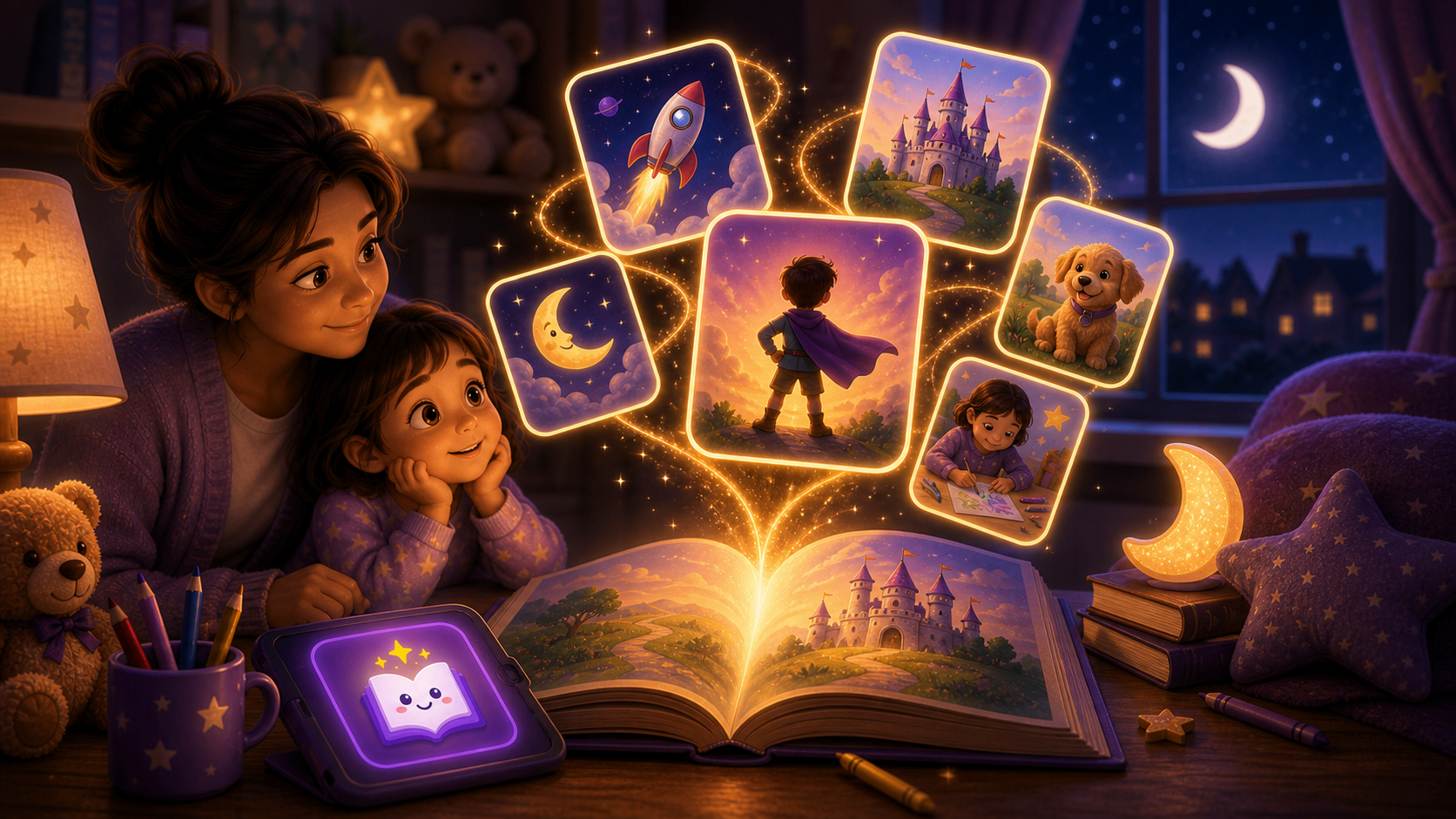
Lulawe takes a personalization-first approach: parents shape the child, characters, mood, and story goal before the story begins. That can create an interactive family process without requiring every scene to branch. If that calmer approach fits your routine, join the Lulawe waitlist.
When a Read-Aloud Is Better
Choose a straight read-aloud when your child:
- is already rubbing their eyes or losing focus
- becomes frustrated by decisions
- repeatedly asks to restart and choose again
- turns every prompt into a negotiation
- is worried and wants a familiar ending
- has already had a stimulating evening
A calming bedtime story can still feel personal without choices. Use the child's name, mention one favorite object, and keep the ending consistent. Familiarity often does more for bedtime than novelty.
Interactive Story Ideas by Age
| Age | Useful interaction | Keep it calm by |
|---|---|---|
| 2–3 | Pointing, repeating one line, choosing between two objects | Asking one question at a time |
| 4–5 | Predicting a gentle next step, choosing a character or setting | Limiting the story to two or three decisions |
| 6–8 | Explaining a character's feeling, choosing between two safe paths | Ending branching before the final third |
Age is only a starting point. Some six-year-olds want to listen quietly; some three-year-olds love to supply a repeated phrase. Follow the child's response rather than trying to maximize participation.
For a broader age-based approach, see personalized bedtime stories by age.
A Reusable Interactive Bedtime Story Prompt
Use this with a story generator or as a plan for your own made-up tale:
Create a 7-minute bedtime story for a [age]-year-old named [nickname] who loves [interest]. Include exactly three calm choice points in the first two-thirds of the story. Give only two safe options at each point, and make either option return to the same gentle plot. Do not include danger, villains, chases, cliffhangers, or surprise endings. Make the final third linear and end with the character safe, cozy, and ready to sleep.
This prompt controls the number, position, and emotional intensity of choices. For more reusable ideas, see these bedtime story prompts for kids.
A Bedtime Interaction Checklist
Before using an interactive story, ask:
- Does each choice relate directly to the plot?
- Are there only two options at a time?
- Can both options stay gentle and safe?
- Is there a fixed end after five to ten minutes?
- Do choices stop before the final third?
- Can the parent preview the story?
- Will the story still work with the screen dimmed or put away?
If several answers are no, simplify the experience or choose a read-aloud instead.
Bottom Line
Interactive bedtime stories for kids are most effective when the child participates in the meaning of the story, not in an endless sequence of taps and rewards. Two or three calm choices can create ownership and conversation. After that, continuity matters more than novelty.
Use interaction while your child is alert, reduce it as bedtime approaches, and let the final part of the story do one job: bring the evening to a clear, peaceful close.