A space bedtime story should make the universe feel wide, quiet, and safe. This 10-minute story for ages 3–8 follows a young astronaut who helps the stars settle for the night and returns home before sleep.
At a glance:
- Story: The Astronaut Who Dimmed the Stars
- Age: 3–8 years
- Reading time: about 10 minutes
- Mood: peaceful, curious, reassuring
- Theme: finishing a small job and returning home
In this article:
- The Astronaut Who Dimmed the Stars
- How to Keep a Space Story Calm
- Space Story Tips by Age
- Make Up Your Own Space Story
- Create a Personalized Space Story
- Choose Another Bedtime Story
The Astronaut Who Dimmed the Stars
A calming space bedtime story for ages 3–8, reading time approximately 10 minutes.
On a hill above a sleeping town stood a very small observatory with a very round roof.
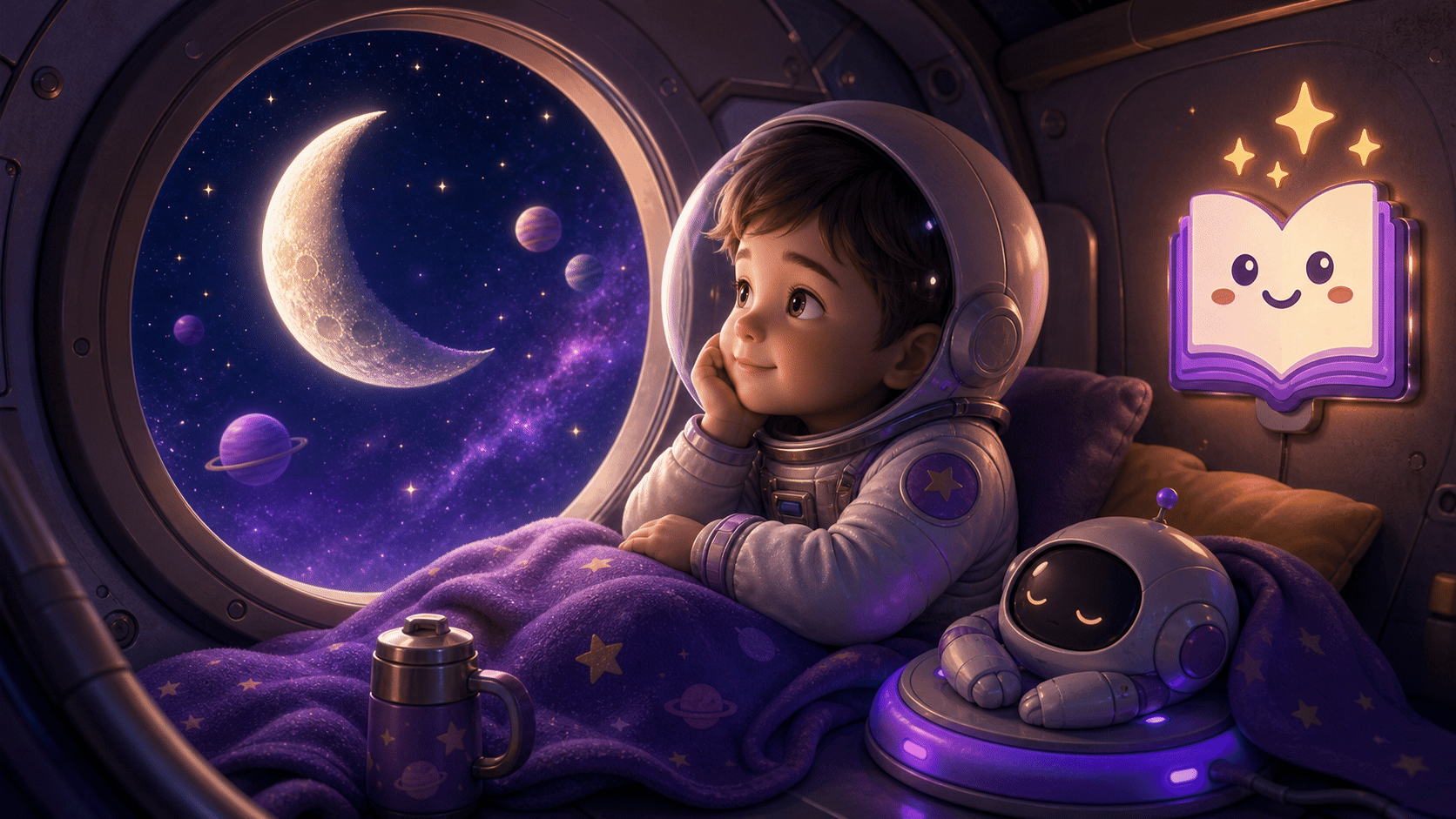
Inside lived an astronaut named Mina and her tiny robot co-pilot, Beep.
Mina did not fly during the noisy daytime. Her spacecraft, the Moon Moth, traveled only after pajamas were on, curtains were closed, and porch lights began blinking off below.
One night, a message arrived from the Moon.
The stars are too bright. The little planets cannot sleep. Please help.
Mina buttoned her soft purple spacesuit. Beep packed two cups of cocoa in a floating flask. Together they climbed into the Moon Moth.
The engine did not roar. It hummed.
Hmmm, went the ship.
Hmmm, went Beep.
Hmmm, went Mina as the town became a patchwork of quiet golden windows below.
First they passed the Moon. It looked like a silver pillow with round dimples.
“Goodnight, Moon,” said Mina.
“One light lower,” said Beep, turning a small golden dial.
The Moon softened from bright silver to a warm pearl glow.
Next they passed Mars, dusty and red.
“Goodnight, Mars.”
“One light lower.”
Then Jupiter appeared, enormous and striped, turning slowly in the dark.
“Goodnight, Jupiter.”
“One light lower.”
At last they reached the Star Garden, where thousands of stars hung like lanterns. Most twinkled gently. One little star flashed brighter and brighter.
“I am trying to stay awake,” the star said. “What if I miss something?”
Mina understood. Sometimes she wanted to keep reading after her own eyes grew heavy.
“Resting does not make the universe disappear,” she said. “It will be here when you wake.”
The little star tried to dim, but immediately shone bright again.
Beep opened a panel in his chest. Inside were three buttons: breathe, listen, and rest.
Mina pressed the first button.
They breathed in while the star grew round and still.
They breathed out while its light became softer.
She pressed the second button.
They listened to the Moon Moth humming, to Jupiter turning, and to the great quiet between one star and the next.
She pressed the third button.
The little star gave one last golden blink.
“Goodnight, astronaut,” it whispered.
“Goodnight, little star.”
Across the Star Garden, the other lights followed. Not dark, not gone—just softer. The little planets tucked themselves into their rings and shadows.
Mina checked her map. The mission was complete.
The Moon Moth turned toward the blue-and-white marble of Earth.
Past Jupiter: hmmm.
Past Mars: hmmm.
Past the Moon: hmmm.
The spacecraft settled beside the observatory without a bump. Mina removed her boots, folded her spacesuit, and poured the cocoa.
From her bedroom window, she could see the little star. It glowed once, softly, like a night-light.
Beep rolled onto his charging cushion.
“Mission status?” Mina asked.
“Stars resting. Astronaut home. Morning waiting.”
Mina pulled the blanket to her chin. Outside, the universe continued turning without needing her to watch it.
Her eyes closed.
And high above the sleeping town, every star kept just enough light for a dream to find its way home.
How to Keep a Space Story Calm
Space stories can become fast very easily. For bedtime, replace countdowns and danger with floating, observing, humming, and returning. Give the child one small mission and make home the destination.
Real planets do not literally dim for bedtime, and stars are not small lamps. This story uses imaginative space images to create a calming rhythm. If your child asks a science question, answer briefly or save it for tomorrow; preserving curiosity matters more than turning bedtime into a lesson.
Reading together is valuable even when a child already reads independently. The American Academy of Pediatrics offers practical tips for reading aloud with children.
Space Story Tips by Age
Ages 3–4
Use only the Moon, Mars, and the little star. Invite your child to whisper “one light lower” each time.
Ages 5–6
Read the complete story. Let your child choose the spacecraft color before you begin.
Ages 7–8
Add one accurate detail your child already knows, such as Saturn's rings or the Moon's craters, but keep the mission and ending unchanged.
Make Up Your Own Space Story
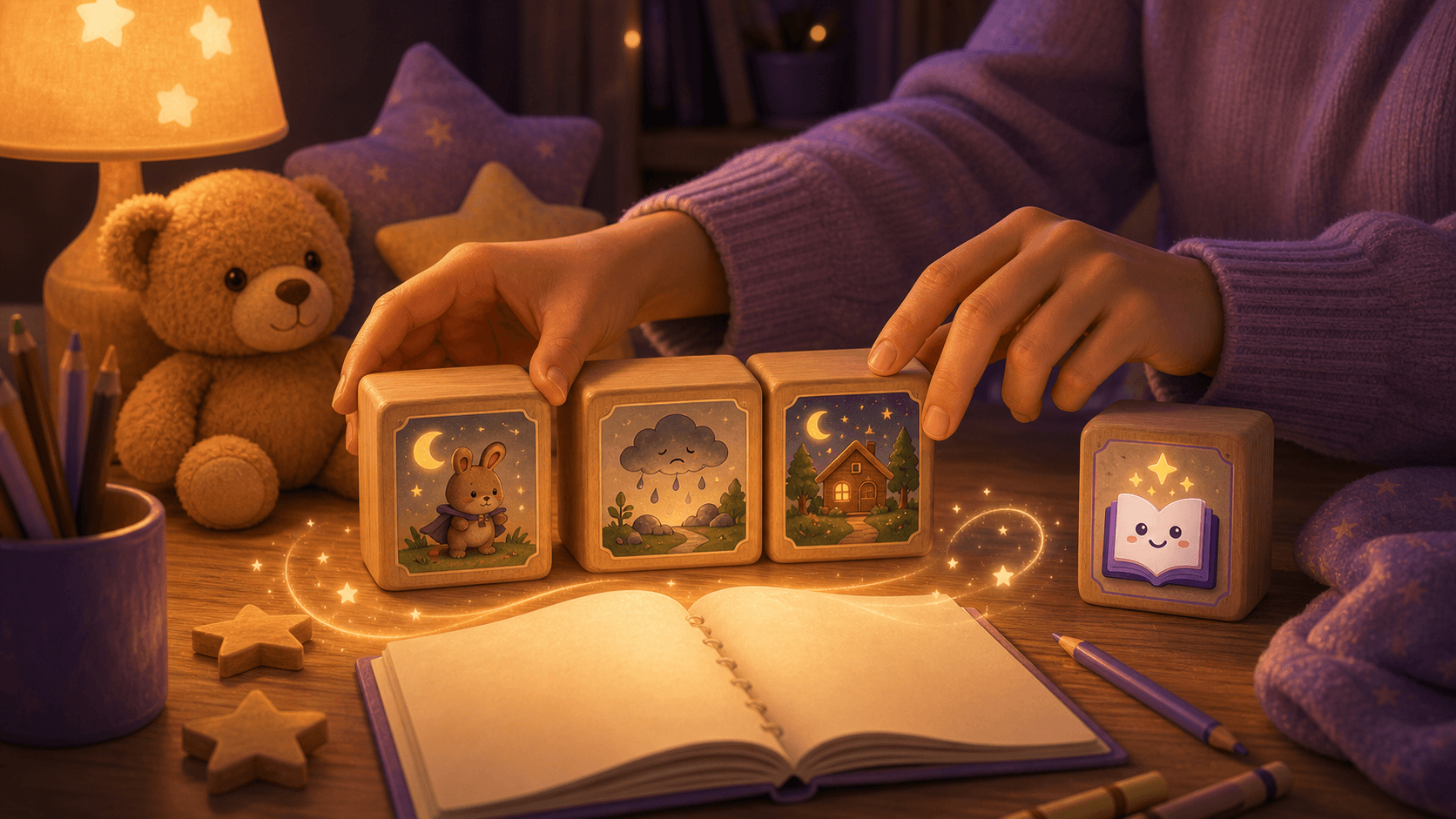
Build a calm space story in five steps:
- Name the astronaut and spacecraft.
- Choose one peaceful mission.
- Visit no more than three space locations.
- Solve the problem with patience rather than speed.
- Return to Earth and prepare for sleep.
Use our bedtime story ideas for kids when you need another theme, or try a robot bedtime story for a smaller high-tech adventure.
Create a Personalized Space Story
Your child's name, favorite planet, toy co-pilot, and preferred spacesuit color are enough to make the story feel personal. Avoid using sensitive information; familiar imaginative details work best.
Create a space adventure starring your child with Lulawe. For more age-specific choices, see the best bedtime stories for kids by age or read our superhero bedtime story.
Choose Another Bedtime Story
Pick tomorrow night's gentle adventure:
- Robot bedtime story
- Pirate bedtime story
- Puppy bedtime story
- Bunny bedtime story
- Ocean bedtime story
Or browse more bedtime story ideas for kids.