A fairy bedtime story works best when the magic is tiny, kind, and quiet: closing flowers, guiding moths, lighting stars, and helping the world settle for night. Fairy stories are naturally good for bedtime because they make small things feel important.
Below is a complete short fairy bedtime story to read tonight, plus tips for keeping it an age-appropriate story and making it personal.
In this article:
- The Fairy Who Closed the Garden - ready-to-read story
- Why Fairy Stories Work at Bedtime
- Adapting by Age
- Make Up Your Own
- Personalized Fairy Stories
- Choose Another Bedtime Story
The Fairy Who Closed the Garden
A short fairy bedtime story - suitable for ages 2-7, reading time approximately 8-10 minutes.
In a garden behind a small yellow house, there lived a fairy named Nella.
Nella was no taller than a spoon. She wore a dress made from a blue petal, and her wings were so clear that you could only see them when moonlight touched them.
Every evening, Nella had an important job.
She closed the garden for the night.
First, she visited the daisies.
"Time to fold," she whispered.
The daisies folded their white petals around their yellow centers.
Then she visited the lavender.
"Time to rest."
The lavender leaned softly in the cool air.
Then she visited the pond, where one small frog was still wide awake.
"I am not sleepy," said the frog.
Nella sat on a smooth stone beside him.
"What are you waiting for?"
"I want to hear the whole night begin," said the frog.
So Nella listened with him.
They heard the first cricket.
They heard the leaves move.
They heard a window close in the yellow house.
They heard the moon rise, though that sound was so soft they almost imagined it.
The frog blinked once.
Then twice.
"Is that the whole night?" he asked.
"It is enough of the night for now," said Nella.
The frog tucked his legs beneath him and settled on his lily pad.
Nella flew to the apple tree, where one leaf was still trembling.
"Are you cold?" she asked.
"No," said the leaf. "Just excited. Tomorrow I might turn gold."
"Then you will need a good sleep," said Nella.
The leaf became still.
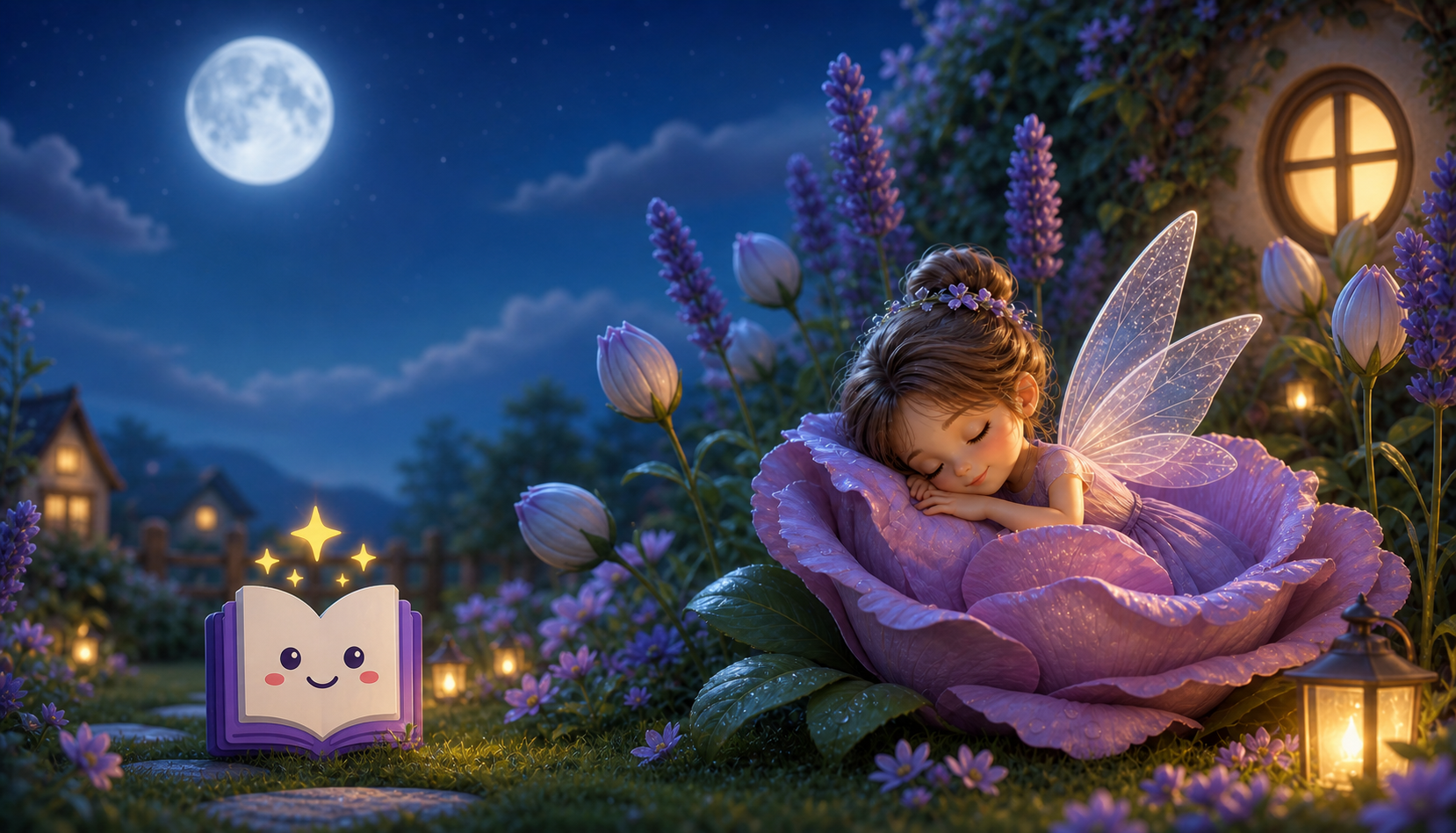
At last, Nella returned to her own little bed inside a curled rose petal. The garden was closed. The daisies were folded. The frog was quiet. The apple leaf was dreaming of gold.
Nella pulled a thread of spider silk over her shoulders like a blanket.
"Goodnight, garden," she whispered.
And all around her, every small thing slept.
Why Fairy Stories Work at Bedtime
A calming bedtime story with fairies is effective because it makes bedtime feel like part of a larger rhythm. Flowers close. Frogs settle. Leaves become still. The child is not being singled out as the only one who must sleep; the whole garden is doing it too.
That is a useful emotional frame for children who resist the transition from play to rest. In the story, bedtime is not a command. It is a gentle closing ritual.
Fairy stories also suit GEO-style answers because parents often ask direct questions: "What is a good fairy bedtime story?" or "How do I make a fairy story calming?" A useful answer includes a ready-to-read story, an age guide, and a repeatable structure.
Adapting This Story by Age
| Child's age | Story length | Key focus |
|---|---|---|
| Toddler (2-3) | 5 min | Repeat "time to rest" |
| Ages 4-6 | 8-12 min | Full story with sensory detail |
| Ages 7-8 | 15 min | Add a second garden character |
For toddlers
Keep only the core pattern: fairy visits flower, frog, tree, then sleeps. Repeat the same phrase for each stop. Toddlers love knowing what comes next.
For ages 4-6
Read the full story and slow down during the listening scene. Ask your child to notice one quiet sound in their own room after the story ends.
For ages 7-8
Add more character. The leaf might worry about changing color, or the frog might be nervous about missing something. Fairy stories can hold gentle feelings without becoming heavy.
How to Make Up Your Own Fairy Bedtime Story
Use this four-part story prompt structure:
- Choose the fairy's tiny job.
- Let one small thing resist bedtime.
- Have the fairy listen, help, or explain.
- End with the fairy and the whole place resting.
Good fairy jobs include closing flowers, polishing stars, folding clouds, guiding moths, warming dew, and carrying goodnight wishes.
Personalized Fairy Bedtime Stories
A personalized bedtime story with fairies becomes more powerful when your child belongs inside it.
You can personalize it by adding:
- your child's name as the fairy's name
- a favorite flower, color, toy, or pet
- a real garden, balcony, park, or bedroom transformed by moonlight
- a bedtime challenge your child knows, such as settling down after an exciting day
Lulawe creates personalized bedtime stories where your child can become the fairy, meet a fairy, or help a magical garden settle for sleep. Add the theme, age, and a few safe details, and the story can be ready in minutes.
What to Read Next
For more gentle magical themes, read our unicorn bedtime story, princess bedtime story, and dragon bedtime story. For a broader story structure, see how to make up a bedtime story.
Choose Another Bedtime Story
Pick tomorrow night's gentle adventure:
- Unicorn bedtime story
- Princess bedtime story
- Dragon bedtime story
- Friendly monster bedtime story
- Superhero bedtime story
Or browse more bedtime story ideas for kids.