The best book for a child is not the most advanced one — it is the one they want to come back to. Start with your child's age, attention span, and interests, then adjust from there.
Choosing books for children is easier when you start with their age, attention span, and reading confidence. A good book does not have to be advanced to be valuable. The right book is one a child wants to return to, talk about, or try reading again.
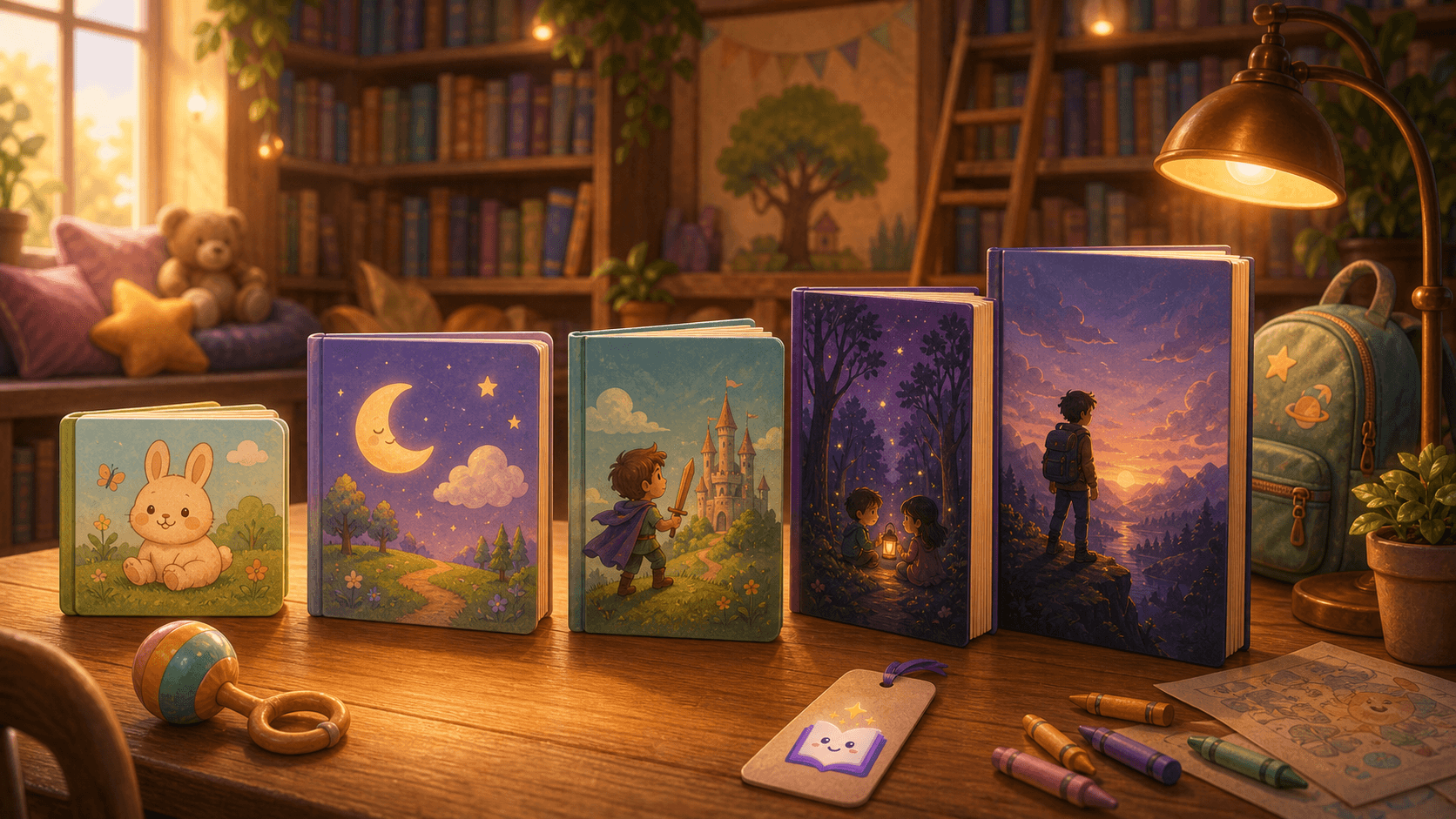
This guide breaks down what to look for at each stage, from baby books and picture books to early readers, chapter books, graphic novels, and middle grade novels.
Why Reading Matters for Children
Books help children build language, imagination, focus, and emotional understanding. Reading together also creates a predictable moment of connection, especially during quiet parts of the day such as bedtime.
For younger children, books introduce rhythm, sounds, pictures, and simple ideas. For older children, books can help them explore friendship, courage, humor, problem-solving, and more complex emotions.
Baby and Toddler Books: Ages 0-3
For babies and toddlers, the best books are sturdy, simple, and easy to repeat.
Look for:
- board books with thick pages
- bright, clear illustrations
- simple words or rhyming text
- familiar topics like animals, bedtime, family, food, or daily routines
- interactive elements such as flaps, textures, or sounds
At this age, children may not sit through a full story. That is normal. Pointing at pictures, naming objects, turning pages, and repeating favorite lines all count as reading.
Good choices include simple bedtime books, first word books, animal books, and short picture books with predictable patterns.
Preschool Books: Ages 3-5
Preschoolers often enjoy stories with repetition, humor, strong illustrations, and characters who face small but meaningful problems.
Look for books that:
- use rhythm or repeated phrases
- invite children to guess what happens next
- introduce emotions in a simple way
- include funny, surprising, or comforting moments
- connect to everyday experiences like sharing, starting school, bedtime, or making friends
Picture books are especially valuable at this stage. Children can follow the story through both the words and the illustrations, which helps build comprehension before they are reading independently.
This is also a good age to introduce books about curiosity, creativity, kindness, and problem-solving.
Early Reader Books: Ages 6-8
Between ages six and eight, many children begin moving from being read to toward reading on their own. The best books at this stage build confidence without making reading feel like a test.
Look for:
- short chapters
- clear spacing and readable text
- illustrations that support the story
- familiar vocabulary with a few new words
- funny or adventurous plots
- series books that let children stay with characters they like
Early readers and first chapter books are helpful bridges between picture books and longer novels. Some children are ready for chapter books quickly, while others still prefer picture-heavy books. Both are fine.
Graphic novels can also be excellent for this age group because they support comprehension through visual storytelling.
Chapter Books and Graphic Novels: Ages 8-10
Children around eight to ten often enjoy books with more developed characters, stronger humor, and bigger adventures. This is a great age for series because familiar worlds help children keep reading.
Good options include:
- funny chapter book series
- adventure stories
- mystery books
- realistic friendship stories
- graphic novels
- books with school, family, or hobby themes
For reluctant readers, graphic novels, illustrated chapter books, and audiobooks can be especially helpful. They still build vocabulary, story understanding, and reading identity.
The goal is not to push children toward the hardest book possible. The goal is to help them find books they genuinely want to finish.
Middle Grade Books: Ages 10-12
Middle grade readers are often ready for longer stories with deeper themes. These books may explore friendship, identity, courage, loss, fairness, independence, and growing up.
Look for:
- strong characters
- age-appropriate emotional depth
- adventure, fantasy, mystery, or realistic fiction
- series for children who like familiar worlds
- standalone novels for readers who enjoy complete stories
- graphic novels for visual readers
Children in this age range vary widely. Some are ready for complex novels, while others still prefer shorter, highly illustrated books. Interest matters more than grade level alone.
Personalized Books for Kids
Personalized books can be a meaningful option for younger children because they place the child directly inside the story. Seeing their name, appearance, family members, or interests reflected in a book can make reading feel more special.
They are especially useful as:
- birthday gifts
- holiday gifts
- keepsakes
- bedtime books
- confidence-building stories
Personalized books work best when the story is still strong without the personalization. The child’s name should add delight, not carry the entire book.
Free and Online Books for Kids
Families do not need to buy every book. Many free and low-cost reading options are available through libraries, schools, and trusted online platforms.
Helpful options include:
- public library cards
- library reading apps
- free read-aloud videos from reputable sources
- school library programs
- digital book platforms for children
- audiobook apps offered through local libraries
Online books and read-alouds can be useful, especially during travel or busy weeks. For bedtime, printed books or audio-only stories may be better for children who become more alert when using screens.
Bedtime Books and Read-Aloud Stories
Bedtime is one of the best times to read because the routine is predictable and calm. A bedtime book does not need to be long. In fact, shorter books often work better on school nights.
Good bedtime books usually have:
- gentle pacing
- comforting language
- soft illustrations
- familiar routines
- a calm ending
- limited excitement or suspense
For older children, a chapter-a-night routine can work well. Stopping at the end of a chapter gives children something to look forward to the next evening.
How to Choose the Right Book
When choosing a book for a child, consider:
- age and attention span
- reading level
- interests
- emotional maturity
- whether the book is for independent reading or read-aloud time
- whether the child prefers pictures, humor, facts, fantasy, or real-life stories
A child who loves dinosaurs, jokes, animals, mysteries, sports, or fantasy is already giving you a path into reading. Start with what interests them, then gradually introduce new genres.
Final Thoughts
The best books for kids are not always the most advanced or the most popular. They are the books children connect with, ask for again, and feel proud to read.
For babies and toddlers, choose simple and sturdy books. For preschoolers, focus on rhythm, pictures, and emotional connection. For early readers, build confidence with short, engaging books. For older children, offer chapter books, graphic novels, audiobooks, and middle grade stories that match their interests.
Reading becomes easier to sustain when it feels enjoyable, personal, and part of everyday life.